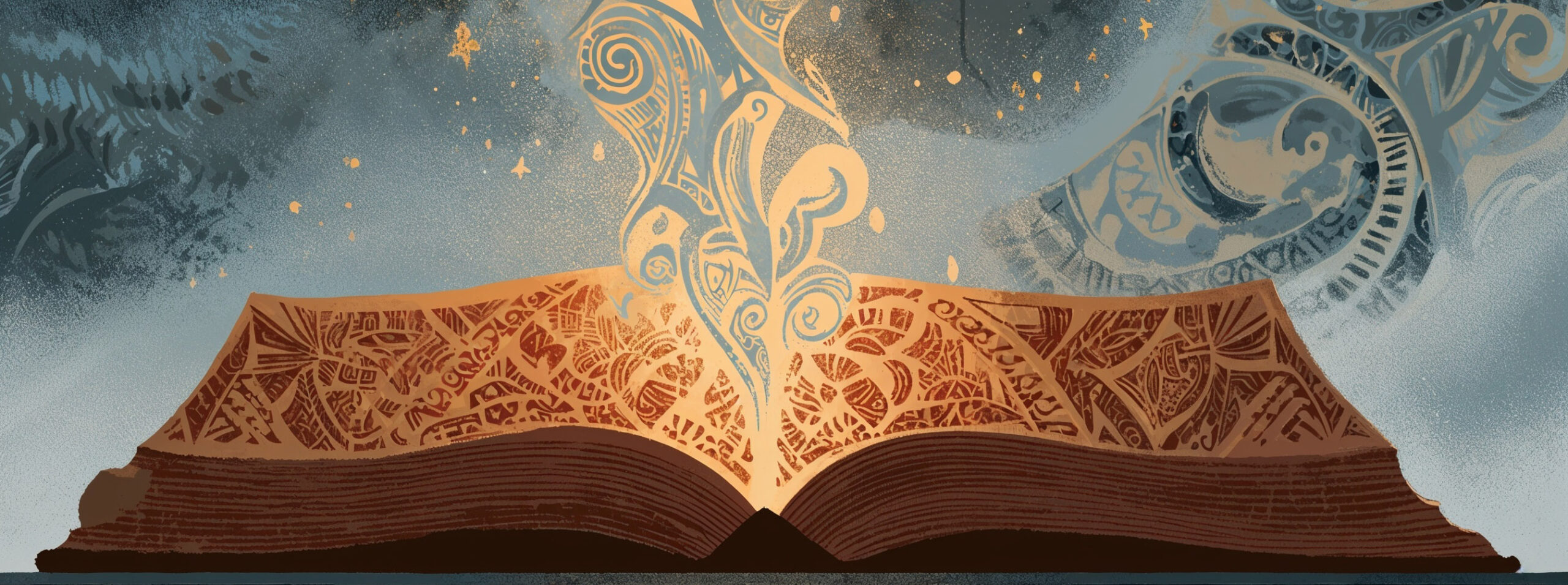
The field of noetic science was thrust into the popular imagination with the publication of Dan Brown’s (2025) fictional novel, The Secret of Secrets, last fall. Noetic science, according to the book, studies human consciousness, the influence of the mind on physical reality, and is, contrary to what many believe, the oldest science on earth (Brown, 2025). The plot of Brown’s novel centers on Katherine Solomon and her manuscript, which promises to revolutionize science and our understanding of human consciousness. The famed symbologist Robert Langdon, a familiar character to many who also appears in some of Brown’s other books, most notably The Da Vinci Code (Brown, 2003) and Angels & Demons (Brown, 2000), has his relationship with Solomon upended, being left looking for answers and hunted by a mythological assailant from Prague. The thrilling, if not bombastic, plotline of the story is nonetheless peppered with many allusions to reputable parapsychological knowledge and research. This is not to mention that the phrase “noetic science” is borrowed from the very real Institute of Noetic Sciences (IONS). IONS published a series of videos inspired by the Secret of Secrets, with one such video featuring Dean Radin interviewing Dan Brown (Institute of Noetic Sciences, 2025). It is also worth noting that Netflix announced the adaptation of the fictional world and story of Brown’s novel into a series that will be featured on its platform (DiLillo, 2025).
What implications does this hold for parapsychology? There are many. Apart from Brown’s (2025) misreporting of the replicability of the Ganzfeld experiment (p. 335), the novel represents parapsychology research, albeit with creative license, in a way that is grounded in the scientific literature (Institute of Noetic Sciences, 2025). Perhaps more importantly, Brown opens up the conversation around consciousness that goes beyond the confines of materialism, expanding what counts as serious science. Moreover, the popularity of this kind of storytelling creates broad, public pressure to support parapsychological research and opens up avenues for funding. On a more philosophical level, as critical theorists and feminist scholars have long emphasized, science is deeply entangled with culture, media, and other domains of human activity (Harding, 1991). In this sense, the state of culture—reflected in the popularity of media such as Brown’s novel—can serve as a lens for situating parapsychology, just as developments within parapsychology may illuminate broader cultural trends. These two domains mutually constitute and mirror one another in significant ways that remain insufficiently examined and underutilized.
Parapsychology as a science is, in other words, necessarily part and parcel of the broader cultural milieu of our contemporary epoch. What topics and subjects are envisioned for research are, in a strong sense, dictated and demarcated by the imaginative and conceptual limits of our cultural imagination. To pose this as a simple question: What is possible? The answer to such a question, no matter who supplies it, will contain presuppositions about the nature of reality, the future, and our very own human potential. On this point, it would serve us well to remember a word of caution and wisdom issued by Fredrick Nietzsche (2010): “What, then, is truth? A mobile army of metaphors, metonymies; anthropomorphisms… truths are illusions of which one has forgotten that they are illusions” (pp. 29-30). The boundaries between truth and fiction are not always so clear-cut. Consequently, the popularity of various cultural products, Brown’s (2025) novel being one such paragon example, and their pragmatic value as useful fictions can steamroll ahead of parapsychological science, creating the space needed for facts and knowledge to be generated. Fictionalized truths can help drive the impulse for scientific fact.