by Carl Lorenz Cervantes

by Carl Lorenz Cervantes
When my paper, “Philippine Parapsychology,” was published in the journal Explore, a comment it received was, “Is this not more paranthropology than parapsychology?” In that paper, I discussed a possible approach to paranormal phenomena in the Philippines, through a culturally-oriented approach informed by literature from within Filipino indigenous psychology (Sikolohiyang Pilipino, or SP). It is true that SP utilizes many anthropological approaches to better contextualize human experiences, but qualitative psychologists have already been doing this—the important addition of SP to social science research is better sensitivity to respondents and communities, treating them with the appropriate reciprocity and respect conditioned by traditional Filipino values (Pe-Pua, 2005). Furthermore, as an Indigenous psychology (IP), SP allows for the development of a psychological framework that draws primarily from native experience, rather than be imposed from elsewhere, particularly through military and political force. That is not to say that the frameworks, findings, and technical vocabulary of mainstream psychology—shaped by Western European and North American (i.e. “Western”) worldviews—is absolutely worthless, only that this ought to be “tested” appropriately for their usefulness in non-Western cultures. In most cases, although we are humans regardless of culture, it is also apparent that cultures have different “maps” for similar experiences, highlighting aspects that are, for these cultures, considered more or less relevant. SP, among other IPs, can “fill in the gaps” of mainstream psychology, contributing to a more inclusive global psychology. While we can say, therefore, that there is one “mind,” there are also many “mentalities” (Schweder, 2020).
There is still something to be said about the assumed distinction between what is considered “psychological” and “anthropological,” as it seems that there lingers the legacy of colonial bias with regard to what is considered “civilized” and “primitive.”
There is still something to be said about the assumed distinction between what is considered “psychological” and “anthropological,” as it seems that there lingers the legacy of colonial bias with regard to what is considered “civilized” and “primitive.” If, say, the assumption of a study as “psychological” evokes purely neurological tests and experimental laboratories, then it has the tendency to reduce individuals to numbers, decontextualized from the spaces within which paranormal experiences are said to take place. Yet this is where parapsychology as a field started, having then contributed to mainstream psychology many methodological approaches that have made psychological study more rigorous (Watt, 2016). It is not “wrong” per se, only incomplete. The anthropological approach, on the other hand, has historically distinguished between so-called “exotic” tribes and their pre-modern customs, and this is true also in the Philippines, particularly with our history of colonization. Spain and the United States, having colonized the Philippines for a combined length of almost four centuries, sought to Christianize and modernize “non-Christian tribes”; in the process both documenting and erasing many indigenous traditions (Acabado & Martin, 2025). If we insist, then, on a singular approach to something so nebulous as the paranormal—for example, only through laboratory methods—we are missing out on various commonsense (that is “indigenous”) maps to effectively approach the paranormal.
In any case, I did not know that there was such a thing as “paranthropology,” mainly because existing literature on paranormal studies in the Philippines are somewhat dated, and still refer to it as “parapsychology” (parasikolohiya) (e.g. Enriquez et al., 1989). The term “paranthropology,” or “parapsychological anthropology,” was coined by Roger W. Wescott in 1970s, but anthropologists have already been studying paranormal phenomena, as it overlaps with folkloristics. Andrew Lang attempted “comparative psychical research” that involved studying paranormal phenomena as it is evoked and manifested across various cultures (Caswell et al., 2014). Paranthropology today draws from this history, providing a more contextualized look into the field of paranormal studies. It posits that various cultures already have methods of evoking paranormal phenomena, particularly in the form of rituals (Hunter, 2010). One can further argue that psychologies indigenous to certain cultural contexts also structure the maps through which such phenomena can be understood, and, oftentimes even embraced as part of everyday life. In this way, certain cultures already have generationally transmitted guidelines on how to deal with the crisis of “spiritual emergencies” that can lead towards a person’s transformation—meanwhile, cultures devoid of such cultural knowledge may consider such phenomena through a more stigmatized lens informed by diagnostic psychiatry (Grof & Grof, 1993).
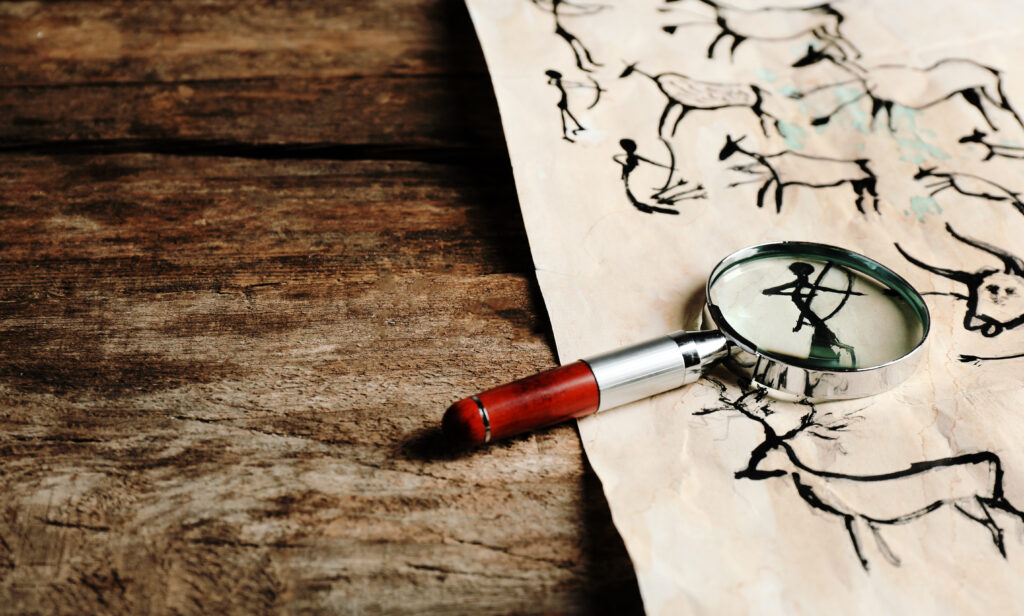
In the Philippines, kababalaghan refers to anything apparently unexplainable that causes shock, wonder, or fear (Almario, 2021). This generally refers to phenomena described as either “paranormal” and “supernatural,” the distinction being that the former implies that it can soon be explained through natural laws, whereas the latter implies that it can only be explained through forces beyond this world. Practically speaking, the only difference between the two is the way through which individuals interpret phenomena—that is, something happened, which the paranormalist may interpret through varied psychic frameworks, but the supernaturalist may interpret in the language of folklore. Enriquez et al. (1989) had distinguished between what can be studied through parapsychology and what is purely kababalaghan, where the former involves human abilities (e.g. precognition, telepathy, etc.) and the latter involves more apparently supernatural causes (e.g. faith healing, talismans, spirit possession). But earlier approaches to the paranormal would not have made such a distinction, as with J. B. Rhine (1934), who considered all these within the purview of parapsychological study. In my view, the distinction is purely cosmetic; it assumes which map ought to be used in understanding the phenomenon. But, as Bulatao (1992) had advised, in studying these matters, one must distinguish the phenomenon from the interpretation, as there may be many ways to approach the same experience—and the only measure of a model’s usefulness really is whether it “works” in healing or understanding.
In my view, the distinction is purely cosmetic; it assumes which map ought to be used in understanding the phenomenon.
Approaching kababalaghan through paranthropology would have to embrace the supernaturalist interpretation as equally plausible. Or, at least, plausible for now; it is accepted by the researcher as a necessary foundation for meaningful engagement with kababalaghan. An explanation by way of psychology can be attempted afterward, but this may just be adding details to maps that are already being used. This perspective, which is at the core of paranthropology, aligns with the existing approach of Filipino parapsychologists such as Jaime Bulatao (1992). Borrowing methods from the field of anthropology, guided by the values and approaches of SP, may prove useful, but only up to one’s integration into communities where research may be conducted. Paranthropological research, particularly on kababalaghan, may be done through observation or inquiry, and ideally through active participation.
One begins, initially, by way of pagkapa (searching in the dark). In order to give shape to something formless, one must drop any and all assumptions—particularly that the frameworks and vocabulary of Western psychology are universally applicable. This tentative and open approach allows for the possibility of new and unusual experiences. Knowledge of the language would be useful, at least with regard to the vocabulary and lore relevant to the ritual process. We can say that describing the lore is the purview of anthropology, and analyzing it in terms of human processes is psychology’s. But rituals are more than just social customs, they serve the function of manipulating and structuring consciousness in such a way that kababalaghan becomes possible—these are, in other words, not merely techniques but structured methods. The main methodology of kababalaghan studies vis-a-vis paranthropological research, therefore, is through ritual. And, in kababalaghan studies, ritual can be treated in very much the same way as a culinary recipe.
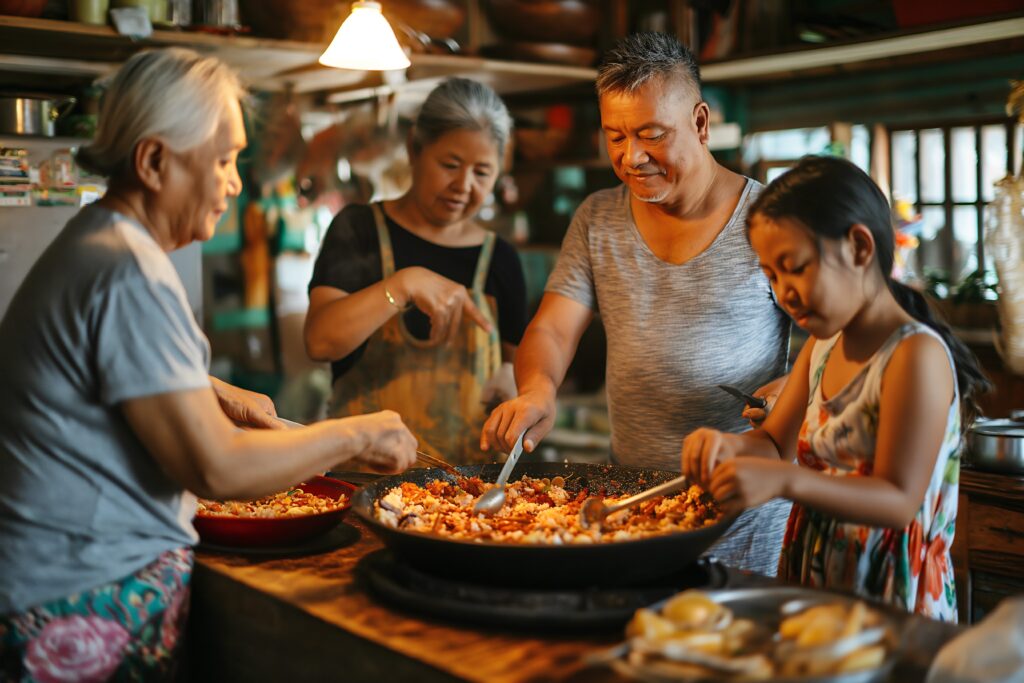
Filipino cuisine has been shaped through colonialism, travel, and trade; many beloved dishes have regional variations that suit the taste of those communities. Filipino psychology, observed through eating habits, shows a relational way of eating, in that food becomes a communal tool and metaphor for shared wellbeing (Fernandez & Alegre, 1988/2025). Ritual can be the same way: there is a general structure or pattern that can be followed, but its effectiveness is a matter of matching the flavor to a person’s preference (tantsa). Answering the issue of cultural appropriation, one can say that such research is only influenced by these rituals, applied judiciously in the search for greater knowledge. And, anyway, even the rituals seen across Philippine communities are, like popular dishes, adjusted to the “flavor preference” of varied practitioners. A ritual developed for kababalaghan studies would only be one of these variations. In the end, if these cultural rituals and folk worldviews are effective in attaining states of consciousness conducive to kababalaghan—and paranthroplogy assumes that they are—then they ought to be considered “legitimate” methods for scientific study.
Almario, V. S. (Ed.) (2021). Kababalaghan. In Pambansang diksyonaryo sa Filipino. Ateneo de Manila University Press.
Acabado, S. B. & Martin, M.M. (Eds.) (2025). More indigenous than we admit: Rethinking encounters, histories, and the politics of indigeneity. Vibal Foundation, Inc.
Bulatao, J. C. (1992). Phenomena and their interpretation: Landmark essays 1957-1989. Ateneo de Manila University.
Casswell, J. M., Hunter, J., & Tessaro, L. W. E. (2014). Phenomenological convergence between major paradigms of classical parapsychology and cross-cultural practices: An exploration of paranthropology. Journal of Consciousness Exploration & Research, 5(5), 467-482.
Enriquez, V. G., Balde, P. J., & Bernardo, M.A. (1989). Ang kababalaghan at parasikolohiya. Akademya ng Sikolohiyang Pilipino.
Fernandez, D. G., & Alegre, E. N. (2025). Sarap: Essays on Philippine food. Exploding Galaxies. (Originally published 1988).
Grof, C., & Grof, S. (1993). Spiritual emergency: The understanding and treatment of transpersonal crises. In R. Walsh & R. Vaughan (Eds.), Paths beyond the ego: The transpersonal vision (pp. 137-144). Jeremy P Tarcher/Penguin.
Hunter, J. (2010). Anthropology & the paranormal: What’s the point? Paranthropology: Journal of Anthropological Approaches to the Paranormal, 1(1), 2-3.
Pe-Pua, R. (2005). Kros-katutubong perspektibo sa metodolohiya: Ang karanasan sa Pilipinas. Pambansang Samahan sa Sikolohiyang Pilipino.
Rhine, J. B. (1934). Extra-sensory perception. Boston Society for Psychic Research. https://sacred-texts.com/psi/esp/index.htm
Schweder, R. A. (2020). The role of reason in cultural interpretation: Some Talmudic distinctions for indigenous and cultural psychology. In L. Sundararajan, K.-K. Hwang, & K-H. Yeh (Eds.) Global psychology from indigenous perspectives: Visions inspired by K.S. Yang (95-110). Palgrave MacMillan.
Watt, C. (2016). Parapsychology: A beginner’s guide. Oneworld.

In this issue of Mindfield, the contributors examine the theme of “Mapping the Unseen: Psi, Media, and the Cultural Imagination.” The editorial by Jacob W. Glazier, Anastasia Wasko, and David S. B. Mitchell examines how fictional narratives can create the cultural space in which new scientific ideas and research agendas emerge. In his Presidential Column, …
by Carl Lorenz Cervantes
Comments
Amy Skinner
Interesting perspective and research, thank you for sharing!