by Athena A. Drewes


by Athena A. Drewes
When dealing with emotional stressors, such as death, trauma, and abuse, the spiritual dimension can help children feel supported and comforted as they seek to understand the unfathomable (Bhatia & Vyas, 2023 But these stressors can also result in having exceptional experiences, such as seeing spirits of the deceased, angels, or religious figures. For example, J.L., age 5, asked, “Where do we go when we die? My mommy says Grandma is part of the Universe. But I know she is in Heaven, because I can see her when she visits me at bedtime.”
Therapists can assist children in sharing and processing their spiritual and exceptional experiences, so that they feel validated and supported. However, many lack the knowledge of how to create an invitational space and respond to exceptional experiences that may challenge the therapist’s own beliefs.
As a result, exceptional experiences go unacknowledged, dismissed, pathologized, or misunderstood, limiting needed support. Consequently, children wind up experiencing social oppression regarding their spirituality, beliefs, and experiences, which ultimately results in repression of natural spirituality, exploration, and sharing exceptional experiences (Boynton, 2016; Robinson et al., 2025).
Children offer a unique perspective into how they understand and experience spirituality.
Children’s Spiritual Expression
Children offer a unique perspective into how they understand and experience spirituality. They describe encountering and communicating with spiritual beings and entities, including animals, trees, angels, the devil, fairies, pixies, and higher powers such as God, Gaia, and the Creator. These encounters are reported as bringing joy, happiness, peace, and comfort, as well as being a source of strength, energy, and inspiration, especially in dealing with trauma, grief, and loss (Edgar-Bailey & Kress, 2010; Mountain, 2016).
Children are capable of having a multi-dimensional awareness, tuning into what others do not perceive. Seeing or communicating with God, deceased friends or family members, shapes and colors (auras) around people and objects, angels or religious figures, knowledge of their “other family” and when they “lived before,” or what someone will say or do before it happens are commonly reported (Belz & Fach, 2015; Nelson & Hart, 2004). For example, one parent emailed the author that “my daughter had just turned one year old and had a near-death experience. She had a seizure that stopped her heart for nearly two minutes. After that, she began to talk almost incessantly about death and dying, going to heaven, seeing angels… she is four years old now and able to see spirits and know about events before they happen.”
The majority of surveyed young adults recalled childhood spiritual experiences before age 18, and more than a third experienced them between ages 6 and 12. The exceptional experiences, which frequently occurred, included knowing other people’s thoughts, experiencing telepathy, clairvoyance, precognition, near-death experiences, or out-of-body experiences (Hart, 2004; Nelson & Hart, 2004).
Navigating in Seclusion
Having a spiritual and exceptional experience can lead to feelings of isolation due to fear of negative reactions, as often happens from friends, family, and even therapists. Children are met with judgment, a lack of understanding, being told not to tell others, anger, comments about being a witch or satanic, and accusations of delving into the taboo. Even mental health diagnoses are quickly given without justification, with experiences seen as hallucinations, delusions, or an overactive imagination (Elam, 2013). This is seen in an email from Sean, a 14-year-old who wrote the author, “When I was a child, people thought I was crazy for being able to see spirits, and I learned to be quiet to avoid ridicule. When I was older, they said I was evil… I know I mentioned it to my parents, who didn’t really listen. Later on, I was able to tell an aunt, and she listened, and it was good to have someone believe me.”
Because of these negative reactions and a desire to fit in with others, children wind up shutting down their experiences or refraining from revealing them, and, in time, come to doubt their own reality and capacity to access their experiences (Hart, 2004). An exploratory study of childhood spirituality with adults (Elam, 2013) revealed that the majority had exceptional experiences in early childhood, but most had never or almost never talked about them. Respondents reported not feeling safe doing so and expressed feeling isolated and different from peers while seeking acceptance and affirmation. They reported keeping to themselves because they felt different, were bullied, teased, avoided, and thought to be strange. A quarter of respondents reported finding an outlet through play, art, music, or dance (Elam, 2013).
Need for Validation
Spiritual experiences feel real to the experiencer. And having an exceptional experience does not mean there is “something wrong” with the person; rather, it means the person had an experience that others may find difficult to understand. Many experiencers consider their experiences an everyday aspect of their lives or a meaningful part of their worlds, and find them to be uplifting, transformative, or comforting. For others, validation, support, and understanding in processing the impact of their experiences are needed, and they often do not know whom to trust to share them with (Nelson & Hart, 2004; Robinson et al., 2025). This is seen in an email that Karla, 17-years-old, wrote: “The darkness has finally left me and I feel that you were the one that helped make it leave. I have had to keep silent about my ability to see and hear things that others don’t to avoid being sent to a psychiatrist, medicated, or made fun of… You have really helped change my life around. Before, I was the ‘weird fat kid,’ but now I’ve flipped it and made something of myself and my abilities. I have you to thank for that. It makes it easier knowing someone out there really cares for confused kids just like me. You’ve made an impact on my life, that I’m very thankful for.”
Elam (2013) found that respondents said validation, affirmation, and knowledge to help them understand their experience(s) were paramount. They wanted to have someone safe, an open-minded mentor, teacher, therapist, or a loving adult to give that knowledge as well as validation and affirmation. They wanted to know they were normal, and there were other children like them. Respondents wanted to be listened to without judgment or fear, with adults interested enough to ask questions and help with integration.
Therefore, it is important for therapists to be supportive. And to be able to offer the space where the child, invited to share their experience, feels comfortable, knows the person will listen, understand, and support without judgment (Mountain 2016; Roxburgh & Evenden, 2016).

Having a Spiritually Sensitive Practice
Typically, therapists working with children who have experienced trauma, grief, and loss focus more on the cognitive, emotional, and physical symptoms but often overlook the spiritual dimension, which can be central to the experience, and consequently disenfranchise the children being served (Boynton & Mellan, 2021; Edgar-Bailey & Kress, 2010). Creating an invitational holding space for the child’s imaginary worlds, experiences, and reflections without judgment allows for focus on children’s spiritual narratives, strengths, experiences, and practices, as well as on their distress, struggles, and concerns. Further, it conveys that the therapist is willing to enter their world, listen, and validate their concerns (Boynton & Margolin, 2025).
Play and Spirituality
The intrinsic power of play (Schaefer & Drewes, 2014) is grounded in a sense of awe and wonder for all children and offers tremendous opportunities for spiritual awakenings and expression. Through play and imagination, the child makes meaning and sense of their exceptional experiences and spiritual world. By nurturing, supporting, and acknowledging all aspects of childhood consciousness during play, therapists can liberate a child’s spirituality and allow exceptional experiences to occur and be shared (Boynton & Vis, 2011; Harris, 2014). Children’s imagination, seen in their artwork, dramatic play, and stories, allows others a glimpse into the mystery of their spirituality. It is during this type of make-believe play that the union of a child’s soul and mind emerges (Edgar-Bailey & Kress, 2010; Harris, 2014).
Mountain (2016) found that play therapy naturally served as a spiritual practice, and that the therapeutic relationship and room created a sacred space for affirming children’s inherent spirituality. Play therapy is used as a non-verbal language and treatment approach to co-regulate emotions, find meaning, and communicate complex feelings and experiences beyond words, thereby accessing deeper spiritual dimensions. It is not just a therapeutic approach but a profound spiritual encounter that honors the child’s innate sacredness and capacity for connection, offering a powerful path to healing and emphasizing the therapist’s role in facilitating this deep, relational connection. Richardson (2015) found that play expression allowed for spiritual meaning in how children coped with daily life and offered insights into how play can be used to promote spiritual well-being. The creative potential of spirituality and its nurturance, through the medium of imaginative play with preschoolers, was identified in a study by Goodliff (2013), who found that spirituality was expressed multidimensionally in relational, reflective, creative, and transcendent ways.
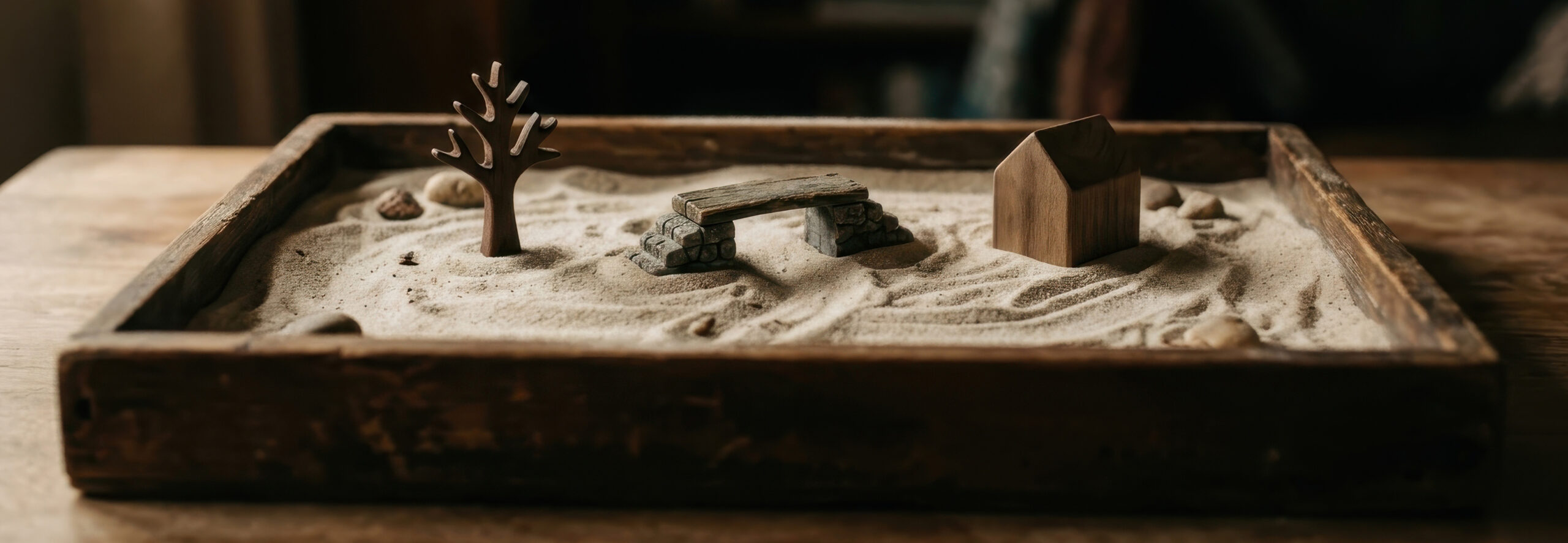
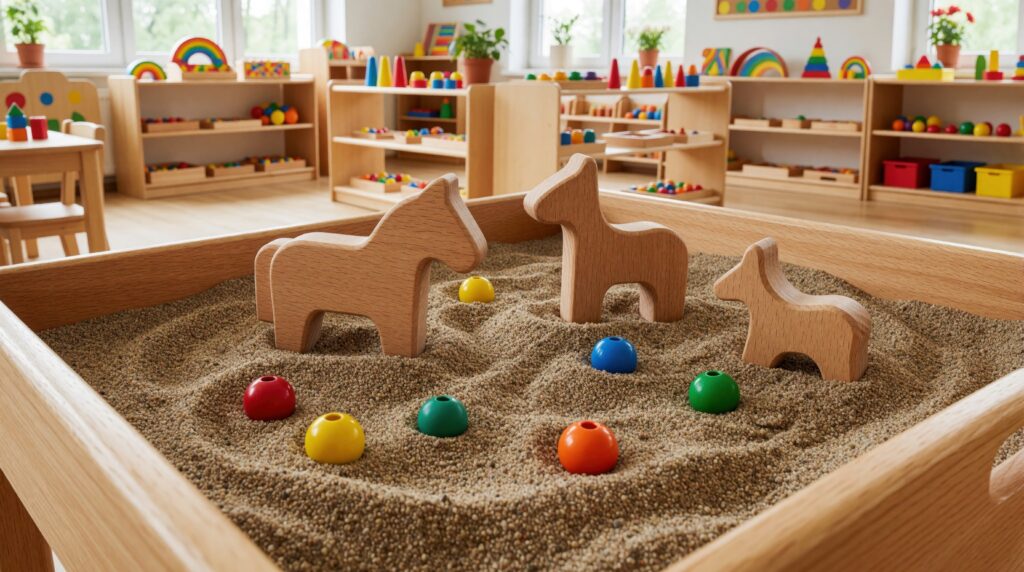
Children express that they want spiritual dialogue and content to involve creativity, play, and expression (Boynton & Mellan, 2021; Thomas, 2023), which serve as an internal and external means of making sense of the world, life, existence, and beyond, while also offering a transformative pathway to the sacred (Boynton & Vis, 2011; Robinson et al., 2025). Play and creative expressive therapies offer a means of existential expression, particularly when language is lacking or experiences are difficult to talk about (Edgar-Bailey & Kress, 2010; Fach, 2023). Expressions of spirituality can be facilitated through play, art, drama, music, sand tray, storytelling, and even humor. In addition, writing, poetry, music, dance, and journaling are ways to provide emotional safety when retelling the experience. By providing play materials that help explore and honor personal beliefs and experiences, the therapist communicates that they are willing to listen to and honor where the child is at. Creating a holding space for the child’s imaginary worlds, experiences, and reflections without judgment lets the child know that the therapist can enter their world, listen, and validate their concerns (Boynton & Margolin, 2025).
Expressions of spirituality can be facilitated through play, art, drama, music, sand tray, storytelling, and even humor.
Creating an Inviting Space for the Sacred
It is important for therapists to understand the spiritual dimension of children and to integrate this understanding into practice (Roxburgh & Evenden, 2016). Boynton and Mellan (2021) stress eight areas pertinent to working with children with trauma, grief, and loss: conceptualizing spirituality, accepting children as spiritual beings, opening one’s heart to sacred relationships, recognizing the importance of spirituality following trauma, grief and loss, creating safe spaces for spirituality to emerge, honoring spiritual emergence and sacred creative expression, facilitating spiritual coping and growth, and expecting the unexpected.
Play Materials in the Playroom
To facilitate children’s play and sharing of spiritual and exceptional experiences, therapists are strongly encouraged to consider including the following items in the playroom.
Puppets
Puppets enable both verbal and non-verbal expression of experiences and the enactment of scenarios. The puppets should include aggressive and tame animals (e.g., lions, alligators, dragons, spiders, as well as lambs, cats, and dogs), as well as male and female puppets (including those from various occupations, such as firefighters and police officers, nurses, and doctors). But the therapist should also include puppets such as angels with halos, devils, ghostly figures, wizards with magic wands, witches, and fairies that can help invite and elicit play around spirituality and experiences.
Miniatures
Miniatures for use in sand tray work, as well as general play, should include items that tap into spirituality. These would include coffins, tombstones, skulls, skeletons, crosses, star of David, angels, devils, religious figures (from as many different religions and cultures as possible), fairies, magic wands, magic lamps, witches and wizards, totem poles and indigenous people and shamans, as well as including figures of Nuns, Priests, Buddhas, religious ceremonies (bar mitzvahs, marriages, communion, people praying), churches, mosques, temples, Day of the Dead boxes, etc. Many of these items can be found at party shops, play therapy conferences, and thrift and craft stores during Halloween.
How to Respond
It is important to be open and attuned to children’s creations that may signal deeper issues, such as death, the afterlife, spirits, ghosts, and exceptional experiences. For example, the child may bury items in the sand tray, add objects reminiscent of tombstones, and comment that there are “watchers.” Responding with “tell me more about the watchers” or “I wonder what the watchers are doing or what they see” can help the child know that you are a safe person willing to enter into their world and invite them to explore what they may be seeing or concerned about.
Therapists also need cultural humility when exploring the child’s spiritual life, which may differ greatly from their own. Children often ask, “What do you believe?” about the afterlife, spirits, etc. While remaining authentic and congruent as the therapist, beliefs can be shared, with the caveat that the goal is to understand the child’s and family’s beliefs nonjudgmentally. Replying with “I believe (or don’t believe) in an afterlife, but this may be very different from what other people believe, or what you or your family believe. Tell me more about what you think.” Or there may be questions that strongly conflict with beliefs, creating a dilemma about how to respond. Such as being asked, “I see ghosts. Do you believe in ghosts?” or “Have you ever had a dream come true?” The therapist might reply, “While I might not see or believe the same things that you do, I want to understand what it is that you have seen or experienced.” Or “Some people can see and experience things that others cannot. Tell me more about what you have seen or experienced.” It is important to be able to hear the child’s experience, acknowledging that it is real to them and allowing for further exploration, even if it goes counter to your own strong beliefs. Feeling heard and validated in a safe space, with a safe person, when others are not (who may be judgmental, teasing, or concerned about the child’s mental health) is extremely important in helping the child process their exceptional experiences.
Conclusion
A therapeutic approach that is open to and inviting of spirituality and exceptional experiences recognizes the child’s whole being and supports emotional, relational, and inner development through validation and support. This approach avoids pathologizing spiritual and exceptional experiences, rather valuing them as enriching and life-altering (Belz & Fach, 2015; Thomas, 2023). By being spiritually sensitive and attuned to our child clients, we can support and validate expressions of their spiritual selves and experiences, so they feel heard and affirmed.
Belz, M., & Fach, W. (2015). Exceptional experiences (ExE) in clinical psychology. In E. Carden, J. Palmer, & D. Marcusson-Clavertz (Eds.), Parapsychology: A handbook for the 21st century (pp. 364–379). McFarland.
Bhatia, J. K., & Vyas, M. (2023). Children’s spirituality: A literature review and conceptual Analysis. Indian Journal of Positive Psychology, 14(1), 53-57.
Boynton, H. M. (2016). Navigating in seclusion: The complicated terrain of children’s spirituality in trauma, grief and loss (Doctoral dissertation, University of Calgary). University of Calgary. https://prism.ucalgary.ca/bitstream/handle/11023/2997/ucalgary_2016_boynton_heather.pdf.
Boynton, H. M. & Mellan, C. (2021). Co-creating authentic sacred therapeutic space: A spiritually sensitive framework for counselling children. Religions, 12(54), 1-14.
Boynton, H. M., & Margolin, I. (2025). Becoming a spiritual influencer through the heart and soul of field practice. In J. L. Drolet & G. Charles (Eds.), Transforming the field education landscape: Student handbook on field education (pp. 211–240). LCR Publishing Services.
Boynton, H. M. & Vis, J. (2011). Meaning making, spirituality and creative expressive therapies: Pathways to posttraumatic growth in grief and loss for children. Counselling and Spirituality, 30, 137-159.
Edgar-Bailey, M. & Kress, V. E. (2010). Resolving child and adolescent traumatic grief: Creative techniques and interventions. Journal of Creativity in Mental Health, 5, 158-176.
Elam, J. (2013). An exploratory study of recalled childhood spiritually transformative Experiences among a specialized population. Journal of Near-Death Studies, 31(3), 161-178.
Fach, W. (2023). Research with the questionnaire on the Phenomenology of Exceptional Experiences: From PAgE-R to PExE-II. The Journal of Parapsychology, 87, 19–22.
Goodliff, G. (2013). Spirituality expressed in creative learning: Young children’s imagining play as space for mediating their spirituality. Early Child Development and Care, 183(8), 1054-1071.
Harris, K.I. (2014). Embracing make-believe play and theories of childhood: Understanding children’s spirituality and the spiritual essence of a young child. International Journal of Integrative Pediatrics and Environmental Medicine, 12-21.
Hart, T. (2004). The mystical child. Glimpsing the spiritual world of children. Encounter: Education for Meaning and Social Justice, 17(2), 38-48.
Mountain, V. (2016). Play therapy. Respecting the spirit of the child. International Journal of Children’s Spirituality, 21(3-4), 191-200.
Nelson, P. L., & Hart, T. (2004). A survey of recalled childhood spiritual and non-ordinary experiences: Age, rate, and psychological factors associated with their occurrence. International Journal of Children’s Spirituality, 9(3), 211–226. https://www.socsci.biz/resources/Nelson-Hart.pdf
Richardson, H. R. L. (2015). More than just child’s play: Symbolic expressions of illness and spirit. International Journal of Children’s Spirituality, 20(2), 100-113.
Robinson, C., Hyde, B., Forlin, C., & Best, M. (2025). The experience and expression of spirituality in childhood: A systematic review and qualitative synthesis of the literature. Journal for the Study of Spirituality, 14(2), 1-16.
Roxburgh, E. C., & Evenden, R. E. (2016). ‘It’s about having exposure to this’: investigating the training needs of therapists in relation to the issue of anomalous experiences. British Journal of Guidance & Counselling, 44(5), 540-549.
Schaefer, C. E., & Drewes, A. A. (2014). The therapeutic powers of play: 20 core agents of change. Wiley.
Thomas, D. (2023). Children’s unexplained experiences in a post materialist world. John Hunt Publishing.


In this first of a double issue of Mindfield Bulletin on “Clinical Approaches for Exceptional Experiences in Children and Adolescents,” Gerhard Mayer contributes his 2026 Presidential Address, arguing that parapsychology is often unfairly labeled as pseudoscience and contends that the term should be reserved for scientific practices that intentionally obstruct or distort knowledge rather than …

by Gerhard Mayer, 2026 Presidential Address