by Christine Simmonds-Moore




by Christine Simmonds-Moore
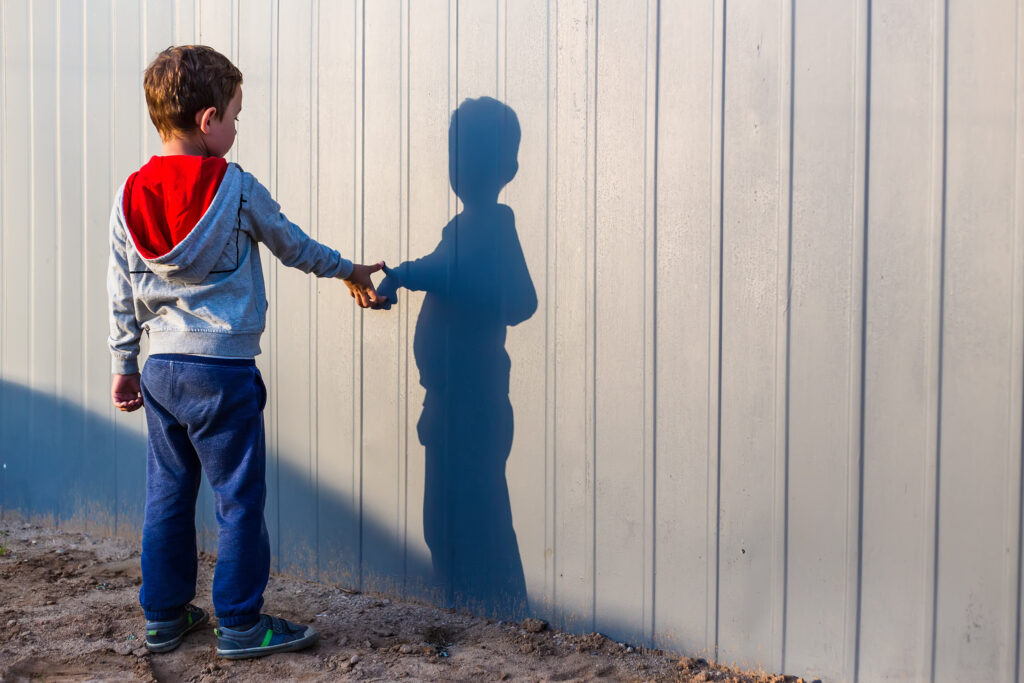
In surveys, interviews, and conversations with experiencers, people often note that they have experienced anomalous or exceptional experiences (AEs) since their childhood. They also express differences in the ways in which they were able to talk about these experiences, or that they were unable to talk about them, were frightened of them, or that they actively repressed them. Although research on AEs in children is somewhat sparse, there is recent renewed academic attention on childhood AEs (Thomas, 2022). There is also renewed public attention on AEs among autistic children, propagated by the popularity of The Telepathy Tapes podcast and the research that inspired it (Hennessy-Powell, 2015).
AEs are often associated with positive personal and social benefits for adults (Cardeña et al., 2017) and children (Thomas, 2022). Research among adult experiencers indicates two main groups. One includes people who are better adapted and who enjoy their AE, while people in a second group are more likely to experience their AE negatively and tend to experience them in the context of stress. Key differences (generally speaking) lie in how much AEs are normalized, the presence or absence of an organizing or explanatory framework, to what extent the experience feels expected versus unexpected, how much the experience feels under the control of the experiencer, whether the experience is passively observed rather than affecting the body, and being able to narrate and share experiences with others rather than feeling isolated. As stress interacts with AEs and their interpretation, learning mind-body strategies for relaxation can help to manage AEs. Other strategies for boundary setting can also be helpful in controlling and promoting healthy AEs (Simmonds-Moore, in press).
It is important to be informed regarding the correlates of childhood AEs and to recognize the signs that a child may be more likely to report AEs. Early support for these experiences is particularly important, given that social and cognitive factors play a key role in how they are interpreted and managed among adults prone to AEs (e.g., dos Santos-Silva et al., 2022). Thomas’s (2022) work indicates that younger children are very open to sharing their experiences in an unedited, accepting, and open manner, but this pattern reverses among older children and teenagers. If AEs are openly discussed, normalized, and frameworks are provided (including strategies for controlling experiences), children can grow up with a different sense of the anomalous. In this article, I will discuss my own childhood experiences, liminal states of consciousness, the attributes of those who are more likely to report AEs and suggest ways to empower children and provide information for parents, teachers, and caregivers to support children who experience the world more intensely.
There are several factors that contribute to a heightened tendency to experience AEs. States refer to experiencing alterations in one’s state of consciousness, while traits reflect individual differences in sensitivity, neural and cognitive plasticity, and strong mental imagery that underpin the transliminality variable (Lange et al., 2019). In addition, states, traits, and socio-cultural factors interact with one another in the recipe for different types of AE (Cardeña et al., 2017).
It is important to be informed regarding the correlates of childhood AEs and to recognize the signs that a child may be more likely to report AEs.
My Story
As a young child, I was terrified of the window. Throughout my childhood, I lived in a village where there were no street lights and my home was a bungalow (one-story home) where my window looked out into darkness. I had experiences where I felt that if I looked at the window, the “window spirit” might influence me and render me unable to move due to its powerful influence. This made me nervous about going to sleep, given the ominous nature of this experience. Later, as a PhD student with a big writing deadline, I had an intriguing presence experience that did not immediately stop when I “opened my eyes” (it did after 5 attempts). For a sustained period of time, I felt as though there were several beings behind me. I did not see them but clearly heard them jumping up and down behind me on my pillow, making vocal sounds. As I looked out into the room, I looked forward and experienced flashing lights. The entire experience felt quite real and sustained, which made me feel quite anxious. I was strongly helped by the fact that I was studying hypnagogia and other sleep states at the time and was aware that this strange experience would eventually stop (it did).
As an adult psychologist and parapsychologist, it has been very helpful to recognize my window experience as one that is also likely to be associated with sleep paralysis (Cheyne, 2002). It is commonly the case that (negative) presences are often tied to sleep-related states of consciousness, particularly when one is also experiencing stress. Children are also more likely to experience sleep anomalies. This and other AEs have been deeply influential on my appreciation for mystery and the exploration of ideas of a deeper reality.
My childhood sense of mystery was also influenced by regular vacations to my grandparents’ house in the West Country in England, which dated back to the 16th century downstairs and the 18th century upstairs. The house felt full of history and ominous feelings that contributed to my fascination with the idea of ghosts. Throughout childhood and adolescence, my mother and sister reported experiencing shared consciousness and talked about it in a calm and curious manner. We all read ghost stories and were fascinated by them. I read Roald Dahl’s Mathilda and was deeply intrigued by the idea that moving objects with the mind (or eyes in Mathilda’s case) might be possible. I later started collecting other books on AEs. As I entered 6th Form (16-18 years old) there was a group of fellow teens who started sharing ghost stories and talking about these topics in an open way. At college (University of Wales, Swansea), I leaned toward studying sleep, dreams, and liminal states, and did my third-year research project on the hypnagogic state. At the time, I was excited to discover that this state is richly tied to AEs. I discovered a section of the library on parapsychology, but the Journal of Parapsychology collection there stopped abruptly in the 1970s, so I concluded that the discipline too was no longer active. My later discovery of the continued legitimacy of parapsychology was an exciting and welcome discovery. I wish I had known that this was the case as a younger child.
It can really help people to know the facts about AEs, when they tend to occur and among whom. My family and friends’ support and open consideration of AEs regardless of their own belief systems has been a key factor in how I have approached them. I think that other childhood experiencers could be helped by easier access to facts about AEs, what circumstances are associated with them, how we can explain them, how we might control them, and that there are others out there who have experienced something similar.

Liminal States and AES
AEs are commonly reported in a range of altered states of consciousness (Cardeña, 2020). This includes the naturally occurring fluctuations in consciousness associated with sleep and sleepy states of consciousness. So-called liminal states are those which occur in-between states of consciousness such as “being awake” and “being asleep.” In fact, there are many commonly occurring liminal states that include waking up from a dream and having dream imagery and content available, falling asleep (hypnagogia), and waking up from sleep (hypnopompia). It is also possible to experience hypnagogia during the daytime with the eyes open. The strange experience of the false awakening occurs when one feels that they have already woken up and vividly experienced some of their day, only to eventually wake up and realize that these very real experiences were “just a dream” (Green, 1968).
Liminal states exhibit features from both the waking and dreaming mind and body. Sometimes, dreams and imagination may be more likely to be remembered as reality, and imagination and dreams may be experienced as occurring out in the physical world. Although many AEs can be explained “normally,” research supports a strong association between mild altered states and genuine psi phenomena, in particular extrasensory perception (Cardeña, 2020). Being told that AEs are common in this state can be very helpful as a normalizing strategy.
Of particular importance for this issue of Mindfield is that hypnagogic experiences are more common among children (and females) (Ghibellini & Meier, 2022). Another liminal state associated with AEs is sleep paralysis (SP), which is the experience of waking up while one is in REM sleep and feeling paralyzed, experiencing hallucinatory imagery and experiences pertaining to a (strongly negative) presence that are often experienced as pressing down on the body with a sense of malevolence. Fear of AEs may ultimately affect sleep schedules and daytime cognition, since sleep deprivation can be detrimental to many aspects of mind-body health (Soffer-Dudek & Shahar, 2009). SP tends to occur more commonly among (older) children and may peak in its occurrence among teenagers and young adults (Khan et al., 2024). In addition, it seems to be more likely among non-white communities, so young people in these groups may be more vulnerable to this type of experience (Farooq & Anjum, 2024). When talking to children about these experiences, it is important to be culturally sensitive given that SPs have different interpretations cross-culturally (Khan et al., 2024).
Research suggests that SP may occur more when one is sleep-deprived or has an irregular sleep pattern (Bhalerao et al., 2024), so trying to ensure good quality sleep and sleep hygiene may be some key factors in preventing this experience. Sleep paralysis is also strongly associated with stress, so managing stress by encouraging relaxation techniques may be helpful. Sleep paralysis is also more likely if one sleeps on their back (Cheyne, 2002), so telling a child to try a different sleep position may be helpful to prevent this experience. It may also help to ask the child to draw and describe the presence and what they think it might represent for them. They might then rip the drawing up as a symbolic way to eliminate the experience.
Liminal states exhibit features from both the waking and dreaming mind and body. Sometimes, dreams and imagination may be more likely to be remembered as reality, and imagination and dreams may be experienced as occurring out in the physical world.
Trauma, Stress, and Bereavement
Having a significant trauma in one’s childhood can predispose someone toward AEs in their childhood, adolescence, and adulthood. This does not mean that the AE is pathological, but rather that trauma could play a role in a looser cognitive style and tendency to dissociate (experience altered states), and this seems to relate to adult scoring on the personality measure of transliminality (Thalbourne et al., 2002). Regardless of prior trauma, stress can serve as a trigger for many AEs (Palsson, 2025). For example, it is a natural reaction to move out of one’s body in the face of danger. This might be something to ask a child about following a stressful or traumatic incident and to note how normal this experience is.
Sometimes dreamers may experience direct knowledge about negative experiences and life-death transitions of loved ones. It can be really disturbing for anyone to dream about something negative that then seems to come true. Here, it is important to let the child know that these experiences are common and that some people may be more sensitive to experiences of others and the future than other people.
AEs are also common following the death of a loved one. Thus, if a loved one dies, it is not unusual for children and adults to experience a range of “after death communications.” These range from more direct senses of presence, hugs, and other interactions with the deceased person to meaningful songs that can ease the grieving process if the child is encouraged to talk about it and the experience is normalized.
Personality
Children and adolescents who express traits associated with sensitivity or transliminality are much more likely to experience AE during the daytime and at night than are others (Lange et al., 2019). Those who are more likely to report AEs tend to display several features. These include a fluid thinking style, making more connections between thoughts and feelings, and syncretic perceptions and cognition. This is when concrete images and experiences are connected to other experiences. This includes objects being given personalities, numbers having genders (or having a preference for certain numbers), and synesthesia, where there is an additional concrete response to an inducing stimulus, like specific colors for letters of the alphabet. AEs are also associated with greater awareness of information and emotions from the body, from the unconscious mind, and the physical environment. These features suggest a greater overall level of sensitivity. In addition, there is greater fluidity in moving between states of consciousness and more hypnagogic experiences overall. There are also more hypnagogic experiences during the daytime and moments of wakefulness at night.
There are certain indicators that a child may be more likely to report AEs. This includes experiencing a lot of dreams or nightmares, sensitivity to lights and sounds and the weather, strong imagination, creativity, and reports of ghosts or other entities, imaginary friends, and other psychic experiences.
Many children report childhood imaginary friends, and this is often understood to be a healthy expression of creativity and the child’s growing understanding of the existence of other minds in the world (Pearson et al. 2025). So-called deep experiences involve characters that seem alive, and which are experienced as having an independent will. Deep experiences are more likely among people displaying greater transliminality (Drinkwater et al., 2024) and could be an indicator that the child is more likely to experience other AEs as well. As an example, the famous Irish medium, Eileen Garrett, reported having childhood imaginary friends, and as an adult was a well-studied medium and psychic whose work inspired the development of the Parapsychology Foundation (Garrett, 1949). Long-term mediums learn to schedule their voices and experiences (e.g., Roxburgh & Roe, 2013), and the same strategies might be taught to children who report a lot of AEs. This may include reminding them that they are ultimately in control of their own cognitive architecture and can decide when to experience AEs. Strategies to develop cognitive control and reduce automaticity of experiences might increase control of boundaries during the daytime and lucidity in dreams at night. This can include meditation, which has been related to better attention and impulse control (Sleimen-Malkoun et al., 2023). In addition, playing interactive video games seems to relate to increased lucidity at night (Gackenbach, 2009; Sesir et al., 2019).
Strong memory for dreams is another tendency associated with those who are more likely to experience AEs. It is a fun exercise to share dreams and talk about dream imagery with children so that they can get familiar with their own imagery and narrative. When dreams are more disturbing (as in the case of nightmares), it may be helpful to remind children that they are the author of their dreams and can alter the narrative via the development of lucidity, which relates to one’s daytime practices. For my children, the installation of a dream catcher or box to collect nightmares or negative dreams was also helpful–this may serve as a physical metaphor that helps children set up stronger boundaries between what they want to experience and what they want to keep away.
If the dream includes genuine psi information that is disturbing, it is important to remind the child that they did not cause the event that they are experiencing, but rather that they are sensitive to the future, information, or the experiences of others—like they have a wider net than others for this type of information.
Synesthesia tends to emerge among those with a genetic tendency around the age of 6 or when children are learning language and other sequence-based information. A lot of synesthesias relate to letters, numbers, days of the week, months of the year, etc., but others can occur with different combinations of senses and concepts. Synesthesias tend to run in families, so if a parent or grandparent reports colors for names (for example), it is more likely that a child may also experience the world like this. Synesthesia is not a sign of poor mental health, but rather a different way of experiencing the world. It is strongly connected to sensitivity, and when it co-occurs with autistic traits, there may be signs of superior memory and other exceptional abilities (see Simmonds-Moore, 2022). People do not always realize that others do not experience the world like this (it just is), but this is a trait that seems to be associated with some AEs as well as with creativity—a lot of traits associated with AEs co-occur in the same person.
Summary of Some Possible Strategies for Managing AEs among Children (and Adults)
Below, I summarize a few strategies that may be helpful for those who are more prone to liminal states and AEs.
Bhalerao, V., Gotarkar, S., Vishwakarma, D., & Kanchan, S. (2024). Recent insights into sleep paralysis: Mechanisms and management. Cureus, 16(7), e65413. https://doi.org/10.7759/cureus.65413
Cardeña, E. (2020). Derangement of the senses or alternate epistemological pathways? Altered consciousness and enhanced functioning. Psychology of Consciousness: Theory, Research, and Practice, 7(3), 242–261. https://doi.org/10.1037/cns0000175
Cheyne, J. A. (2002). Situational factors affecting sleep paralysis and associated hallucinations: Position and timing effects. Journal of Sleep Research, 11(2), 169–177. https://doi.org/10.1046/j.1365-2869.2002.00297.x
Drinkwater, K., Dagnall, N., Houran, J., Denovan, A., & O’Keeffe, C. (2022). Structural relationships among mental boundaries, childhood imaginary companions, creative experiences, and entity encounters. Psychological Reports, 127(6), 2717-2735. https://doi.org/10.1177/00332941221123235
Farooq, M., & Anjum, F. (2024). Sleep paralysis. In StatPearls. StatPearls Publishing. https://www.ncbi.nlm.nih.gov/books/NBK562322/
Gackenbach, J. (2009). Electronic media and lucid-control dreams: Morning after reports. Dreaming, 19(1), 1–6. https://doi.org/10.1037/a0013781
Garrett, E. J. (1949). Adventures in the supernormal: A personal memoir. Creative Age Press.
Ghibellini, R., & Meier, B. (2022). The hypnagogic state: A brief update. Journal of Sleep Research, 32(1), e13719. https://doi.org/10.1111/jsr.13719
Green, C. (1968). Lucid dreams. Hamish Hamilton.
Hennacy-Powell, D. (2015). Autistics, savants, and psi: A radical theory of mind. Edgescience, 23, 13-18.
Holt, N. J. (2018). Using the experience-sampling method to examine the psychological mechanisms by which participatory art improves wellbeing. Perspectives in Public Health, 138(1), 55-65. https://doi.org/10.1177/1757913917739041
dos Santos-Silva, A., da Silva, T. L., Serra, J. G., Alminhana, L. O., & Argimon, I. I. L. (2022). The impasse of anomalous experiences in mental health: Maturity, social support and identity as indicators of benign schizotypy in a Brazilian sample. International Journal of Latin American Religions, 6(2), 211–230. https://doi.org/10.1007/s41603-022-00182-6
Lange R., Houran J., Evans J., & Lynn S. J. (2019). A review and reevaluation of the revised transliminality scale. Psychology of Consciousness: Theory, Research, and Practice, 6, 67–89. https://doi.org/10.1037/cns0000153
Mohr, C., & Claridge, G. (2015). Schizotypy—Do not worry, it is not all worrisome. Schizophrenia Bulletin, 41(Suppl. 2), S436–S443. https://doi.org/10.1093/schbul/sbu185
Palsson, O. S. (2025). Anomalous experiences are associated with high subconscious connectedness. Psychology of Consciousness: Theory, Research, and Practice, 12(3), 430–451. https://doi.org/10.1037/cns0000428
Pearson, D., Rouse, H., Doswell, S., Ainsworth, C., Dawson, O., Simms, K., Edwards, L., & Faulconbridge, J. (2001). Prevalence of imaginary companions in a normal child population. Child: Care, Health and Development, 27(1), 13–22. https://doi.org/10.1046/j.1365-2214.2001.00167.x
Roxburgh, E. C., & Roe, C. A. (2013). “Say from whence you owe this strange intelligence”: Investigating explanatory systems of spiritualist mental mediumship using interpretive phenomenological analysis. International Journal of Transpersonal Studies, 32(1), 27–42.
Sestir, M., Tai, M., & Peszka, J. (2019). Relationships between video game play factors and frequency of lucid and control dreaming experiences. Dreaming, 29(2), 127–143. https://doi.org/10.1037/drm0000102
Simmonds-Moore, C. (in press). Anomalous experiences and mental health. In A. Rock, H. Friedman, E. Ouellet, & S. Krippner (Eds.), Advances in parapsychological research (Vol. 11). McFarland.
Simmonds-Moore, C. (2022). Synesthesia and the perception of unseen realities. Journal of Humanistic Psychology, 62(2), 187–207. https://doi.org/10.1177/0022167820918691
Sleimen-Malkoun, R., Devillers-Réolon, L., & Temprado, J.-J. (2023). A single session of mindfulness meditation may acutely enhance cognitive performance regardless of meditation experience. PLOS ONE, 18(3), Article e0282188. https://doi.org/10.1371/journal.pone.0282188
Soffer-Dudek, N., & Shahar, G. (2009). What are sleep-related experiences? Associations with transliminality, psychological distress, and life stress. Consciousness and Cognition: An International Journal, 18(4), 891–904. https://doi.org/10.1016/j.concog.2008.07.007
Thalbourne, M. A., Houran, J., & Crawley, S. E. (2003). Childhood trauma as a possible antecedent of transliminality. Psychological Reports, 93(3), 687–694. https://doi.org/10.2466/pr0.2003.93.3.687
Thomas D. (2022). A participatory research study to explore the healing potential of children’s anomalous experiences. EXPLORE, 18(5), 551–558. https://doi.org/10.1016/j.explore.2021.08.012

In this first of a double issue of Mindfield Bulletin on “Clinical Approaches for Exceptional Experiences in Children and Adolescents,” Gerhard Mayer contributes his 2026 Presidential Address, arguing that parapsychology is often unfairly labeled as pseudoscience and contends that the term should be reserved for scientific practices that intentionally obstruct or distort knowledge rather than …

by Gerhard Mayer, 2026 Presidential Address