by Alex A. Álvarez




by Alex A. Álvarez
The attraction to psi in popular culture appears to have intensified in the last few years, although it can be traced back to science fiction—or, as Damien Broderick (2019) has proposed, psience fiction—works dating many decades. It is also evident in the pulps and in many classical comic books written from the early 20th century onward (Kripal, 2011). More recently, many of yesterday’s heroes have been brought to the big screen in superhero films and television series, mainly those of the Marvel Cinematic Universe. At the same time, psi-related themes have gained visibility in highly popular shows such as Netflix’s Stranger Things, Wednesday, and The OA.
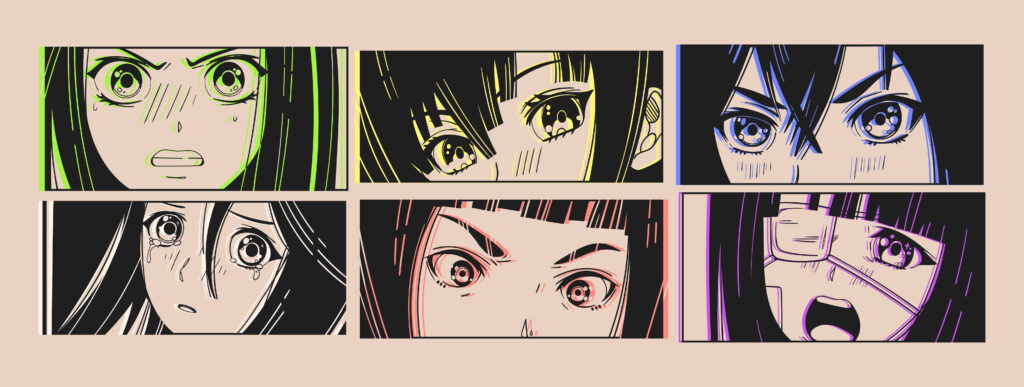
In recent years, several studies have examined the influence of classical psychical research on popular culture, with Jeffrey Kripal’s Mutants & Mystics (2011) perhaps the most influential contribution. However, one genre has remained largely overlooked in this line of inquiry: anime, a form of Japanese animation whose fandom has grown massively over the last few decades in the United States and worldwide (Horbinski, 2019).
To date, no clear explanation has been offered for anime’s exclusion from analyses of psi in popular culture. One possibility is the longstanding stigmatization of the genre (Chambers, 2012) and even of its fandom (Reysen et al., 2016), though a thorough examination of this issue lies beyond the scope of the present discussion. Instead, here I will focus on how parapsychological themes are represented in selected anime. While all major sub-branches of parapsychology—extra-sensory perception (ESP), psychokinesis (PK), and the survival hypothesis—have appeared across numerous series over the years, I examine three recent and critically acclaimed shows, each centered on one of these principal domains.
However, one genre has remained largely overlooked in this line of inquiry: anime, a form of Japanese animation whose fandom has grown massively over the last few decades...
Spy X Family: Telepathy in a Shadow War
Pronounced “Spy Family” (the x is silent), the series unfolds against a conflict between two rival nations, Westalis and Ostania—an evident echo of the Cold War. The story follows Loid Forger (a.k.a. Twilight), a Westalian spy tasked with infiltrating the Ostanian elite to preserve peace between both countries. To avoid suspicion, he must create a family; he marries Yor Briar (a.k.a. Thorn Princess), who secretly works as an assassin for an Ostanian organization pursuing the same geopolitical balance, and adopts a young girl named Anya, who possesses telepathic abilities.
As the plot develops, we learn that Anya acquired her abilities through a secret governmental program, a past she conceals out of fear of being abandoned or returned to the laboratory. For those familiar with parapsychology, parallels with the STARGATE Project—a U.S. government initiative during the Cold War aimed at developing “psychic spies” to gain an advantage over the USSR (Jacobsen, 2017)—are difficult to ignore.
What distinguishes this series is the way psi is portrayed. Unlike many narratives in which telepathy is fully volitional, little Anya lacks complete control over her ability. At times she uses it intentionally—within limits—but it often manifests spontaneously, particularly in emotionally charged situations, such as protecting her parents’ secret identities or during the hijacking of a school bus in which she and her classmates are taken hostage. Her telepathy also leads her to meet Bond, a precognitive dog (who later gets adopted by the Forgers) and former subject of another military experiment designed to create super-animals. Like Anya’s telepathy, Bond’s precognition tends to emerge in life-or-death contexts and includes a spontaneous component. Notably, many of his visions are not fixed outcomes; they can be altered when Anya becomes aware of them by reading his mind. Besides being precognitive, Bond is a normal dog after all, which means he cannot share his visions directly with humans.
The depiction of ESP in Spy x Family aligns with a model of psi as largely non-volitional and unconscious, emerging under conditions analogous to the fight-or-flight response. Attention to this kind of “natural history” of psi—that is, the circumstances under which it appears—has contributed to renewed discussions about its possible evolutionary roots, a topic addressed extensively in recent years (e.g., Sheldrake, 2015; Álvarez, 2026).

Mob Psycho 100: When Emotion Becomes Force
Setting ESP aside, we now enter the realm of PK (or, more specifically, recurrent spontaneous PK, or RSPK). The story centers on Shigeo Kageyama (Mob), a shy and introverted 14-year-old boy who, besides dealing with ordinary middle school struggles—poor grades, difficulty expressing his feelings to the girl he likes, among others—happens to be one of the most powerful psychics in the world. Fully aware of his immense abilities, and likely because of his personality, he is almost always afraid to use them. After a traumatic childhood incident involving the unleashing of his powers, in which he injured his younger brother Ritsu (who later experiences his own psychic awakening), Mob resolved to suppress not only his powers but also his emotions—clearly linked to their release. Seeking guidance, he later becomes the disciple of Arataka Reigen, a charismatic scammer who claims to be the “world’s greatest psychic” despite possessing no psychic ability whatsoever.
Mob’s powers are, of course, far more spectacular than those documented in real-life cases of outstanding psychics. Nevertheless, he fits the typical RSPK profile identified in the analysis of hundreds of cases: usually teenagers (more commonly girls) undergoing psychological turmoil, displaying introverted traits, insecurity, or difficulty expressing emotions (Dullin, 2024; Williams, 2019). What makes the series particularly compelling is the context in which his abilities manifest. Although Mob can use his powers voluntarily, they intensify dramatically when he reaches the “100% threshold,” represented as a meter that rises from 0 to 100 as emotions such as anger, sadness, shame, or even ecstasy build. This narrative device echoes reports from numerous RSPK cases, in which phenomena tend to occur during periods of intense emotional distress that the agent struggles to manage (Rogo, 1986; Roll, 2007). Beyond this, Mob occasionally enters an “ultimate state”—known as ???%—triggered when he loses consciousness under extreme stress, during which the most extraordinary phenomena unfold. Though dramatized, this pattern closely resembles descriptions of RSPK as an “exhaust valve” through which suppressed emotions are discharged, often without the agent’s awareness (Clarkson, 2011).
Within the Mob Psycho universe, genuine psychics—called “espers,” a term clearly alluding to ESP and coined by Alfred Bester, one of the pioneers of psience fiction—are rare, perhaps as rare as in real life. Most possess latent, innate abilities that can be refined through training once awakened. At one point, Mob and his friends encounter a group of newly awakened teenagers training at what resembles a parapsychology laboratory—the Awakening Lab—complete with spoons and Ganzfeld-like cards. This detail raises a question sometimes overlooked in parapsychology: are psychic abilities innate, or can they be learned? As of today, there is no definitive answer. What appears somewhat clear is that such abilities seem to follow a normal distribution (Radin, 2018); however, whether they are present from birth (as portrayed in Mob Psycho) or can be developed later in life following events such as near-death experiences, UFO encounters, training, or even lightning strikes (Álvarez, 2021) remains unresolved.
This detail raises a question sometimes overlooked in parapsychology: are psychic abilities innate, or can they be learned?
Anohana: The Flower That Returned to Heal
There is perhaps no anime more closely aligned with over a century of literature on after-death communications (ADCs) than Anohana: The Flower We Saw That Day. The story follows six friends—who once called themselves the Super Peace Busters—during their teenage years, five years after the tragic death of one of their members, Meiko (“Menma”) Honma, at age ten. For reasons unknown, Menma suddenly reappears one summer day to Jinta (“Jintan”) Yadomi, arguably her closest friend and childhood love interest. He alone can see her, yet rather than reacting with fear, he initially assumes that her presence is a projection of his own stress and unresolved trauma—especially his guilt over her accidental drowning, for which he blames himself. Compounding this burden, he has also recently lost his mother.
At first, neither Jintan nor Menma understands why she has returned. The possibility soon emerges that her appearance may be tied to the fulfillment of an ungranted wish—though neither knows what that wish might be. When the other members of the group learn of Menma’s supposed return, they react with disbelief and anger, interpreting Jintan’s claims as a painful fabrication that dishonors her memory.
As the narrative unfolds, it becomes clear that Jintan is not alone in carrying unresolved guilt. Each of the former Super Peace Busters harbors regrets related to Menma’s death, and all have remained emotionally stuck in that moment. This culminates in one of the most powerful scenes of the series: an emotionally charged confrontation in which each friend confesses their own sense of responsibility. Following this catharsis, they unite in an effort to fulfill Menma’s wish so that she may finally move on and go to Heaven.
I am not exaggerating when I say that this series is a masterpiece in the sense that it depicts so perfectly the psychology of grief. Equally remarkable is the way ADCs are represented. Certainly, many of them do not seem particularly extraordinary, but that’s precisely the point: most ADCs that occur in real life aren’t either. Throughout the show, although only Jintan can see and speak directly to Menma, the others gradually begin to feel her presence, for example, by perceiving her smell or feeling a push or jolt out of nowhere the moment she hugs them—something that has been widely documented, especially in widows and widowers (Rees, 1971). At other moments, they observe the movement of small objects as she interacts with them, or the flickering of lights, both commonly reported in ADC accounts (Guggenheim & Guggenheim, 1995; Wright, 1998). At one point, one member of the group receives a phone call that she believes could have only come from Menma, and then she reveals that the only thing that she could hear was static—a detail that resonates strongly with cases of anomalous phone calls attributed to the deceased (Rogo & Bayless, 1979).
Perhaps most compelling is the transformation that follows. As the characters move from guilt and emotional paralysis toward acceptance and reconciliation, the series mirrors findings from clinical parapsychology suggesting that such anomalous experiences can facilitate healing and meaning-making during bereavement (Cooper et al., 2015). In this sense, Anohana not only dramatizes the survival of personality after bodily death but also illustrates the psychological function that ADCs may serve in the process of recovery.
Conclusion
One possible factor behind the prevalence of parapsychological themes in anime may lie in broader cultural attitudes toward the anomalous within Japanese society. Scholars have noted that contemporary forms of spirituality in Japan often remain continuous with long-standing traditions that emphasize reverence for ancestors and the persistence of invisible presences in everyday life (Yamanaka, 2021). At the same time, historical analyses of Japanese media show that interest in paranormal topics has periodically entered mainstream entertainment, particularly during the late twentieth century, when television and popular culture openly explored psychic phenomena and alternative ways of understanding reality (Johnson, 2024). While such observations do not in themselves explain the prominence of psi in anime, they suggest that these narratives emerge within a cultural environment in which ideas about hidden dimensions of mind and existence may be received with less skepticism than in many Western contexts.
Across the three examples discussed here, another pattern becomes evident: parapsychological phenomena are not depicted as pathological, fraudulent, or inherently threatening. Instead, they are woven into the characters’ emotional lives, relationships, and moral development. In Spy x Family, telepathy and precognition are portrayed as part of the fabric of everyday experience; psychokinesis in Mob Psycho 100 emerges as an expression of inner conflict and growth; and in Anohana, post-mortem presence functions less as a supernatural anomaly than as a catalyst for reconciliation and healing. Seen together, these examples suggest that psi is not framed as something pathological or anomalous, but as a meaningful part of human experience.
If broader acceptance of psi ever emerges, its origins may not lie primarily in academic institutions but in shifts within the cultural imagination. Scientific paradigms tend to change slowly, yet cultural narratives often move ahead of them. As I have argued previously (Álvarez, 2024, pp. 150-151), transformations in collective attitudes toward anomalous experience are likely to precede shifts in formal research agendas rather than follow them. Anime, once regarded as a niche genre, now reaches global audiences across generations, increasingly shaping how themes such as telepathy, survival, and expanded consciousness are imagined and discussed. In that sense, these stories may do more than simply reflect cultural change; they may help produce it. As such representations become more familiar and less stigmatized, they could gradually influence what future researchers consider plausible, meaningful, or worthy of investigation. In this light, anime’s growing cultural influence may already be reshaping how psi is viewed—long before conventional academia is ready to follow.
Álvarez, A. (2021). The roads to supernormality: A biological perspective. Journal of Parapsychology, 86(1), 22-23.
Álvarez, A. A. (Ed.). (2024). Apuntes sobre la consciencia y los fenómenos psi. Lunaria Ediciones.
Álvarez, A. A. (2026). Towards a natural history of psi: An evolutionary proposal based on consilience of inductions. Journal of Scientific Exploration, 40(1), 124-148. https://doi.org/10.31275/20263647
Broderick, D. (2018). Psience fiction: The paranormal in science fiction literature. McFarland & Co.
Chambers, S. (2012). Anime: From cult following to pop culture phenomenon. Elon Journal of Undergraduate Research in Communications, 3(2). http://www.inquiriesjournal.com/a?id=836
Clarkson, M. (2011). The poltergeist phenomenon: An in-depth investigation into floating beds, smashing glass, and other unexplained disturbances. New Page Books.
Cooper, C. E., Roe, C. A., & Mitchell, G. (2015). Anomalous experiences and the bereavement process. In T. Cattoi & C. Moreman (Eds.), Death, dying and mysticism: The ecstasy of the end (pp. 117–131). Palgrave Macmillan.
Dullin, E. (2024). A detailed phenomenology of poltergeist events. Journal of Scientific Exploration, 38(3), 427–460. https://doi.org/10.31275/20243263
Guggenheim, B., & Guggenheim, J. (1995). Hello from Heaven! Bantam Books.
Horbinski, A. (2019). What you watch is what you are? Early anime and manga fandom in the United States. Mechademia, 12(1), 11-30.
Jacobsen, A. (2017). Phenomena: The secret history of the U.S. Government’s investigations into extrasensory perception and psychokinesis. Back Bay Books.
Johnson, D. (2024). Psychic TV: The paranormal as popular culture in Japanese television of the 1990s. Television & New Media, 26(3), 283-299. https://doi.org/10.1177/15274764241246988
Kripal, J. J. (2011). Mutants and mystics: Science fiction, superhero comics, and the paranormal. The University of Chicago Press.
Radin, D. (2018). Real magic: Ancient wisdom, modern science, and a guide to the secret power of the universe. Harmony Books.
Rees, D. W. (1971). The hallucinations of widowhood. British Medical Journal, 4(5778), 37–41. https://doi.org/10.1136/bmj.4.5778.37
Reysen, S., Plante, C. N., Roberts, S. E., Gerbasi, K. C., Mohebpour, I., & Gamboa, A. (2016). Pale and geeky: Prevailing stereotypes of anime fans. The Phoenix Papers, 2(1), 78-103.
Rogo, D. S. (1986). On the track of the poltergeist. Prentice-Hall, Inc.
Rogo, D. S., & Bayless, R. (1979). Phone calls from the dead. Prentice-Hall.
Roll, W. G. (2007). Psychological and neuropsychological aspects of RSPK. In J. Palmer (Ed.), Proceedings of Presented Papers: The Parapsychological Association 50th Annual Convention (pp. 114–130). Parapsychological Association.
Sheldrake, R. (2015). Psi in everyday life: Nonhuman and human. In E. Cardeña, J. Palmer, & D. Marcusson-Clavertz (Eds.), Parapsychology: A handbook for the 21st century (pp. 350–363). McFarland & Co.
Williams, B. (2019). Psychological aspects of poltergeist cases. Psi Encyclopedia. The Society for Psychical Research. https://psi-encyclopedia.spr.ac.uk/articles/psychological-aspects-poltergeist-cases/
Wright, S. H. (1998). Experiences of spontaneous psychokinesis after bereavement. Journal of the Society for Psychical Research, 62, 385–395.
Yamanaka, H. (2021). Religious change in modern Japanese society: Established religions and spirituality. Japanese Journal of Religious Studies, 48(2), 365-382.


In this issue of Mindfield, the contributors examine the theme of “Mapping the Unseen: Psi, Media, and the Cultural Imagination.” The editorial by Jacob W. Glazier, Anastasia Wasko, and David S. B. Mitchell examines how fictional narratives can create the cultural space in which new scientific ideas and research agendas emerge. In his Presidential Column, …

by Carl Lorenz Cervantes