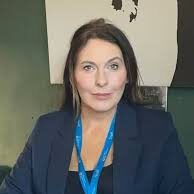
Dr. Donna Thomas is a research fellow in Consciousness & Experience Studies and a co-director of the ICreateS International Research Unit at the University of Lancashire. Donna was recently awarded Perrot Warrick Senior Researcher, administered through Trinity College, Cambridge University. Donna has researched with children, young people, and communities for over twenty years. Recent research areas Donna investigates are exploring consciousness through qualitative research, the nature of self and subjectivity, and children’s extra sensory experiences. Donna has published academic articles on these areas, published two books, received invitations for press comments, and regularly appears on podcasts to discuss her research.
Kate Adams
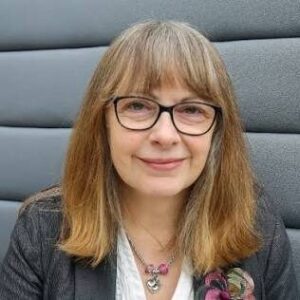
Professor Kate Adams is a professor of education at Leeds Trinity University, UK and a co-director of the ICreateS International Research Unit. She has over 30 years of experience in education, initially as a primary school teacher, before moving into academia. Her research focuses on children’s spirituality, with a particular interest in childhood experiences that are perceived as real but often dismissed by others as "just imagination." She has published extensively for almost three decades, including research papers, professional articles, and books such as "Unseen Worlds: Looking Through the Lens of Childhood."
In this first of a double issue of Mindfield Bulletin on “Clinical Approaches for Exceptional Experiences in Children and Adolescents,” Gerhard Mayer contributes his 2026 Presidential Address, arguing that parapsychology is often unfairly labeled as pseudoscience and contends that the term should be reserved for scientific practices that intentionally obstruct or distort knowledge rather than …