by Jorge Villanueva



by Jorge Villanueva
In 1973, I was a young parapsychologist who became interested in the field after seeing the film The Exorcist (Blatty, 1971; Friedkin, 1973; Mull, 2023). Many other parapsychologists also became interested in the field through other films in the 1970s and 1980s, including Ghostbusters (Reitman, 1984), which showed ESP card tests for the first time! In fact, even before cinema, the genre of “fantastic literature” turned out to exert a similar fascination among many of the pioneers of old psychic research (see Owen, 2007; Smajić, 2019; Quereilhac, 2020). In fact, cinema can be a great trigger in the vocation for parapsychology in a similar way to how the film Close Encounters of the Third Kind (Spielberg, 1977) was inspiring for many modern ufologists. UFOs (or UAPs), paranormal and/or anomalous phenomena (mainly haunting, poltergeists, ghosts, mediums, psychic detectives, and premonitions) have been of interest to writers and novelists such as Stephen King (many of whose books were inspired by parapsychological experiences and phenomena). In various ways, Hollywood producers “feedback” the interest of adolescents and young people who then encourage the study of parapsychology and also create, in turn, new generations of film directors such as M. Night Shyamalan (1999) and his film Sixth Sense.
The link between cinema and psychic phenomena helps us understand the role of the body and mind (Ruffles, 2004). In fact, the history of recording and communication devices is a relevant axis to put cinema and Spiritualism in dialogue as two typical products of industrial modernity because both highlight the presence of “cinema-spirit” and the “spectator-telepath” that give access to the world of the invisible (Kovacs, 2005; Peeren, 2014). In this way, it is possible to highlight the figure of the “cinema-mediumship,” that viewers conceptualized as a “vision device.” For example, mediums can create and project images (and sounds) through various media. Likewise, cinema has been seen since its origins seen as a ghost-machine; the medium is presented as a device whose action is reminiscent of the media and the means of recording and transmitting messages (sound, verbal, visual) due, to a large extent, to the cultural context in which supernatural qualities are attributed to technology and mechanical properties of the human body. Spiritualism and the reception of cinema are thus based on a common imaginary that underlines the mystical power of the media and the body-machine, both impregnated with fields of invisible forces (electric, odic, etheric, etc.) (Connor, 1999; Christie, 2018).
Spiritualism and the reception of cinema are thus based on a common imaginary that underlines the mystical power of the media and the body-machine.
During the second half of the 19th century, such parallelism participated in an enterprise of “scientization” of the paranormal; for example, telegraphy, telephony, X-rays, as well as electricity and magnetism, provided Spiritualists with arguments to consolidate his ideas about the functioning of telepathy, the transmission of thoughts or communication with spirits. In fact, since the 16th century, there was a tendency to grant supernatural powers to vision devices (the “magic lantern,” the telescope, the microscope, the spyglass, the mirrors) even if their operation is explainable in technical terms (Andriopoulos, 2008; Berton, 2011). Particularly, cinema, which combines lights and magnifying glasses, can be the subject of magical interpretation (so-called “the magic of cinema,” cf. Butler, 2009), exemplified in that it is possible to “resurrect” the dead when we watch videos of our deceased loved ones. This tendency to attribute an esoteric dimension to cinema goes beyond the mediums themselves.
Perhaps this is the reason why Spiritualism and the media share a common vocabulary, especially when it comes to comparing the medium with the telegraph, radio, TV, and now the internet. The operation that consists of sending immaterial data over long distances instead of postal mail updates the analogy between communication systems and mediums, especially because mediumistic communication is seen as a transmission. Indeed, Allan Kardec – the founder of French Spiritualism – maintained that: “The universal fluid establishes a constant communication between [spirits]; [the fluid] is the vehicle for the transmission of thought, as for you the air is the vehicle for sound; a kind of universal telegraph that connects all worlds and allows minds to communicate from one world to another” (cf. Blanco & Peeren, 2010, 2013).
This declaration of a “spiritual telegraph,” more than a descriptive metaphor, is an expression that becomes current in Spiritualist writings (Sconce, 2000); the word medium is a Latinism that was never translated into other languages, making it universal in use. The cultural history of the ghostly, known as “Spectralities Studies” (Callard, 2019; Christie, 2018; Leeder, 2015; Pilar & Peeren, 2010, 2013), is the way in which the study of ghosts and apparitions can be conjured up as compelling analytical tools in human and social sciences based on analysis that exploits the polysemy of the term “medium” and the tensions between the material and the immaterial.
The aim of this brief analysis will focus on American and Argentine films whose topics were mediumship/ghosts and terror/paranormal and why they are relevant to the relationship between cinema and the paranormal. I will briefly analyze here cinema productions that present this postmodern idea of the spirit world that, to a large extent, shapes our own idiosyncrasy in the interaction between the spirit and the medium. Films mentioned here represent friendly ways of proposing the medium as an interlocutionary ally with the world of spirits instead of an alienated person worthy of preservation in an asylum for the deranged, as has happened over the last decades with other films on Western mediumship. This analysis will help us understand how the figure of the medium has contributed to shaping some of our own beliefs and hopes about the afterlife in our own modern inter-century period.
American and English-Speaking Movies
In the film Ghost (Zuker, 1990), Sam (Patrick Swayze), a banking and investment executive, and Molly (Demi Moore), a ceramic sculptor, are a happy couple living together in New York City. One night, leaving a theater, they are both attacked by a thief. Because of the struggle, the gun goes off, killing Sam, who realizes that he has become a ghost trapped between worlds. The moments where a “focus of light” comes down to look for him from above gives full proof that he is no longer alive and must continue on the mundane plane with a “hidden destiny” that will be revealed at the end, doing justice for the pecuniary cause of his own death.
During his process of adaptation to the ghostly situation, Sam will try not only to heal his situation but will also learn the meaning of the role of the “dark ones” and the “good ones” who take the soul of the dying person, how and why ghosts can see each other, and how it is possible to physically influence the world of the living thanks to the advice of a wandering soul (Vincent Schiavelli in the New York subway) who must pay, with patience and suffering, for his immaterial status quo. At the same time, Sam accidentally meets Oda Mae Brown (Whoopi Goldberg), a rogue and phony medium who, ironically, Sam met when he criticizes his fraudulent business out loud. Right there, Oda also discovers that she has the gift of hearing the voices of the dead through maternal inheritance. So, he becomes her private fortune teller after convincing her to help Molly, who is in danger. The hilarious role of the medium in alliance with Sam’s ghost forms a duo that learns to coexist with each other.
Ghost rescues the arguments of Kardecist Spiritualism that believes that spirits remain on this plane in an initial “state of confusion,” especially if death occurs unexpectedly, which makes them wanderers searching for their purpose and their pending goals; in contrast to those who die after a terminal process and end up accepting the end of their existence (Berton, 2011; Ruffles, 2004). The spirit’s learning process allows it to play with its immateriality (pass through solid objects or be “passed through” by the living) partly thanks to other spirit-colleagues who establish contact with Molly, but not without several comedic communicative dilemmas (highlighted by Goldberg’s brilliant performance).
In the film Sixth Sense (Shyamalan, 1999), Malcolm Crowe (Bruce Willis) is a psychologist awarded by the city of Philadelphia for his successful career as a child therapist. That same night, unexpectedly, an unbalanced young man enters his house. Crowe tries to calm him down, but it’s no use. Vincent Gray, his former patient, shoots him and then commits suicide in front of him. Some time later, Crowe visits a boy named Cole Sear (Haley Joel Osment), the son of divorced parents who lives somewhat isolated and suffers from acute anxiety. His schoolmates treat him like a “freak.” He has no friends, and his mother must pay a schoolmate to grant him a false friendship.
The boy hides a secret that he has not confessed to anyone: “I see dead people” – he says timidly but emphatically. Crowe almost drops the case, but his diagnosis is accurate: Cole suffers from hallucinations and requires hospitalization. However, the psychologist thinks there is something more. He knows this will not be the help Cole needs. The boy wants to stop being afraid and asks for his help, demanding that the ghosts leave. He even fears that his terrible secret will threaten the relationship between him and his mother. Crowe advises the child to establish contact with the ghosts instead of feeling afraid, waiting for “them” to say on their own what they are looking for from the child because he has the gift of perceiving this spiritual dimension. The solution soon appears, and Cole manages to regain his self-esteem. Thus, he reestablishes contact with his peers and with his mother, to whom he confesses his fearful reality. The end of the film produces a twist so unexpected that it surprises the viewer.
Sixth Sense is a genuine collection of paranormal phenomena; for example, all the moments where the child “sees the dead” represent apparitional experiences. Cole also practices automatic writing and xenographies that their voices dictate: “De profundis clamo et domine” (From the depths I call you!) where the boy has never read Latin or heard anything in that language or the girl who solves her own crime by delivering the videotape to his father to bring justice against his murderous mother. At school, Cole tells his teacher that the school building was not a court of law, as is believed, but rather a place where prisoners were hanged in the 16th century.
The diagnosis of the child – frightened by experiences that he cannot understand – is lapidary. With certainty, this seems to be the closure of one more clinical case among thousands of similar ones. But, as it turns out, mental health professionals have no answer for these experiences, and, consequently, most therapists can only persuade their patient that these are fantasies or refer them to a psychiatrist to “reduce” their hallucinations: “These themes generate a lot of intrigue in the public, when people begin to wonder about life after death” – explained its director, M. Night Shyamalan, who responded to the causes of the film’s success. “But I also think that there are four or five things combined that make the film worth seeing: it is entertaining, surprising, emotional, intelligent and leaves you thinking when you return home… I think that flavor of originality is what, in any genre, it’s always going to cause a reaction” (Bamberger, 2006).
Productions like Sixth Sense represent ghosts that ignore each other – living and dead – placing children as protagonists. If there is a disenchantment with what is disturbing, it is above all from the side of psychological horror and its realistic ghosts because the film begins the trend of a formula that attracts producers to the possibilities offered by skillfully playing with the public’s expectations and democratizing the genre of horror, generally reserved for a smaller audience, bringing terror into drama. Despite this, in 1999, the juries agreed to deny M. Night Shyamalan many awards: he only won four BAFTAs, three Golden Globes, and one from the Screen Actors Guild but no Academy Oscars out of the six nominations received (Hantke, 2015).
But, as it turns out, mental health professionals have no answer for these experiences, and, consequently, most therapists can only persuade their patient that these are fantasies or refer them to a psychiatrist to “reduce” their hallucinations.
The story of The Others (Amenábar, 2001) takes place in 1945, at the end of the Second World War, where Grace (Nicole Kidman), owner of a vast mansion, awaits the return of her husband, who is in combat. Grace is a woman of religious beliefs who lives on the Isle of Jersey in the English Channel with her children Anne (Alakina Mann) and Nicholas (James Bentley), who suffer from a strange disease that causes photosensitive wounds, neurotically distancing them from all light sources. One morning, three domestics arrive asking for work: Mrs. Bertha (Fionnula Flanagan), Mr. Turtle (Eric Sykes), and a speech-impaired young woman named Lydia (Elaine Cassidy), whom Grace agrees to hire in exchange for following the strict rule of remaining in the dark so that no light enters because children could die from it.
Everyday life in the house passes calmly between housework and gardening and the severe religious studies that Grace teaches her children. In the midst of so much silence, Grace feels afraid that any shock could affect them, even though they warn her that ghosts live there. After noticing strange noises and changes inside the mansion, Grace tries to discover what is happening. The richness of this film is due in part to the question at the very heart of the narrative structure that compels us to ask, to what extent can we trust our normal visual capacities and, more broadly, our rational frameworks of thought?
By giving the ghosts an utterly human constancy, The Others suggests that death is only an extension of life in classical Spiritualist doctrine. Indeed, if the incarnation of the ghost and the concealment of its state allow the viewer to be temporarily attracted, it is to maximize the surprise in the “final twist” but also to deny death and its irreversible nature. However, The Others takes the principle of inversion between the world of the living and the dead even further, thanks to the deviation of the aesthetic and narrative codes of the haunted house. Isolated on an island, surrounded by a thick fog and disturbed by noises and movements of inexplicable objects, the mansion undoubtedly responds to the stereotypes of the genre. The darkness imposed by Grace due to the photosensitivity of her children, Anne and Nicholas, creates a sepulchral atmosphere worthy of ghost movies.
Reflecting the religious fundamentalism defended by Grace, the absence of natural light echoes the landscape that surrounds her, filmed in cold colors and shades of gray. The omnipresence of the shadows is interpreted as the symbol of a heavy secret that justifies the isolation in which Grace keeps her family. Everything indicates the possibility of the woman’s collaboration with the German occupier, installed on the island of Jersey between 1940 and 1945, based on the repressive climate that weighs on the house (darkness, silence, and division of spaces). The film also establishes a parallel between two historical moments: the evacuation of the island due to a tuberculosis epidemic (to which the servants succumbed in 1891) and the evacuation of the island in 1940 due to the arrival of the armed forces of Nazi Germany (Wehrmacht) where Grace chose to stay when the rest of her family decided to leave.
In The Others, old houses become a meeting place. In fact, according to Kardec, there is no need to fear “haunted houses” because they are, above all, a place of attachment for spirits. Ghosts come to bother humans to take revenge or repair an injustice committed against them because they want to maintain a bond with the incarnated ones, entrusting them with reassuring messages. The mansion is polysemic; metaphor of Catholic rigor, metaphor of the death of the protagonists (locked in an immense coffin), metaphor of the unconscious or of the heroine’s guilt that mimics the work of an optical device: here two spaces coexist, one being the “negative” (the world of the dead) of the other (the world of the living).
The mansion is polysemic; metaphor of Catholic rigor, metaphor of the death of the protagonists (locked in an immense coffin), metaphor of the unconscious or of the heroine's guilt that mimics the work of an optical device: here two spaces coexist, one being the “negative” (the world of the dead) of the other (the world of the living).
Mediumship here appears transparent, crossing the limits of the beyond and perceiving the state of the situation of spirits instead of mortals. A blind medium whom the future owners summon because of the force of the invisible presences in the mansion seems to be the remedy that will “cleanse” spiritual intruders. However, this medium suggests to remain in that place, which is a solution that the owner of the property seems to be fond of as a desperate alternative to sell the property. In fact, the motifs of light and photography evoke the idea of the house as a photographic apparatus, telling the story from the point of view of the “dark room” where the ghosts are inscribed in the latent image of the sensitive film (Juan-Navarro, 2017).
From this perspective, Anne and Nicholas represent the negative ordeal of Victor (Alexander Vince), the child with mediumistic gifts, the son of the purchasing couple, but who lives on the side of the “positive image” of the living in the house, which are Anne and Nicholas and his mother the specters that stalk intruders and not the other way around. By analyzing ghost figures, the film seals the promise of eternal life while exorcising the anxiety about death that generates new ghosts. The Others won eight of the fifteen Spanish Goya Awards (including Best Film), strongly influenced by the book The Turn of the Screw, a short story by Henry James from the late 19th century.
One of the dogmas of Spiritualism, as the medium Aurora (Geraldine Chaplin) explains to Laura (Belén Rueda) in El Orfanato (The Orphanage) (Bayona, 2007), a mother desperate for the disappearance of her son is: “Believe and then you will see.” Laura returns with her husband Carlos (Fernando Cayo) and her son Simón (Roger Príncep) to the orphanage where she grew up as a child with the intention of reopening it as a residential center for children with disabilities. However, after the disappearance of her adopted son, Laura consults Aurora, a medium who contacts the spirits of the orphanage children murdered by poisoning those still in the house.
Following the medium’s advice, Laura recreates the original layout of the orphanage and tries to contact the children’s ghosts through her games. Laura begins to believe and ends up seeing the spirits of her friends. The ghosts lead her to a hidden door inside a closet under the stairs: “Tomás’s little house.” The revealing ending occurred with his own son: after the argument with his mother on the day of the inauguration, Simón went to “Tomás’s little house” and his mother accidentally blocked the door. The child caused the blows, asking for help, which she heard at night. The boy caused the loud crash she heard as he fell down the stairs and died. Laura, in a state of shock, decides to commit suicide by swallowing handfuls of pills with the corpse of her son in her arms. Before she dies, she asks to be with Simón again as a reward for finishing the treasure game. When she opens her eyes, Simón is there with her to ask her to stay at the orphanage to take care of the rest of the children and himself. Laura’s spirit, after being recognized by the spirits of her friends, accepts.
In this film, the ghost-machine (real or fictitious) seems ambivalent, located at the crossroads of science and Spiritualism, like the mediums themselves who merge two worlds that our society has decided to dissociate. Thus, on both sides of our screens, death, that repressed part of our technological dreams, regains its empire in our bodies and in our own machines. Bayona brings together most of the protagonists of the ghost cinema of the Spiritualist tradition: a parapsychologist (Edgar Vivar) who possesses the knowledge, the technician responsible for reporting the experience, the medium (Aurora), the believer (Laura), the skeptics (Carlos, the father and Pilar, police psychologist) and the ghosts that were interpreted as an allegory of the deaths hidden by Franco’s regime (González-Dinamarca, 2015). In addition to the medium, various other “media” (photographs, press clippings, Super-8 films, etc.) restore the repressed past and therefore rehabilitate its memory. The amateur films seen by Laura, the effect of briefly breathing “life” into her childhood friends (although the specter of death looms over them), just as the medium Aurora attests to her existence, complement each other to give voice and body to the missing children.
Finney (Mason Thames) is a kidnapped teenager who uses a mysterious phone to communicate with the victims of “The Raptor” (Ethan Hawke) in the film The Black Phone (Derrickson, 2023). The siblings Finney and Gwen (Madeleine McGraw) live with their father, a widower and alcoholic, who mistreats them. When Bruce, another teenager, falls into the hands of “The Raptor,” Gwen, Finney’s sister, has premonitory dreams about the kidnapping. Detectives Wright and Miller, curious to know how Gwen knew so many details that were never publicly revealed, interview Gwen but have a hard time believing her claims.
The Black Telephone is a film that presents mediumistic phenomena, which is evident in the case of the “telephone” itself, through which a form of Instrumental TransCommunication occurs that combines technology and mediumship. It is interesting that a number of authors, such as D. Scott Rogo in the seventies and Callum Cooper (2012) more recently, have dealt with the compilation of cases and experiences of deceased people communicating by telephone with their relatives. In other words, the phone rings, and when you answer the call, on the other end of the line, a deceased loved one leaves a message, even on voicemail.
A violent scene of corporal punishment is the alcoholic father (Jeremy Davis), which creates an atmosphere of tension, screaming, and crying. The backgrounds of some of the mediums are plagued with situations of corporal parental punishment and reprimands in their childhood. When children begin to show certain types of proto-mediumistic experiences, it can trigger violent reactions, physical or verbal, in some parents. Here it occurs in the context of two brothers and a desperate father who does not stop loving his children, a wrong, disturbed man with few resources to intervene. The father typically does what many families with mediums do: denial or ridicule.
The punishing father reproaches Gwen because her mother had the same dreams, visions, and heard voices. Consequently, Gwen and Finney’s father shows the same concern that the parents of some mediums whose childhood had been punished by alcoholic and violent parents present. Some parents did not even want their children to suffer from the same disorders that they did as children (especially social in terms of stigmatization and ridicule). This family climate of punishment, tension, and aggression is a defense mechanism, a way of coping that does not present a possible “paranormal solution.” Some mediums recognized in their life stories that they had not been happy in their childhood but that the possibility, for example, of talking with spirits or having experiences of “leaving” the body was a way of facing, tolerating, or enduring the contradictory emotions of domestic abuse (see Hart-Wright, 2002).
The film then suggests that the traumatic situation of kidnapping and confinement “awakens” mediumship rather than repressing it so that the proximity of death in Finney triggers the phone calls in the basement. Perhaps the director of the film did not want to put so much emphasis on the supernatural but rather on domestic violence, as the author warns in his novel, one of fifteen stories in Joe Hill’s first story collection. Then, signaling his opening, he asks his daughter: “Did you dream about something or see something?” His daughter responds: “I want to talk to you about something.” To which his father responds: “I hear you” (Hill, 2021).
Argentine Productions
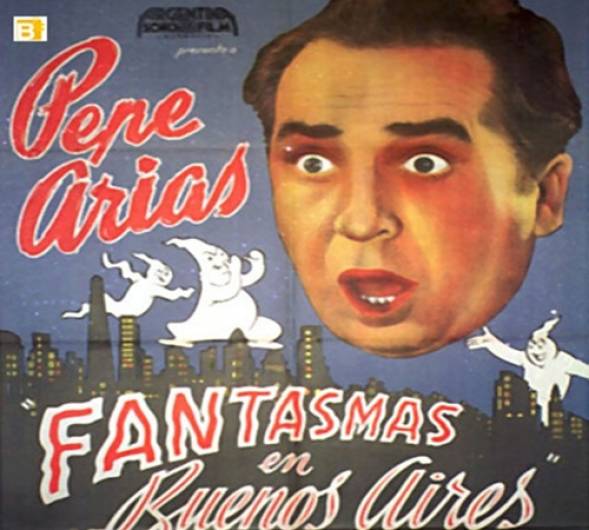
Following a European tradition, Argentine cinema (mainly inspired by the French style) (Peña, 2012) has not paid enough attention to themes related to the paranormal. However, among older productions, often featuring humor and irony or mystery and intrigue, there are a number of scripts inspired by ghosts and apparitions – primarily based on traditional legends. For example, Ghosts of Buenos Aires (Santos-Discépolo, 1941), a comedy film starring Pepe Arias and Zully Moreno, where a group of swindlers hires Maestro Odóñez (Ramón Garay), a rogue medium who makes a man believe a man that an attractive woman he fell in love with is a ghost. That same year, Arias also starred in El Hermano José (The Brother José) (Momplet, 1941), another comedy and drama set in a town in the interior of Buenos Aires, where a young doctor discredits the practices of a healer until he falls in love with the daughter of him.
The director and author Eliseo Subiela directed Hombre Mirando al Sudeste (Man Facing Southeast) (Subiela, 1986), a drama starring Lorenzo Quinteros and Hugo Soto, which narrates the experience of a psychiatrist (Quinteros) who receives a patient called Rantés (Soto) in the main psychiatric hospital of Buenos Aires, who claims to be an extraterrestrial but who will call into question the border between sanity and madness, and how a conventional therapist reacts to psychic experiences, such as psychokinesis and telepathy (Bustamante-Vélez, 2014). The film received numerous awards in Argentina and other countries, although in 2001, Subiela denounced that the American film K-Pax (Softley, 2001), starring Kevin Spacey and Jeff Bridges, inspired by Gene Brewer’s 1995 novel, narrated the same story without giving credit to Subiela, who filed a lawsuit for plagiarism. Despite everything, in 1995, Subiela again addressed the paranormal experiences in the film No Te Mueras Sin Decirme Donde Vas (Don’t Die Without Telling Me Where You Go) (Subiela, 1995), where a humble worker from a cinema who had been trying for years to build a machine to record human dreams, manages to record one where he falls in love with a woman who lived a hundred years ago. Once again, the film won awards in numerous film competitions in Argentina and other countries, placing ghosts, retrocognition, and Instrumental Trans-Communication under debate at a time when such topics were barely known at a popular level (Almeida-Duvoisin, 2019).
In the 2000s, Argentina experienced a resurgence of films that addressed anomalous phenomena, flooding theaters with audiences (Rodríguez, 2010). Several directors took up the matter, for example, Auxilio (Aid) (Garateguy, 2023) is an Argentine-Colombian film starring Cumelén Sánz and Gerardo Romano, which tells the story of a young rebel (Sanz) who unleashes PK-type events in a convent of nuns where she was sent as punishment for not following family mandates. Ghost-haunting groups and poltergeists also paraded through Argentine cinema, such as the case of Aterrados (Terrified) (Rugna, 2018), which narrates a number of paranormal events, such as hearing voices and apparitions that can be seen not only by witnesses but also filmed using video cameras and audio recorders: Mr. Funes (Maximiliano Ghione), Mr. Jano (Norberto Gonzalo), and Dr. Albreck (Elvira Onetto) make up a team of researchers, led by Albreck, a psychologist expert in parapsychology, who examine the house in search of the origin of the unexplained events. The film earned nominations and won numerous awards as an independent production.
Gonzalo Calzada is one of the Argentine film directors who has consulted members of the Institute of Paranormal Psychology on numerous occasions. In the film La Plegaria del Vidente (The Seer’s Prayer) (Calzada, 2012), he brings together a detective, a journalist, and a psychic (starring Gustavo Garzón, Juan Minujín, and Valentina Bassi) around a series of real crimes committed in the city of Mar del Silver. Another film, Resurrección (Resurrection) (Calzada, 2016), starring Patricio Contreras and Martín Slipak, is set within the framework of the yellow fever epidemic that hit Buenos Aires in 1871, where a young priest (Slipak), driven by a mystical experience, doubts of the meaning of their initial mission, their beliefs and their faith. In the film Luciferina (Calzada, 2018), the director details the case of Natalia (Sofía del Tuffo), a young nineteen-year-old novice with a gift that allows her to see people’s auras. She returns to her house to say goodbye to her dying father but reunites with her sister and her friends to travel to the jungle to participate in a healing ritual that involves the use of “mystical plants.” Finally, Nocturna (Nocturnal) (Calzada, 2021), a suspense film starring Pepe Soriano and Marilú Marini, tells the story of Ulises (Soriano), an old man who, throughout his life, left several memories and situations unresolved. Ulysses receives a visit from a spirit who will take him to review the pending accounts that he still keeps.
In addition to fiction, members of the Institute of Paranormal Psychology of Buenos Aires collaborated with the TV channel Infinito between 1999-2005, owned by Claxson Interactive Group, which broadcasts programming 24 hours per day. Infinito produced documentaries, talk shows (e.g., debates between skeptics and paranormalists), TV series based on recreations of inexplicable events (inspired by genuine cases investigated by members of the Institute), expert interview programs, and even a daily newscast, anomalous phenomena that reported events from all over Argentina and Latin America. Although such productions were non-fiction style, Infinito was a high-risk bet in audio-visual terms that worked very well both as a publicity agent for our own research and for educational activity.
I am convinced that cinema has been and will be a great source of inspiration for future parapsychologists and the general public to generate new ideas about the cultural role of parapsychology as science.
Finally, the so-called “paranormal cinema” has its own spaces on the History Channel, National Geographic TV, Discovery Channel, among many other renowned documentary channels around the world, local and international. Even recently, the “Esoteric Film Festival” is held every April in Moscow, an in-person and virtual meeting for independent cinema (music, documentaries, fiction, short films, novels, etc.) dedicated to esoteric/spiritual themes where directors and directors producers from countries around the world (http://esotericfilmfest.ru/en/home/) have won awards within many categories. In short, I am convinced that cinema has been and will be a great source of inspiration for future parapsychologists and the general public to generate new ideas about the cultural role of parapsychology as science.
Almeida-Duvoisin, A. (2019). Eliseo Subiela y la revalorización del simbolismo en el cine. Imagofagia: Revista de la Asociación Argentina de Estudios de Cine y Audiovisual, 19, 217-240.
Amenábar, A. (Director). (2001). The others [Film]. Dimension Films.
Andriopoulos, S. (2008). Possessed: Hypnotic crimes, corporate fiction, and the invention of cinema. University of Chicago Press.
Bamberger, M. (2006). The man who heard voices: Or, how M. Night Shyamalan risked his career on a fairy tale. Gotham Publisher.
Bayona, J. A. (Director). (2007). El orfanato (The orphanage) [Film]. Telecinco Cinema.
Berton, M. (2011). Le Medium (Au) Cinema: Le Spiritisme A L’ecran. Georg.
Blanco, M. P., & Peeren, E. (Eds.) (2010). Popular ghosts: The haunted spaces of everyday culture. Continuum.
Blanco, M. P., & Peeren, E. (Eds.) (2013). The spectralities reader: Ghosts and haunting in contemporary cultural theory. Bloomsbury.
Blatty, W. P. (1971). The exorcist (1st ed.). Harper & Brothers.
Bustamante-Vélez, L. (2014). Análisis textual de la película Hombre Mirando al Sudeste. Cuadernos de Lingüística Hispánica, 23, 103-118.
Butler, D. (2009). Fantasy cinema: Impossible worlds on screen. Wall-Flower.
Callard, C. (2019). Le Temps des fantômes: Spectralités à l’âge moderne (xvie-xviie siècle). Fayard.
Calzada, G. (Director). (2016). Resurrección (Resurrection) [Film]. Buffalo Films.
Calzada, G. (Director). (2018). Luciferina. [Film]. Buffalo Films.
Calzada, G. (Director). (2021). Nocturna (Nocturnal) [Film]. Coruya Cine.
Christie, I. (2018). Ghosts and their nationality in the fin de siècle machinery. In M. Dahlquist, D. Galili, J. Olsson, & V. Robert (Eds.), Corporeality in early cinema: Viscera, skin, and physical form (pp. 46-58). Indiana University Press.
Connor, S. (1999). The machine in the ghost: Spiritualism, technology and the “direct voice”. In P. Buse, & A. Stott (Eds.), Ghosts: Deconstruction, psychoanalysis, history (pp. 203-225). St. Martin’s Press.
Cooper, C.E. (2012). Telephone calls from the dead. Tricorn Books.
Derrikson, S. (Director). (2023). The black telephone [Film]. Universal Pictures.
Friedkin, W. (Director). (1973). Exorcist [Film]. Hoya Productions.
Garateguy, T. (Director). (2023). Auxilio (Aid) [Film]. DelToro Films.
González-Dinamarca, R. (2015). Los niños monstruosos en El Orfanato de Juan Antonio Bayona y Distancia de rescate de Samanta Scweblin. Revista de Investigación sobre lo Fantástico, 3(2), 89-106.
Hantke, S. (2015). “I see dead people”: Visualizing ghosts in the American horror film before the arrival of CGI. In M. Leeder (Ed.), Cinematic ghosts: Haunting and spectrality from silent cinema to the digital era (pp. 179-198). Bloomsbury Academic.
Hart-Wright, S. (2002). When spirits come calling: The open-minded skeptic’s guide to after-death contacts. Blue Dolphin.
Hill, J (2021). The black phone [Movie Tie-in]: Stories. HarperCollins.
Juan-Navarro, S. (2017). Trapped in the house of mirrors: The others as a transnational postmodern gothic thriller. In J. Marí (Ed.), Tracing the borders of Spanish horror cinema and television (pp. 15-33). Routledge.
Kovacs, L. (2005). The haunted screen: Ghosts in literature and film. McFarland.
Leeder, M. (2015). Cinematic ghosts: Haunting and spectrality from silent cinema to the digital era. Bloomsbury Academic.
Manrupe, R. (1995). Un diccionario de films Argentinos. Corregidor.
Momplet, A. (Director). (1941). El hermano José (Brother José) [Film]. Argentina Sono Film.
Mull, L. L. (2023). William Friedkin story: From the French connection to The Exorcist. Independently published.
Owen, D. (2007). The haunted: A social history of ghosts. Palgrave Macmillan.
Peeren, E. (2014). The spectral metaphor: Living ghosts and the agency of invisibility. Palgrave Macmillan.
Peña, F. (2012). Cien años de cine Argentino. Biblos.
Quereilhac, S. (2020). Modernism, spiritualism, and science in Argentina at the turn of the twentieth century: An analysis of national magazines. In M. P. Blanco & J. Page (Eds.), Geopolitics, culture, and the scientific imaginary in Latin America (pp. 215-229). University of Florida Press.
Reitman, I. (Director). (1984). Ghostbusters [Film]. Columbia Pictures, Delphi Films, and Black Rhino Productions.
Rodríguez, C. (2010). El cine de terror en Argentina: producción, distribución, exhibición y mercado (2000-2010). Unidad de Publicaciones del Departamento de Ciencias Sociales de la Universidad Nacional de Quilmes, Argentina.
Rugna, D. (Director). (2018). Aterrados (Terrified) [Film]. Aura Films.
Ruffles, T. (2004). Ghost images: Cinema of the afterlife. McFarland.
Santos-Discépolo, E. (Director). (1941). Fantasmas en Buenos Aires (Ghosts of Buenos Aires) [Film]. Argentina Sono Film.
Sconce, J. (2000). Haunted media: Electronic presence from telegraphy to television. University Press.
Shyamalan, M. N. (Director). (1999). Sixth sense [Film]. Hollywood Pictures.
Smajić, S. (2019). Detectives and spiritualists: Theories of vision in Victorian literature and science. Cambridge University Press.
Softley, I. (Director). (2001). K-Pax [Film]. Lawrence Gordon Productions.
Spielberg, S. (Director). (1977). Close encounters of the third kind [Film]. Columbia Pictures.
Subiela, E. (Director). (1986). Hombre mirando al sudeste (Man facing southeast) [Film]. Cinequanon Pictures.
Subiela, E. (Director). (1995). No te mueras sin decirme adónde vas (Don’t die without telling me where you go) [Film]. Cinemateca.
Zuker, J. (Director). (1990). Ghost [Film]. Paramount Pictures.



In this issue of Mindfield, the contributors examine the theme of “Mapping the Unseen: Psi, Media, and the Cultural Imagination.” The editorial by Jacob W. Glazier, Anastasia Wasko, and David S. B. Mitchell examines how fictional narratives can create the cultural space in which new scientific ideas and research agendas emerge. In his Presidential Column, …

by Carl Lorenz Cervantes