by Cory Nakasue



by Cory Nakasue
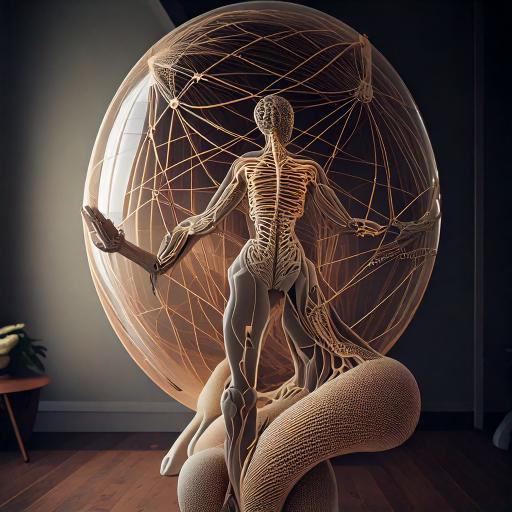
One of the first things I remind myself of when working with a new client is that the body is not a thing. It is neither meat, nor machine, nor concrete form. It is process, an event that shifts from minute to minute as it interacts and responds to every bit of information in its internal and external environment. I have to remind myself of this because cultural conditioning–the body is often treated as a container that houses mysterious processes and an all-powerful brain that is the master of the lumbering workhorse.
The mind-body split is one of the more pervasive narratives in western culture. It seeps into the personal stories that frame the individual experience of being in a body. It is not uncommon for a new client to regale me with medical and psychology vocabularies shared with them from practitioners to explain their bodily experience. They do this in the hopes that more context will help me do my work. These contexts are usually riddled with how something in the body should look, feel, or operate, giving people a relatively narrow framework of possibilities. As a sensorimotor practitioner who helps people with interpretive and pattern-making processes, I’m only interested in the interpretation of the person who is experiencing their body and how they define the transformative and numinous experiences that occur during embodiment.
Modalities and techniques are fodder for the real work that takes place, which is nervous system regulation, and the integration of narrative, sensation, and emotion. Whether the interest is physical and emotional rehabilitation, or self-discovery, tending to the contextual frameworks that people use to make meaning is just as important as changing movement patterns.
Of course it’s helpful to know if there are architectural or physiological conditions to work with, but, (and this might sound sacrilegious) it is not necessary. The work I do to help people become literate in the language of sensation and emotion isn’t dependent on mechanics. As a somatic movement therapist and teacher, one of my main goals is to help my clients develop a sense of trust in their bodies. It’s my hope that they will begin a relationship with themselves that increases their physical, mental, and emotional agency. The tools I use are movement, touch, and narrative. I also consider things like metaphor to be a basic body-mind sense that is invaluable for contextualizing experience. It’s much more than a literary device. I use a host of modalities and teachings, including yoga, Pilates, neuromuscular reeducation, and dermoneuromodulation (considering the nervous system of a person from skin cell to sense of self) (Jacobs, 2016). Each of these modalities have a contemplative aspect to them. However, modalities are not what my practice is based on. Modalities and techniques are fodder for the real work that takes place, which is nervous system regulation, and the integration of narrative, sensation, and emotion. Whether the interest is physical and emotional rehabilitation, or self-discovery, tending to the contextual frameworks that people use to make meaning, is just as important as changing movement patterns.
Candace was a yoga student of mine before she became a private client. She had suffered from Guillain-Barré syndrome as a girl and received insufficient, truncated treatment from doctors as well as medical trauma. The result left her with severe lymphedema in her lower legs which greatly restricted foot and ankle movement, extremely limited range of motion in her knees and hips, and poor balance. She tried many forms of physical and manual therapies to regain sensitivity and range of motion to no avail. Candace is an incredibly intelligent and hardworking person who is open to new experiences but was frustrated by a lack of progress. She was also simultaneously dependent on, and untrusting of medical professionals. I had earned her trust after a couple of years of being her yoga teacher, inventing ways for her to take class with a group and modify movements as needed.
I was convinced that most of Candace’s movement restrictions were rooted in a lack of trust in her bodily sensations and years of adopting protective postural patterns that were based on fears or falling. She intellectually understood this, but awareness of why we do things will only take us so far. It’s important to pair this understanding with embodied experience. The body needs to trust a new story. The physical work we embarked on included introducing new situations to her body in a safe environment. Not unlike exposure therapy, we used the foundation of our secure relationship to confront anxiety-provoking movements successfully. Proof, in the form of sensation, registered these new stories as a truth her nervous system would accept.
An interesting thing happens when we genuinely adopt a new story about our reality; our history gets rewritten as well.
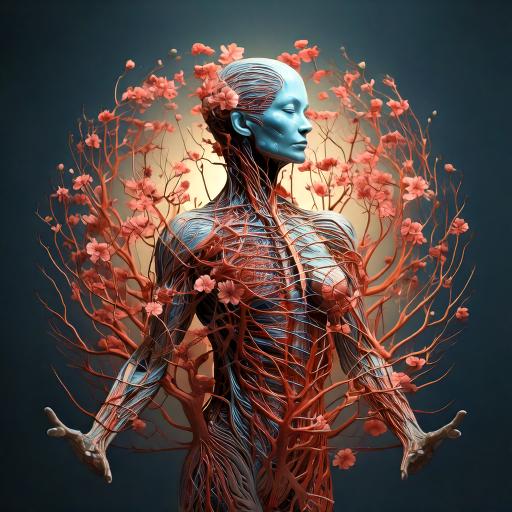
An interesting thing happens when we genuinely adopt a new story about our reality; our history gets rewritten as well. In essence we become new people with a different past, and the body will reorganize itself around this new evidence. As the astrologer Caroline Casey says, “Imagination lays the tracks for the reality train to follow.” If we don’t edit and tend to our perceptions and stories about what we’re capable of, there is no scaffolding to support the materialization of something new. A new movement or sensation can’t exist in an old psyche, it simply won’t take. The new habit will be treated as a foreign appendage and eventually be discarded. I know some great therapists who accidentally stumble upon this way of working and get outstanding results by virtue of who they are as people. I’ve chosen to work this way intentionally and it has proven to be not only effective for clients, but more rewarding for me as a practitioner. I get changed by the relationship too.
I’ve gained a lot of inspiration from people like Wilhelm Reich, one of the first psychotherapists who worked with the body as an expression of character. He believed that our muscle tension and movement patterns are created by emotional and cognitive patterns (Lowen, 1970). This seems like an obvious way-in for working with anxious, depressive and dysmorphic states, but it also works with bio-mechanical injury and troublesome functional movement patterns. People perform all kinds of “physical rituals” to make them feel safe, more confident, or in control. It’s a bit like an unconscious superstition, or movement talisman that wards off danger. When we have embodied evidence that renders our patterns unnecessary, a spell is broken. We start entertaining options and creating new narratives about who we are. My work with Candace even began to inhabit more liminal spaces. The body is the subconscious mind in action. The subconscious mind doesn’t discriminate between true and false (Beilock, 2017). It simply accepts whatever reality it’s presented with if it stirs feeling. She began to dream about jumping—something she hadn’t done in forty years, and could call up that sensation in her waking hours. While watching people dance on TV, her legs would twitch in recognition. When I teach movement, I feed the body new sensations, images, and narrative contexts to frame that experience. New experiences in a safe environment create a feedback loop that encourages an expansion of perception. Today, Candace is someone who seeks out the wobbly activity of sailing boats. She’s embodying a new story about a person who trusts herself enough to take risks.
Beilock, S. (2017). How the body knows its mind: The surprising power of the physical environment to influence how you think and feel (Reprint ed.). Atria Books.
Lowen, A. (1970). Pleasure: A creative approach to life. The Alexander Lowen Foundation.
Jacob, D. (2016). Dermo neuro modulating: Manual treatment for peripheral nerves and especially cutaneous nerves. Diane Jacobs.


In this issue of Mindfield, the contributors examine the theme of “Mapping the Unseen: Psi, Media, and the Cultural Imagination.” The editorial by Jacob W. Glazier, Anastasia Wasko, and David S. B. Mitchell examines how fictional narratives can create the cultural space in which new scientific ideas and research agendas emerge. In his Presidential Column, …

by Carl Lorenz Cervantes