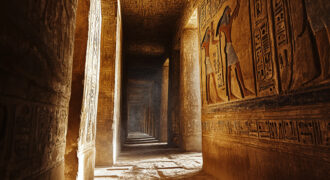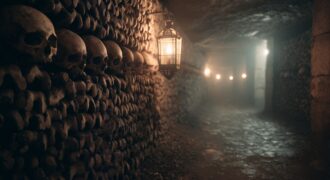
In this issue of Mindfield, the contributors examine the theme of “Dark Tourism and Legend Tripping.” In his first column as PA President, Gerhard Mayer suggests that despite declining institutional support, parapsychology remains a vital and evolving field grounded in tradition, renewed by qualitative research, global perspectives, and emerging consciousness studies. Leo Ruickbie details how academic conference travel can function as a form of dark tourism, where scholars engage in legend-tripping practices that reproduce, circulate, and re-enchant paranormal experience through embodied encounters with haunted places. Romain Jallet, Béatrice Bertrand, and Claude Berghmans argue that the myths, rumors, and illicit practices surrounding the Paris Catacombs are best understood not as supernatural realities but as culturally produced responses to dark tourism, urban transgression, and altered states of consciousness that generate exceptional underground experiences. Ludmilla Butzbach and Jean-Pierre Pallandre’s research shared non-ordinary states of consciousness in symbolically charged environments that produce strikingly concordant visions, suggesting collective experiential synchronization shaped by ritual, environment, and cultural symbolism. David S. B. Mitchell explores legend-tripping as a cultural practice that functions as a rite of passage, examining its psychological significance, ecological context, and ethical implications within folklore, parapsychology, and social identity formation.
Benedikt Grimmler explores why people engage in dark and paranormal tourism, highlighting motives like authenticity, fear, and fascination with the uncanny through cultural, aesthetic, and literary perspectives. Julia A. Yusupova reflects on spirit photography in Salem, blending the historical context of the witch trials with personal photographic encounters of alleged apparitions, and situates these experiences within parapsychological theories of hauntings and place memory. Jorge Villanueva analyzes dark tourism and haunted sites as cultural practices shaped by death, fear, and economic forces, exploring their social, political, and symbolic meanings in contemporary society. Isela Madriz argues that dark tourism—visiting sites tied to death, tragedy, and the paranormal—has grown as a way to explore history, evoke intense emotions, and boost local economies, while sparking ethical debates about respect and preservation.
Juan J. Rios shows how imagination can transform a personal paranormal encounter into a research method and healing process by bridging unconscious and conscious awareness. Gregory Cain recounts experiences during his career as a California correctional officer, arguing that prisons like San Quentin act as emotional and spiritual archives where trauma manifests as unexplained phenomena. Maurice van Luijtelaar and Renaud Evrard present the 47th iteration of their bibliography with 136 articles, from 116 different journals, including one conference proceeding and one book review.