by Anastasia Wasko and Jacob W. Glazier



by Anastasia Wasko and Jacob W. Glazier
Parapsychology’s intellectual legacy rests not only on empirical investigation but also on the careful labor of those who catalogue, organize, synthesize, and critically interpret research findings. Among the most influential figures in this tradition was Carlos Alvarado (Matlock, 2022), a Puerto Rican American parapsychologist whose work exemplified the importance of historical and conceptual scholarship in the field. Recently, I (A.W.) listened to his talk about the importance of knowing history in parapsychology, and he mentioned that he was “a firm believer that the past has a lot to teach us in the present” (Forever Family Foundation, 2024). The parapsychology of the past has tended to provide more rigid methodologies and research practices, those based predominantly in the clean, controllable safety of the laboratory. By contrast, legendary parapsychologists Louise Rhine (1953) and Rhea White (1997) have emphasized the contextual and human elements of exceptional experiences—that the anomalous most often happens en vivo, during daily life, or when we least expect it. As this issue of Mindfield highlights, such experiences can occur while exploring strange, haunted, or macabre places through the activity of dark tourism and legend tripping. Narratives, in this regard, are shaped in real-time, and methodologies need to keep pace.
Such reasoning grew after reading this issue’s editorial by President Gerhard Mayer. He invites us to ground ourselves in the history of the Parapsychological Association while looking toward the future. He writes that “resistance to parapsychology, or rather to its main research subject in a generalized sense, the study of the connection between mind and matter, may be weakening in some areas” (Mayer, 2026, para. 12). We agree, and the rationale lies in large part with the shift in what is considered legitimate knowledge and data: Much qualitative data are being gleaned from self-reported exceptional experiences. And, some of the strongest research arrives from earnest early-career and citizen parapsychologists.
In the past, parapsychology has often built theories based on quantifiable data. At present, anecdotal experiences and the stories of exceptional experiences are producing a massive amount of qualitative data that are just as valuable. We wonder to what extent this type of data will support the future, expanding reach of parapsychology. Yet, exceptional experiences may also be transpersonal encounters, a confrontation with developmental stages beyond the ego (Kasprow & Sotton, 1999). They represent the space in which parapsychology is moving—a space that maintains scientific rigor while incorporating methods that capture embodied, culturally sensitive, and experiential data. There is an active assembling to do here in the sense of an arrangement of the present so that it informs the future. Each of the pieces included in this issue represents a step out of the traditional, clinical lab setting and quantitative data to being more in the world. Dark tourism and legend tripping offer experiences that generate this more sociological and meaning-making source of knowledge.
Juan J. Rios’s (2026) “Imagination as a Method of Revelation: A Case Study of an Encounter With an Exceptional Phenomenon” reminds us that we are in a feedback loop. The ability to travel away from developments, crowded cities, and places with infrastructure and architecture is akin to shifting out of a lab environment. We move from the measured and controlled clinical setting to one where unexpected events occur, where control is relinquished in favor of the surroundings affecting the experience. In Rios’s case, the unsculpted environment created a shift in the feedback loop from his body and mind to the land. In other words, he put himself in the experiment. He considers imagination as part of cyclical meaning-making.
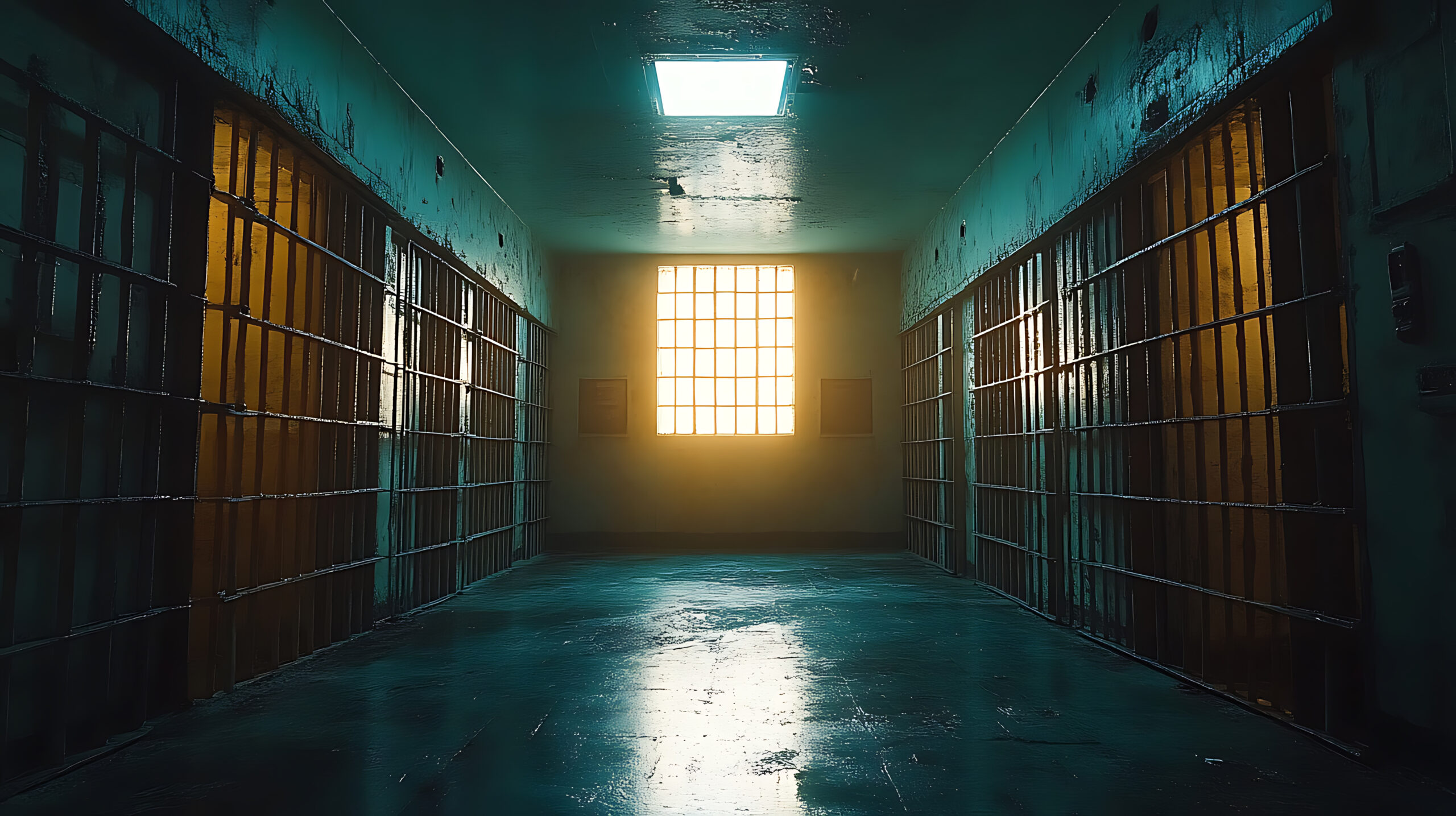
Gregory Cain (2026), in writing about his paranormal experiences at San Quentin, states straightforwardly that “prisons are psychological spaces” (para. 16). Prisons are places built to hide people and can be full of violence. These are necessarily psychological matters to a person; they are the individual imprints of culture on the place. This is where we move to the realm of transpersonal and parapsychological. If we consider what being imprisoned would be like, in comparison to the freedom of the desert mountains, these many emotions and sensory impressions interact with the environment and the land. The inclusion of such qualitative experiences in parapsychological research carries us forward from the present to the future. What new streams of inquiry does this inclusion open up?
Jallet and colleagues (2026) move in a similar, more inclusive space of inquiry, too. In “Demystifying the Catacombs of Paris: Beyond Dark Tourism and Urban Legends, the Hypothesis of Exceptional Underground Experiences,” they write, “[the catacombs] were also a favorite spot for illegal activities such as prostitution. More recently, they have been used as a route for the city’s sewers, a storage place for breweries, and even a biospeleology laboratory” (Jallet et al., 2026, para. 9). This is exactly the kind of place that may feel strange, and that feeling is best captured through more of a qualitative-inspired approach to research.
So how do we do this? We have to ask why “dark” places are so fascinating, as Jorge Villanueva (2026) does in “Why are Haunted Places so Fascinating?: Dark Tourism and Paranormal Activity.” According to the essay, the past experiences of the people in these places are crucial: “Dark tourism, also known as thanatourism, refers to forms of tourism in which death and suffering are the main attractions, sometimes because they highlight the trauma or vulnerability of victims” (Villanueva, 2026, para. 1).
As a result, we steep the place in significance through its history. Symbolically charged environments are locations imbued with historical, mythological, or geomantic significance. These sites, ranging from megalithic monuments to natural landmarks, are hypothesized to facilitate non-ordinary states of consciousness by providing sensory and symbolic cues that prime altered states. This idea is further developed in “Collective Concordances in Non-Ordinary States of Consciousness: Field Observations” by Ludmilla Butzbach and Jean-Pierre Pallandre (2026).
In a strong sense, dark tourism is cultural tourism. As a case in point, in “Looking for Fear? Dark Tourism and the Paranormal Tourist” by Benedikt Grimmler (2026), the author writes that “the term suffering expands these sites to include, for example, prisons or US slave plantations. The broad term ‘macabre’ also brings a new but vague meaning into play” (para. 1). Yusupova (2026) and Madriz (2026) underscore this in their trips to emotionally charged places.
We can build upon the tradition of parapsychology by refreshing the methods of inquiry that generate useful knowledge and data. This is why legend tripping, as David Mitchell names it, is like future dreaming. Mitchell (2026) writes that as he, alongside Jacob Glazier (2025), and several colleagues, have noted, “paranormal folklore [is] historical or ongoing accounts of anomalous or exceptional experiences (ExEs), which are experienced by more than one person on different occasions” (p. 1)—the draw to some of the sites that appear in this issue is the promise of an exceptional experience. The future of parapsychology, taking seriously the way that these experiences anchor the anomalous in geographically situated locations, can create more inclusive methodologies and research practices, honoring qualitative data and anecdotal experiences. It just makes sense. Folklore often becomes the stuff of legend, and legend tripping is a fruitful site for future research endeavours.
Issue Overview: Dark Tourism and Legend Tripping
In this issue of Mindfield, the contributors examine the theme of “Dark Tourism and Legend Tripping.” In his first column as PA President, Gerhard Mayer suggests that despite declining institutional support, parapsychology remains a vital and evolving field grounded in tradition, renewed by qualitative research, global perspectives, and emerging consciousness studies. Leo Ruickbie details how academic conference travel can function as a form of dark tourism, where scholars engage in legend-tripping practices that reproduce, circulate, and re-enchant paranormal experience through embodied encounters with haunted places. Romain Jallet, Béatrice Bertrand, and Claude Berghmans argue that the myths, rumors, and illicit practices surrounding the Paris Catacombs are best understood not as supernatural realities but as culturally produced responses to dark tourism, urban transgression, and altered states of consciousness that generate exceptional underground experiences. Ludmilla Butzbach and Jean-Pierre Pallandre research shared non-ordinary states of consciousness in symbolically charged environments that produce strikingly concordant visions, suggesting collective experiential synchronization shaped by ritual, environment, and cultural symbolism. David S. B. Mitchell explores legend-tripping as a cultural practice that functions as a rite of passage, examining its psychological significance, ecological context, and ethical implications within folklore, parapsychology, and social identity formation.
Benedikt Grimmler explores why people engage in dark and paranormal tourism, highlighting motives like authenticity, fear, and fascination with the uncanny through cultural, aesthetic, and literary perspectives. Julia A. Yusupova reflects on spirit photography in Salem, blending the historical context of the witch trials with personal photographic encounters of alleged apparitions, and situates these experiences within parapsychological theories of hauntings and place memory. Jorge Villanueva analyzes dark tourism and haunted sites as cultural practices shaped by death, fear, and economic forces, exploring their social, political, and symbolic meanings in contemporary society. Isela Madriz argues that dark tourism—visiting sites tied to death, tragedy, and the paranormal—has grown as a way to explore history, evoke intense emotions, and boost local economies, while sparking ethical debates about respect and preservation.
Juan J. Rios shows how imagination can transform a personal paranormal encounter into a research method and healing process by bridging unconscious and conscious awareness. Gregory Cain recounts experiences during his career as a California correctional officer, arguing that prisons like San Quentin act as emotional and spiritual archives where trauma manifests as unexplained phenomena. Maurice van Luijtelaar and Renaud Evrard present the 47th iteration of their bibliography with 136 articles, from 116 different journals, including one conference proceeding and one book review.
Taken together, the contributions in this issue affirm that parapsychology’s future is not a departure from its past, but an expansion of it—one that honors rigorous traditions while embracing qualitative, experiential, and culturally situated forms of data. As exceptional experiences increasingly emerge beyond the laboratory, they invite methods attuned to place, narrative, embodiment, and meaning-making. Such an invitation may lead to the darker side of legends.
Butzbach, L., & Pallandre, J.-P. (2026). Collective concordances in non-ordinary states of consciousness: Field observations. Mindfield: The Bulletin of the Parapsychological Association, 17(3). https://mindfieldbulletin.org/collective-concordances-in-non-ordinary-states-of-consciousness-field-observations/
Cain, G. (2026). Shadows behind the walls: Correctional officer Cain’s paranormal encounters at San Quentin state prison. Mindfield: The Bulletin of the Parapsychological Association, 17(3). https://mindfieldbulletin.org/shadows-behind-the-walls-correctional-officer-cains-paranormal-encounters-at-san-quentin-state-prison/
Kasprow, M., & Scotton, B. W. (2019). Journal of Psychotherapy Practice and Research, 8(1), 12–23.
Forever Family Foundation. (2024). History of Parapsychology with #FFFScientist Carlos S Alvarado [Video]. YouTube. https://www.youtube.com/watch?v=vxs9uAnDHJc&list=PLrWAdXSGt7MkI75J65Lwjq0hvvIPyuUut
Glazier, J. W., Mitchell, D. S. B., Wipff, Z., & Cochran, N. (2025). Paranormal folklore in Western Georgia: A critical narrative analysis of apparitions. Anthropology of Consciousness. Advance online publication. https://doi.org/10.1111/anoc.70005
Grimmler, B. (2026). Looking for fear? Dark tourism and the paranormal tourist. Mindfield: The Bulletin of the Parapsychological Association, 17(3). https://mindfieldbulletin.org/looking-for-fear-dark-tourism-and-the-paranormal-tourist/
Jallet, R., Bertrand, B., & Berghmans, C. (2026). Demystifying the catacombs of Paris: Beyond dark tourism and urban legends, the hypothesis of exceptional underground experiences. Mindfield: The Bulletin of the Parapsychological Association, 17(3). https://mindfieldbulletin.org/demystifying-the-catacombs-of-paris-beyond-dark-tourism-and-urban-legends-the-hypothesis-of-exceptional-underground-experiences/
Madriz, I. (2026). Paranormal tourism: An unconventional way to experience the unknown. Mindfield: The Bulletin of the Parapsychological Association, 17(3). https://mindfieldbulletin.org/paranormal-tourism-an-unconventional-way-to-experience-the-unknown/
Matlock, J. G. (2022). In memoriam: Carlos Alvarado, 1955-2021. Journal of Parapsychology, 86(1), 9-11. https://doi.org/10.30891/jopar.2022.01.02
Mayer, G. (2026). Being part of a tradition and looking towards an exciting future. Mindfield: The Bulletin of the Parapsychological Association, 17(3). https://mindfieldbulletin.org/being-part-of-a-tradition-and-looking-towards-an-exciting-future/
Mitchell, D. S. B. (2026). Legend-tripping: Considerations on importance, ecology, and ethics. Mindfield: The Bulletin of the Parapsychological Association, 17(3). https://mindfieldbulletin.org/legend-tripping-considerations-on-importance-ecology-and-ethics/
Rhine, L. E. (1953). Subjective forms of spontaneous psi experiences. Journal of Parapsychology, 17(2), 77-114.
Rios, J. J. (2026). Imagination as a method of revelation: A case study of an encounter with an exceptional phenomenon. Mindfield: The Bulletin of the Parapsychological Association, 17(3). https://mindfieldbulletin.org/imagination-as-a-method-of-revelation-a-case-study-of-an-encounter-with-an-exceptional-phenomenon/
Villanueva, J. (2026). Why are haunted places so fascinating?: Dark tourism and paranormal activity. Mindfield: The Bulletin of the Parapsychological Association, 17(3). https://mindfieldbulletin.org/why-are-haunted-places-so-fascinating-dark-tourism-and-paranormal-activity/
White, R. A. (1997). Exceptional human experiences and the experiential paradigm. In C. T. Tart (Ed.), Body mind spirit: Exploring the parapsychology of spirituality (pp. 83–100). Hampton Road Publishing Company.
Yusupova, J. A. (2026). Spirit photography: The ghosts of Salem. Mindfield: The Bulletin of the Parapsychological Association, 17(3). https://mindfieldbulletin.org/spirit-photography-the-ghosts-of-salem/

In this issue of Mindfield, the contributors examine the theme of “Dark Tourism and Legend Tripping.” In his first column as PA President, Gerhard Mayer suggests that despite declining institutional support, parapsychology remains a vital and evolving field grounded in tradition, renewed by qualitative research, global perspectives, and emerging consciousness studies. Leo Ruickbie details how academic …