by Gregory Cain



by Gregory Cain
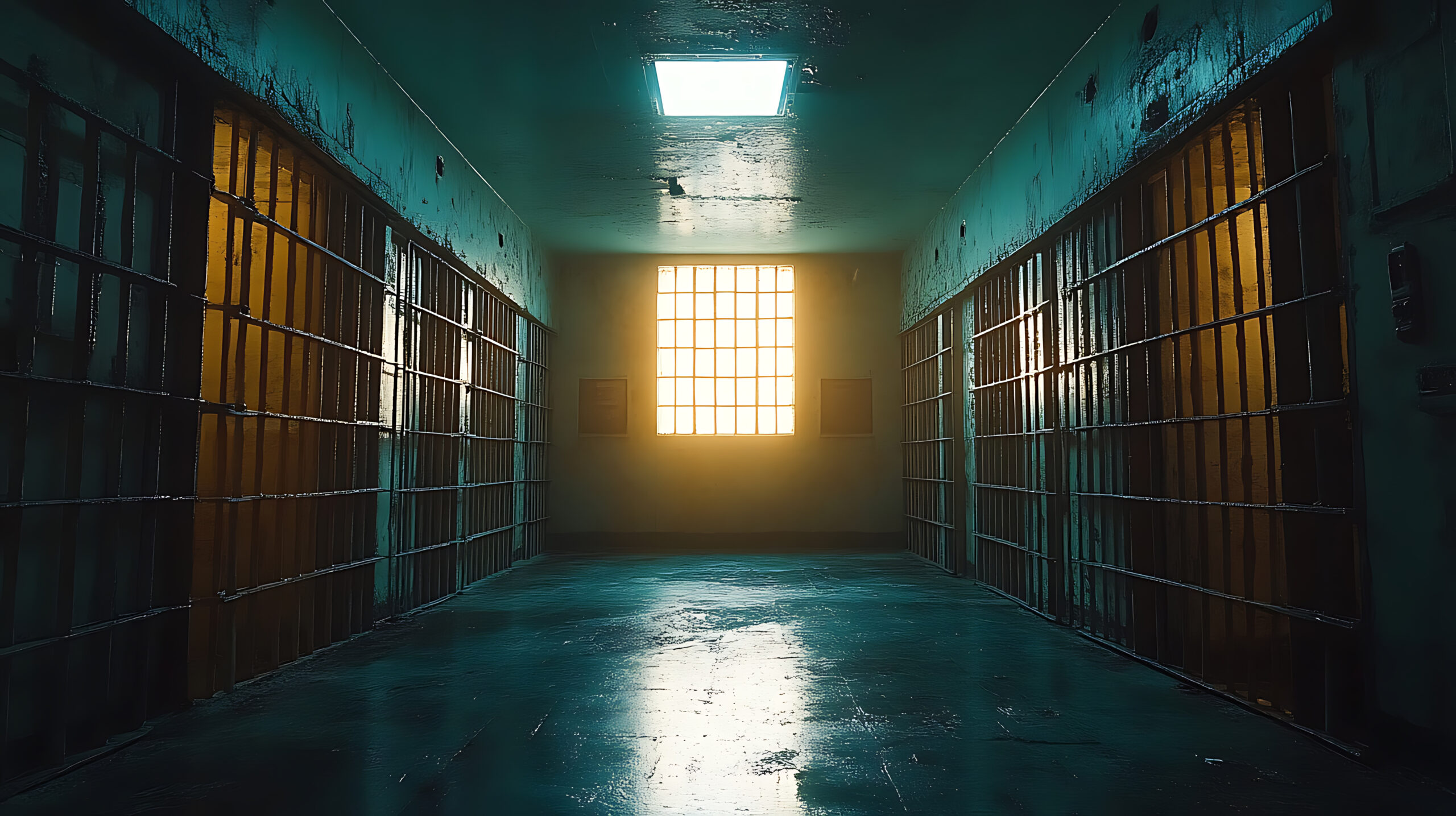
When I began my career as a California Correctional Officer in 1990, I thought I knew what awaited me: long shifts, hypervigilance, and the sobering responsibility of supervising some of the state’s most dangerous people. Over the course of twenty-five years, serving at Mule Creek, Folsom, and ultimately San Quentin, I learned quickly that prisons are worlds unto themselves. Granite walls, iron gates, razor wire, and a constant undercurrent of tension shape every moment.
But nothing could have prepared me for the encounters that defied every rule, every report, and every rationale—shadows that seemed to move with intention, disconnected phones that rang relentlessly, and abandoned towers glowing with lights that should not exist. Over time, I came to believe that prisons are not merely correctional institutions but repositories of trauma, holding the emotional residue of generations of suffering, violence, and death.
Throughout my career,[1] I supervised some of the most infamous individuals in American criminal history: Tex Watson of the Manson Family, Yosemite Park killer Cary Stayner, and Richard Ramirez, referred to as the Night Stalker. Experiences with individuals like these sharpened my instincts yet also made me aware of something far less tangible: a persistent sense that unseen eyes watched from beyond the bars.
San Quentin stands apart.
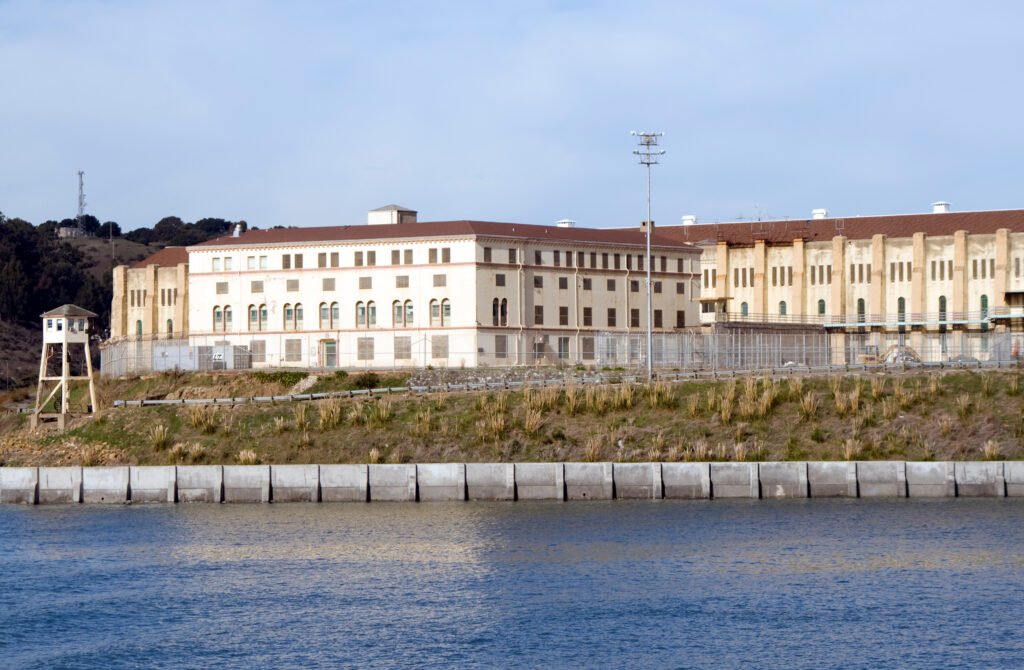
Understanding San Quentin requires understanding the ground it was built upon. California’s first prison began not on land but on water, in 1851, when the prison ship Waban was anchored in San Francisco Bay to confine thirty inmates. Later, following corruption scandals, convicts themselves constructed San Quentin’s first cell block, “The Stones,” completed in 1854. It remains California’s oldest public building (Lichtenstein, 1996).
The land beneath the prison is just as steeped in violence. Point Quentin was named after a Coast Miwok warrior captured after fighting under Chief Marin. The soil itself, layered with conflict and death, seems to hold memory (Haney, 2001).
During my assignment to death row on the fifth tier, officers frequently reported strange shadows darting along the walls, always just beyond clear vision. One night, while discussing these sightings with my partner, a Catholic priest walked up the tier. Known for his strict, quiet demeanor, he surprised us with a confession of his own: Every time he approached death row; he saw two dark figures perched on opposite corners of the roof.
He described them as black angels or demons, waiting for condemned souls. He admitted that he prayed before entering each day, fearing the energy inside might attach itself to him or follow him home.
Coming from a man of faith and discipline, his words shook me. They confirmed what many of us had quietly believed: San Quentin was haunted by more than its history.
One of the most chilling incidents occurred while I was assigned to Tower 8 along the shoreline. During count, the phone at my post rang, its caller ID showing the fifth floor of the old infirmary. That building had been abandoned for decades, stripped of power, stripped of phone lines, and sealed.
Two officers were dispatched to investigate, sweeping the decrepit halls with flashlights. They found nothing, no operational equipment, no electricity. Yet my phone continued to ring repeatedly from that same dead location.
The event was logged. No explanation was ever found.
Another night, I was stationed at Tower 10 near the main sally port gate when I spotted a steady yellow glow emanating from Tower 13, an abandoned 300-foot metal tower decommissioned decades earlier and surrounded by impenetrable brush.
Plant Operations, the San Quentin Fire Department, PG&E, and Marin County Electrical all responded. Engineers climbed, probed, and tested, finding no power, no circuits, no active wiring, no bulbs capable of holding a charge, and yet the light remained, until it simply didn’t.
Multiple agencies witnessed it, but no one could explain it. I documented the event in my logbook, fully aware that it defied reason.
Prisons are psychological spaces as much as physical ones. Exposure to violence and despair can result in vicarious trauma, where officers internalize distress from the environment (Haney, 2001). Some experiences can be explained through the subconscious mind trying to process trauma.
Prisons are psychological spaces as much as physical ones... Some experiences can be explained through the subconscious mind trying to process trauma.
My wife, Tisha Marie Cain, a leading clinical hypnotherapist, helped me explore these experiences safely. Through hypnotherapy and NLP, she guided me to distinguish between mental echoes and authentic encounters (Cain, 2020). But even with that clarity, not everything had a rational explanation. Such residual hauntings may appear across America’s oldest prisons, Alcatraz, Eastern State, and San Quentin, among them (Buntin, 2012; Frost, 2019).
Carl Jung’s concept of the shadow archetype adds another dimension. He believed places of extreme human experience can prompt manifestations of the collective unconscious, symbols of guilt, fear, and death projected outward (Jung, 1968). In prisons, where emotion runs raw, and the veil between life and death is thin, these projections may become perceptible.
Prisons like San Quentin are more than institutions. They are emotional archives, living, breathing structures that carry the weight of every soul that has passed through their gates. The shadows, lights, and voices I witnessed are reminders that some echoes cannot be silenced.
Whether interpreted as paranormal phenomena, psychological projection, or symbolic haunting, the message remains: Human suffering leaves a mark, and some places remember.
[1] Readers are invited to listen to the following podcast based on the author’s experiences: https://www.youtube.com/watch?v=8UsdTTGax-E
Buntin, J. (2012). Alcatraz: A definitive history of the fortress prison. HarperCollins.
Cain, T. M. (2020). Transformational therapy: A guide to clinical hypnotherapy practices. American Hypnosis Association.
Frost, R. (2019). Echoes of the past: Haunted Eastern State Penitentiary. Pennsylvania Historical Review, 42(2), 67–84.
Grassian, S. (2006). Psychiatric effects of solitary confinement. Journal of Law & Policy, 22, 325–383.
Haney, C. (2001). The psychological impact of incarceration: Implications for post-prison adjustment. University of California Press.
Jung, C. G. (1968). Archetypes and the collective unconscious. Princeton University Press.
Lichtenstein, A. (1996). Twice the work of free labor: The political economy of convict labor in the South. Verso.


In this issue of Mindfield, the contributors examine the theme of “Mapping the Unseen: Psi, Media, and the Cultural Imagination.” The editorial by Jacob W. Glazier, Anastasia Wasko, and David S. B. Mitchell examines how fictional narratives can create the cultural space in which new scientific ideas and research agendas emerge. In his Presidential Column, …

by Carl Lorenz Cervantes