by Benedikt Grimmler


by Benedikt Grimmler
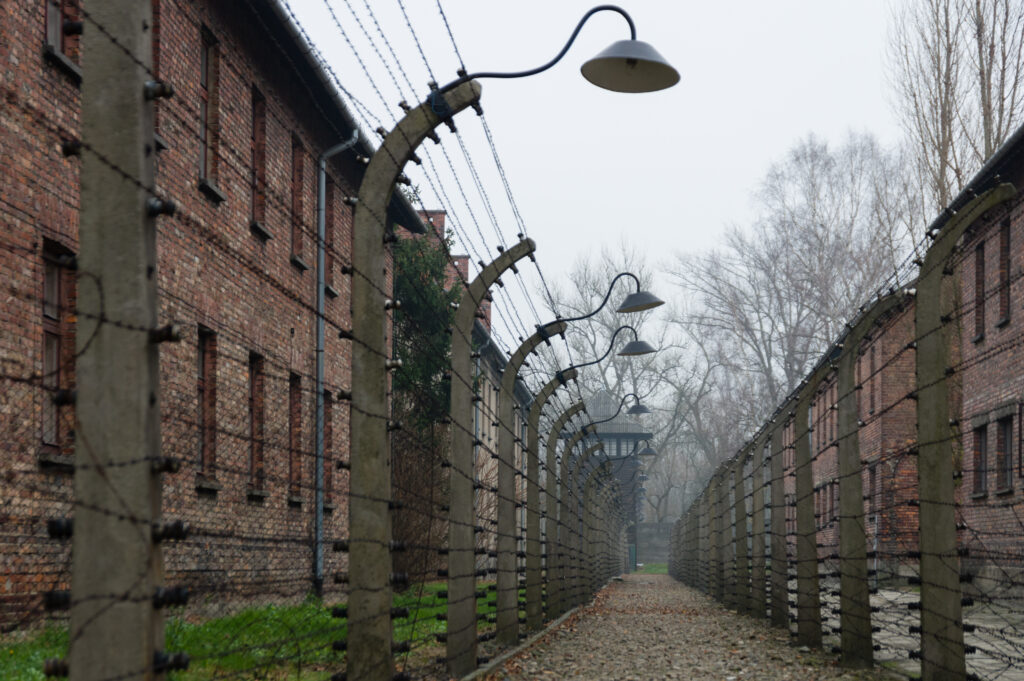
In 1996, British tourism researchers Malcolm Foley and John Lennon introduced the term “Dark Tourism” in an article (cf. Foley & Lennon, 1996) to describe a phenomenon which they located within the framework of so-called “Heritage Tourism.” The latter can best be translated as memorial tourism or, more broadly, as cultural tourism. Foley and Lennon’s interest was piqued by a group of people who did not visit Westminster Abbey or the Eiffel Tower, but rather former concentration camps, battlefields, or famous crime scenes. These people were apparently not seeking relaxation or pure education, but had other, additional reasons for visiting places referred to by the two researchers as “dark.” In 2006, tourism researcher Philip R. Stone (2006) attempted to update the concept: “Dark tourism may be referred to as the act of travel to sites associated with death, suffering and the seemingly macabre” (p. 146). Stone thus introduced several clarifications: the sites visited can also merely be associated with death—they need not be actual places of death. This includes specific museums or memorials such as Yad Vashem. The term suffering expands these sites to include, for example, prisons or US slave plantations. The very broad term “macabre” also brings a new but vague meaning into play. Stone uses the term to incorporate the sense of spookiness: haunted houses, but also ghost trains. He enables this through his distinction between “sites of death and suffering” and “sites associated with death and suffering” (emphasis added), wherein he introduces a spectrum from very dark places (concentration camp memorials) to less heavy ones like gothic amusement parks (cf. Stone, 2006, pp. 150–157).
However, a discrepancy has arisen between the narrow academic definition of dark tourism (first approach) and the public perception due to these phenomena being taken up by the media (second approach). In press coverage, the focus is predictably not on visitors to concentration camp memorials or accepted commemorative sites such as the battlefield of Verdun. Journalists and reporters—and, it is assumed, readers—are much more interested in tourists who visit execution sites, the crash site of an airplane, ugly, decaying factories, the ruins of the Chernobyl nuclear power plant, trenches of the ongoing war in Ukraine, or a haunted castle. Through media coverage, the image of the dark tourist as a lover of the bizarre, who sometimes operates on the fringe of social acceptability, has emerged; in any case, they are considered eccentric. It must therefore be made clear once more that there is a marked gulf between the academically established and the everyday, mostly extra-academic use of the term dark tourism, which leads to the paradox that the two are partly mutually exclusive: e.g., most visitors to a concentration camp memorial would feel misunderstood or even offended if labelled as dark tourists.
“Objects of Terror”: The Paranormal Tourist
It is undisputed that dark tourism, as already mentioned, is a part of cultural tourism. In colloquial terms, the cultural tourist wants to get to know the country and its people. The keyword here is authenticity, which means unadulterated, immediate encounters with locals and their cultural assets. One can discuss at length the illusory nature of this concept, but it is clear that the dark tourist is particularly guided by this idea. “The decisive factor for the increased interest in the shadowy sites of the 20th century is therefore not the fascination with death, but the aura of authenticity” [author’s translation] (Eisenhuth, 2017, p. 36). However, there are also areas where the concept of authenticity fails; for example, it is not clear how a building like Freiburg Cathedral could not be authentic unless there exists another fake cathedral somewhere else. An authentic experience is usually tied to people or events. This can be the birthplace of a celebrity, the “unadulterated” local, or, in the case of dark tourism, the experience of death and violence required by the academic definition. However, this principle also leads to conflicts, such as with memorial sites like Yad Vashem that are not placed at the location of the event they are commemorating and are therefore inauthentic. For the paranormal tourist, however, authenticity is likely one of the most basic principles. There are exceptions, of course: ghost trains and haunted amusement parks. Still, the paranormal tourist usually seeks out destinations that follow the formula: “Exactly the place where…”
Of course, this does not explain why they do so. Kolbe (2021) lists a whole range of motivations for this kind of tourism:
Is it sensationalism, the thrill of fear and horror, that drive ‘dark’ tourists? Or is it rather historical interest and empathy for the suffering of others? Motivation research usually shows a broad spectrum of motives, corresponding to the great diversity of sites counted among the destinations of dark tourism. They range from schadenfreude, the thrill of shuddering, seeking confrontation with death, interest in violence, empathic identification with victims and perpetrators, and curiosity about the unusual to the search for self-assurance or identity, the pursuit of knowledge, a sense of social responsibility (“Never again!”) and pilgrimage [author’s translation]. (Kolbe, 2021, p.69)
An, albeit predictable, mixture of motives from both types of dark tourist—the memorial visitor hopefully does not take pleasure in others’ misfortune, while the popular dark tourist is probably not inspired by a “sense of social responsibility.” The underlying question of why someone would consciously, voluntarily, and purposefully expose themselves to things generally considered terrible, hideous, or evil has always been asked and regularly revisited. It became especially prominent in aesthetic discourse from the eighteenth century onwards (cf. Alt, 2011, pp. 11–30; Noller, 2017, pp. 96–102; Zelle, 1990). This was mainly about looking at cruel and ugly paintings—Massacre of the Innocent Children by King Herodes, the Head of Medusa by Peter Paul Rubens—reading shocking books, the emerging gothic novel, or watching violent plays from Seneca to Shakespeare, but also the enjoyment of such “objects of terror,” as they were called in the English discourse, in themselves. The debate was conducted across Europe, intensified by the new genre of the gothic novel from the 1770s onwards.
Friedrich Schiller takes up this discussion in several of his theoretical texts on art: “It is a general phenomenon in our nature that the sorrowful, the terrible, the horrific entice us with irresistible charm, that we are equally repelled and drawn to scenes of misery and horror” [author’s translation] (Schiller as cited in Zelle, 1990, p. 58)—among other examples from art and literature, Schiller also mentions the then-common practice of attending public executions. The solutions offered by theorists of the eighteenth and nineteenth centuries for these impulses are mostly unconvincing: “A strange and unexpected event awakens the mind, and keeps it on the stretch” (Aikin, 1773 as cited in Norton, n.d.),[1] is just another, though not very explanatory, expression for delight in the extraordinary and unexpected.
Also often cited—by both contemporaries and later interpreters of the debate—is the motive of self-assurance, the reassurance as a “substitute for terror,” since the observed event can be rationalized as either fiction or not personally relevant. In reference to Max Weber’s disenchantment thesis, pleasure in horror is seen as compensation for a world demystified by the Enlightenment and later scientific modernity, and can be enjoyed in the safety of one’s living room. This argument is still alive today when explaining the popularity of TV crime dramas or horror films. The consumer is reassured that “in real life” there are neither vampires nor indestructible aliens, and that the detective always catches even the most cunning serial killer. The criticism of this approach is as old as it is justified, and the exact opposite is also asserted: periods of particular uncertainty or cruelty produce especially cruel and shocking works, as exemplified by the wave of brutal and extremely violent psychopathic horror films that emerged in the USA at the end of the Vietnam War. This feeling of exposing oneself, so to speak, from the safety of modern everyday life to an uncertain, fear-laden event exerts a certain appeal for the dark and especially the paranormal tourist can certainly be assumed.
Tourism and fear are not mutually exclusive. Of course, travelers want to avoid fears and uncertainties, such as tour operators going bankrupt or disease outbreaks in the destination country. Heuwinkel (2019) writes that,
In tourism, the conscious experience of fear-related situations can be found in various places. Examples include extreme sports, activities like shark cage diving, visiting townships or guided gangster tours. Some museums, such as the medieval torture museum in , can also be included [author’s translation]. (p. 165)
The latter example is clearly in the spectrum of dark tourism.[2] Heuwinkel’s (2019) explanation for the phenomenon ranges from biology—adrenaline release—to the already familiar self-assurance: “In this way, control is regained. Fear handled in this way can be recounted after the holiday or even posted during the experience” [author’s translation] (p. 166). As these examples are authentic, presumably non-fictional experiences, this thesis is even more questionable, or could apply mainly to the purely personal and not very empathetic feelings of the individual, since the fear-inducing events or places actually exist and continue to do so, be it townships—apparently understood as places of daily violence—or a haunted house. The dark tourist who then relaxes at home, enthusiastically recounting their experiences with photos, would come very close to being a cynic. However, it is hard to deny that fear[3] plays at least a partial role for the paranormal tourist.
It is hard to deny that fear plays at least a partial role for the paranormal tourist.
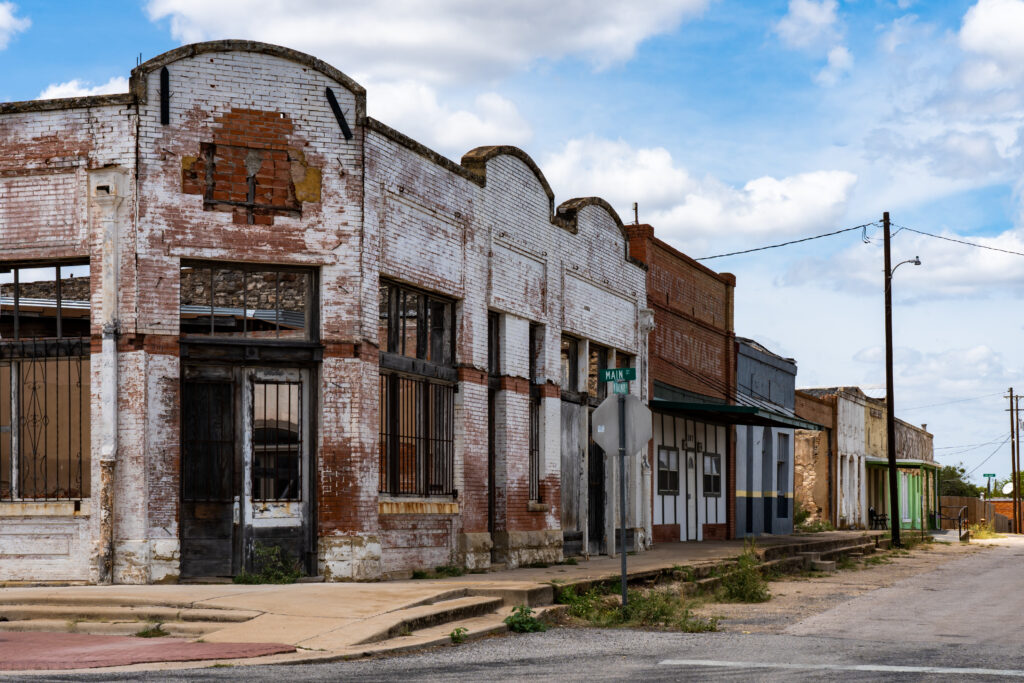
This leads to the question of what exactly causes this fear. What is eerie or shocking about visiting a place? What makes it interesting for the paranormal tourist? In his article on “Haunted Houses and Ruin Porn,” Julian Blunk (2020) tries to summarize various features of these uncanny places: he mentions ”topographical remoteness as a first, somewhat binding feature” [author’s translation] (p. 105), a façade that invites one to “project a facial expression into it” [author’s translation] (p. 105), convoluted and labyrinthine dimensions, as well as a historical or, better yet, historicist (Victorian) style (cf. Blunk, 2020, pp. 106-108). One need not agree with this classification, which relies heavily on media clichés. Indeed, a seemingly nondescript, respectable detached house in a well-behaved residential area haunted by a poltergeist can be far more uncanny, precisely because it is so familiar and does not, like a semi-ruined Victorian villa with a face-like façade and secret stairs in the middle of nowhere, trigger well-rehearsed associations.
Nevertheless, Blunk raises an important point, quoting architecture researcher Matthias Bickenbach: “The [haunted house] must appear uninhabited and at the same time inhabited“ [author’s translation] (Bickenbach as cited in Blunk, 2020, p. 106). Blunk (2020) later puts it in his own words: “The uncanny is one’s own presence in the living space of an absent Other” [author’s translation] (p. 111). This is probably closer to the experience of lost-place photographers, but it does suggest something important. In his study “Das Seltsame und das Gespenstische” (The Weird and the Eerie), British cultural scholar Mark Fisher introduces a distinction for his definition of the eerie that goes much further than merely characterizing haunted houses and could perhaps apply to all dark sites sought out by paranormal tourists: “The eerie arises from the failure of absence or the failure of presence. The feeling of the eerie arises when either something is there where there should be nothing, or when there is nothing where there should be something” [author’s translation](Fisher, 2017, p. 75, emphasis in original). Blunk’s haunted houses are uncanny because something is felt or suspected inside them—the presence of former inhabitants—where there should actually be emptiness. Poltergeist noises are uncanny because there is no natural cause for them; they are present where they should not or cannot be. The reverse case is harder to grasp, as the position is often a difficult-to-document absence—Fisher again cites ruins and abandoned places (cf. Fisher, 2017, p. 76), i.e., lost places, essentially reversing Blunk’s argument: people should live here, but they are absent. Another classic example would be an empty coffin or grave. In any case, Fisher’s presence/absence distinction is a tool worth applying to dark site cases.
A second helpful tool for explaining what is uncanny can be borrowed from literary theory. In 1970, Tzvetan Todorov, in his “Introduction à la littérature fantastique,” attempted to establish a clear criterion for classifying a text in this genre (cf. Todorov, 1970). According to him, it is hesitation, or “Unentscheidbarkeit” (indecision), as it was translated in German academic discourse. Readers are ultimately unable to explain the events in the text convincingly or unambiguously. There is evidence both for a rational and an irrational or supernatural reading, without a clear verdict for either side—hence the hesitation. Some examples would include Ira Levin’s “Rosemary’s Baby,” the works of Austrian writer Leo Perutz, or Arthur Schnitzler’s story “Die Prophezeiung” (The Prophecy). Whether, for example, the protagonist of “Rosemary’s Baby” is a victim of pathological paranoia or, as she suspects, a satanic conspiracy, remains open—both seem plausible. Todorov’s thesis attracted great interest and was widely received but was also criticized for its strong restriction of the field of fantastic literature (cf. Brittnacher & May, 2013, pp. 190-191). Even classics such as Mary Shelley’s “Frankenstein” or Bram Stoker’s “Dracula” would, according to this strict interpretation, not be part of the genre, among numerous other works. However, this literary discussion does not preclude its application to our question: Todorov’s hesitation or indecision could be a good description of the fascination of paranormal dark sites. These sites are usually such that there is exactly that often unresolved conflict between rational and irrational or supernatural explanation, and it is precisely this that makes the place attractive.
We have thus compiled a certainly incomplete and preliminary list of criteria that can help us assess the motivation of the dark tourist: authenticity, self-assurance, the conscious exposure to or at least acceptance of fear, the failure of absence or presence, and the indecision just mentioned. We can assume that there is no monocausal explanation and that some of the motivations behind dark tourism may just stay “in the dark.”
[1] Anna Laetitia Aikin (later Barbauld) accompanied English Romantic literature as a critic with a progressive and early feminist outlook, focusing particularly on the Gothic novel.
[2] On different kinds of anxieties–or rather apprehensions–experienced by travelers, for example, when visiting concentration camp memorials, see Kuchler, 2025.
[3] For the various forms of fear as an affect—from shock to disgust—encountered when confronted with the supernatural, see Brittnacher, 2013, pp. 514-521.
Alt, P.-A. (2011). Ästhetik des Bösen. C.H. Beck.
Blunk, J. (2020). Spukhaus und ruin porn. In F. Buss, P. Müller (Eds.), Hin- und Wegsehen. Erscheinungsformen der Gewalt im Wechselverhältnis zwischen Bild und Betrachter (p. 101-120). De Gruyter.
Brittnacher, H.-R. (2013). Affekte. In H.-R. Brittnacher, & M. May (Eds.), Phantastik. Ein interdisziplinäres handbuch (p. 514-521). Metzler.
Brittnacher, H.-R., & May, M. (2013). Phantastik-Theorien. In H.-R. Brittnacher, & M. May (Eds.), Phantastik. Ein interdisziplinäres handbuch (p. 189-197). Metzler.
Eisenhuth, S. (2017). Reiseziel: Schattenort. Überlegungen zum „Dark Tourism“ nach einer Reise in den Süden Europas. In S. Eisenhuth, & M. Sabrow (Eds.), Schattenorte. Stadtimages und Vergangenheitslasten (p. 24-39). Wallstein.
Fisher, M. (2017). Das Seltsame und das Gespenstische. Edition TIAMAT.
Foley, M., & Lennon, J. (1996). JFK and dark tourism: Heart of darkness. Journal of International Heritage Studies, 2, 198-211.
Heuwinkel, K. (2019): Tourismussoziologie. UVK.
Kolbe, W. (2021): Geschichtstourismus. Theorie – Praxis – Berufsfelder. Narr Francke Attempo.
Kuchler, C. (2025): Auschwitz als Lernort. Ertrag schulischer Exkursionen zum Staatlichen Museum Auschwitz-Birkenau. Aus Politik und Zeitgeschichte, 75(1-5), 24-31.
Noller, J. (2017): Theorien des Bösen. Zur Einführung. Junius.
Norton, R. (n.d.). On the pleasure derived from objects of terror (1773). Retrieved November 11, 2025, from https://rictornorton.co.uk/gothic/aikin2.htm
Stone, P. R. (2006). A dark tourism spectrum. Towards a typology of death and macabre related tourist sites, attractions and exhibitions. Tourism, 54(2), 145-160.
Zelle, C. (1990). Über den Grund des Vergnügens an schrecklichen Gegenständen in der Ästhetik des achtzehnten Jahrhunderts (mit einem bibliographischen Anhang). In P. Gendolla, & C. Zelle (Eds.), Schönheit und Schrecken. Entsetzen, Gewalt und Tod in den alten und neuen Medien (p. 55-91). Winter.


In this issue of Mindfield, the contributors examine the theme of “Mapping the Unseen: Psi, Media, and the Cultural Imagination.” The editorial by Jacob W. Glazier, Anastasia Wasko, and David S. B. Mitchell examines how fictional narratives can create the cultural space in which new scientific ideas and research agendas emerge. In his Presidential Column, …

by Carl Lorenz Cervantes