by Gerhard Mayer, PA President



by Gerhard Mayer, PA President
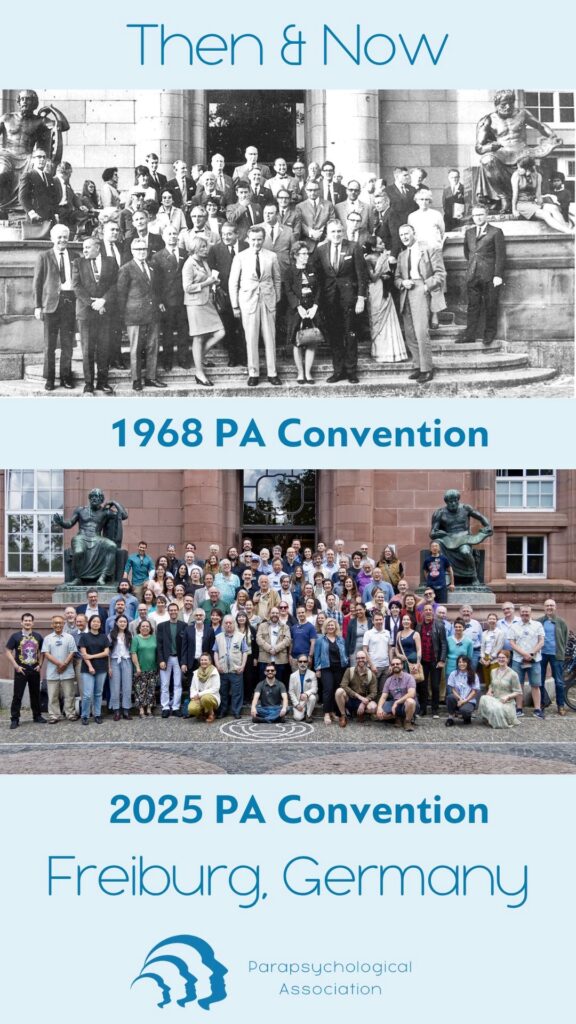
In 1968, the University of Freiburg, Germany, provided the venues for the 11th Convention of the Parapsychological Association (PA), hosted by the Institute for Frontier Areas of Psychology and Mental Health (IGPP). It was an exciting and optimistic time for parapsychology. E. Douglas Dean, president of the PA in 1967, had succeeded in overcoming the initial hurdles to the PA’s recognition as an Affiliate of the Association for the Advancement of Science (AAAS) (Dean, 2016). Ian Stevenson (1918–2007), best known for his field research on cases of the reincarnation type (CORT), was President of the PA in 1968. The founder of the IGPP, Hans Bender (1907–1991), became his successor in 1969. Bender was a charismatic figure and enjoyed great popularity in the public media thanks to his public appearances as an expert on paranormal phenomena and poltergeist cases. The spectacular Rosenheim poltergeist incident took place from late 1967 to early 1968 and attracted international attention (Bender, 1968; Karger & Zicha, 1968). The fact that the PA conference was held at the University of Freiburg was a personal success for Bender: in 1967, he had attained the position of full professor of psychology and installed an “Abteilung für Grenzgebiete der Psychologie” (Department of Frontier Areas of Psychology) at the Psychological Institute; for him, this meant the complete integration of parapsychology as a legitimate part of academic psychology at the University of Freiburg.
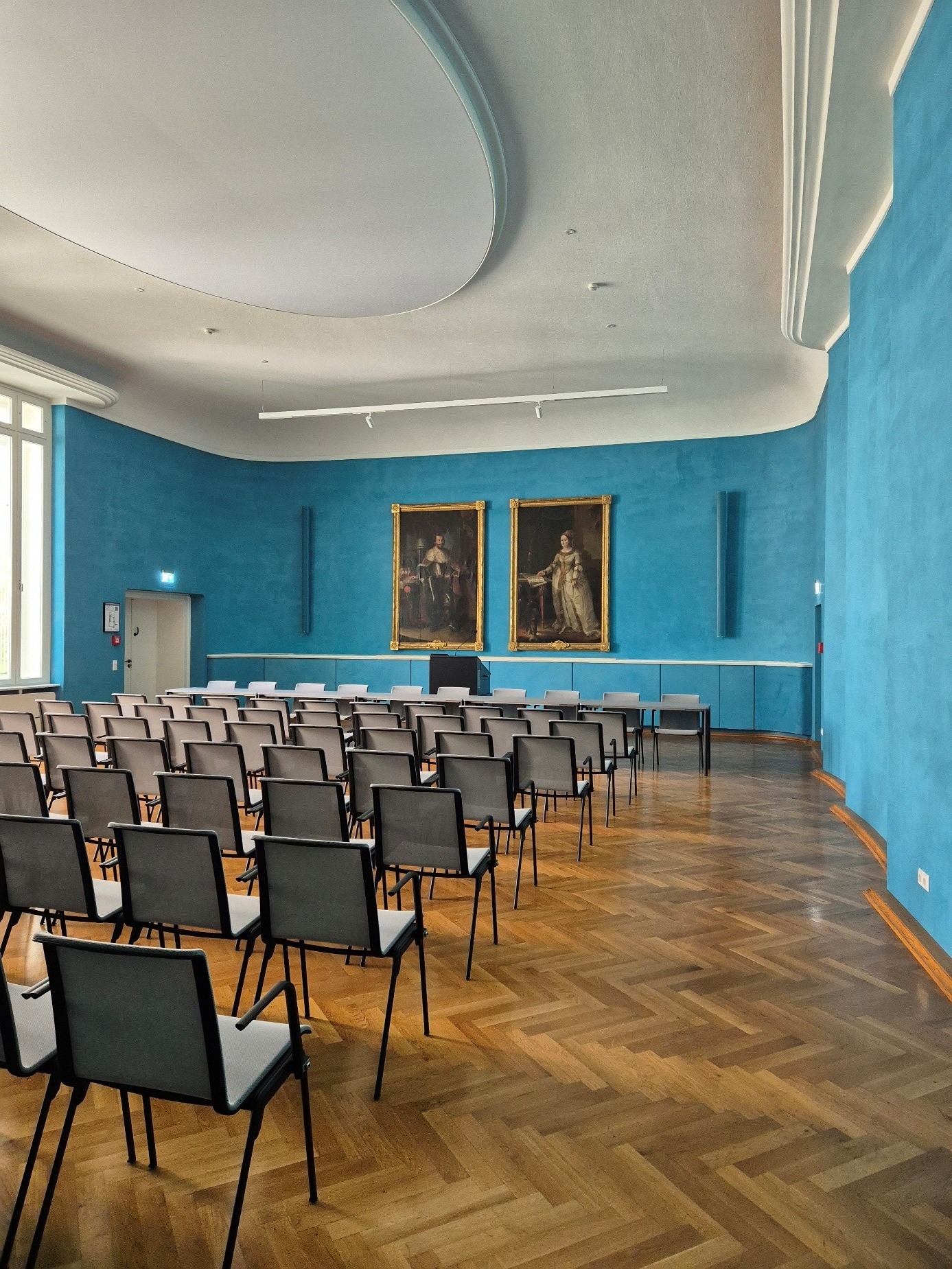
His position helped him in organizing the convention. He managed to get the university’s auditorium as a conference room, and the Vice Rector of the University, the Dean of the Faculty of Philosophy, as well as the Mayor of the City of Freiburg were present at the opening of the event. With regard to organizing the PA Convention in 2025, the situation was different in several respects. International conferences with physical attendance have lost some of their appeal because it is now possible to hold online conferences, and there is an abundance of information available online via podcasts and lectures that are streamed and made available on YouTube channels. The number of conferences with international participation has also increased due to easier travel options. They are therefore no longer comparably “special” as was the case in 1968. However, another factor is also of particular importance: after Bender’s death and the retirement of his successor Johannes Mischo, the professorship in Frontier Areas of Psychology at the university was redesignated in 1999 as a professorship in Pedagogy of Psychology. Parapsychology disappeared from the University of Freiburg. The successful institutionalization of parapsychology at universities seems to be closely linked to the personalities who represent it, as historian Anna Lux (2016) writes. This was the case with Hans Bender, but also with J. B. Rhine.
The successful institutionalization of parapsychology at universities seems to be closely linked to the personalities who represent it... This was the case with Hans Bender, but also with J. B. Rhine.
We were very grateful that we were able to hold the PA Convention again in the university premises in 2025, albeit on a smaller scale. This was possible because of the ongoing cooperation of the IGPP with university facilities and departments. The 2025 PA Convention no longer had 160 participants as in 1968, but still about 120, and was thus fully booked. The participants were aware that physical meetings with colleagues—the discussions, eating, drinking, and celebrating together—have a completely different quality than contacts that are limited to online exchanges, and seemingly enjoyed their stay in Freiburg.
Serving as the Arrangements Chair for the 2025 PA Convention and now as the new President of the PA, I feel part of a long tradition with great role models and, of course, especially with the founder of our institute, Hans Bender. This also applies to content-related aspects concerning the scientific approach to parapsychology. In contrast to J. B. Rhine, who saw experimental laboratory research as the ideal path to parapsychology, Bender’s interest was always additionally focused on qualitative research approaches and, above all, case studies. He was fascinated by the occurrence of psi phenomena in everyday life and considered quantitative and qualitative research approaches to be equally fruitful. In this respect, he found a kindred spirit in Ian Stevenson, whose Presidential Address “The Substantiality of Spontaneous Cases” for the PA Convention in Freiburg has lost nothing of its topicality and expresses this view in elaborate terms (Stevenson was unable to attend the PA Convention in Freiburg because of health issues). I’d only like to mention two of the eight points of his summary:
Spontaneous cases occur in ordinary life and show the practical effects of paranormal processes on conduct and belief much more than do the results of most laboratory experiments. Any view of paranormal phenomena which omits spontaneous cases must necessarily be defective; [and]
The neglect of spontaneous cases in theory building by some parapsychologists has limited the usefulness of such theories (based exclusively on experimental results) in devising better experiments or field observations. (Stevenson, 1968, pp. 124–125)
Bender himself presented results of the investigation of the Rosenheim poltergeist case at the Freiburg Convention, and his own Presidential Address of 1969 at the PA Convention in New York was entitled “New Developments in Poltergeist Research” (Bender, 1969). I see myself as part of this tradition of valuing field research and individual case studies—in addition to quantitative approaches and experimental laboratory research—and have also made a small contribution to qualitative research in parapsychology and anomalistics with the publication of the anthology N Equals 1 (Mayer, 2019).
Another interesting connection from then to now can also be found through Ian Stevenson. His contribution, in addition to the Presidential Address, was a report on “Characteristics of Cases of the Reincarnation Type in Turkey” (Stevenson, 1968a). This research paradigm was still very new at that time. Stevenson (1966) had published his first book on his CORT research, Twenty Cases Suggestive of Reincarnation, two years earlier. Stevenson’s approach has lost none of its fascination over the years and has been continued and expanded by successors after his death in 2007. Michael Nahm, the Program Chair of the 2025 PA Convention and my colleague at the IGPP, described the evidence from the CORT studies as the “best available evidence for the survival of human consciousness after permanent bodily death” in his award-winning essay “Climbing Mount Evidence” (Nahm, 2021, subtitle of the essay). Given the now greatly increased interest in research into human consciousness (e.g., Wittmann, 2018, pp. 115–122), the significance of this tradition, which was established during the 1960s, can hardly be overestimated.
A report on the 1968 PA Convention states: “The banquet took place in an atmosphere of international understanding and solidarity” (Lischke, 1968, p. 92, author’s translation). This, too, is a welcome tradition. PA Conventions have been held since the mid-1990s, alternating between locations in North America and countries on other continents, mostly in Europe. This guideline alone promotes international exchange and helps to broaden cultural horizons. We were delighted to welcome participants from 17 countries to the 2025 PA Convention in Freiburg. This is very encouraging at a time of increasing national egoism, cultural alienation, and exclusion.
However, it remains a problem that, despite national diversity, certain cultural groups or cultural areas are severely underrepresented or even non-existent in our parapsychological community. At the joint convention of the PA and the Society for Scientific Exploration (SSE) in 2016, “Accessing the Exceptional, Experiencing the Extraordinary,” in Boulder, Colorado, I was greatly surprised to see only one person of color among the about 200 attendees. There are various explanations for this, and two of them seem particularly plausible to me. They were related to me in a personal conversation with sociologist James McClenon, who studied extraordinary experiences in people from different cultures (McClenon, 1993). On the one hand, those people of color who pursue a career in science—this still seems to be an unusual decision that is not always welcomed by certain non-white communities—are strongly oriented toward the guidelines of mainstream science and do not want to jeopardize their careers by engaging with topics that have been discredited by many scientists. On the other hand, many people of color are strongly involved in religious worldview systems that already provide answers to many of the questions addressed by parapsychology and anomalistics (Mayer, 2016, pp. 430–431).
In a broader context, it must be noted that this problem of non-representation affects entire ethnic groups or continents. In my Invited Address “Open Up the Field – Broaden the Horizon” (delivered on February 25, 2022; Parapsychological Association, 2022), I mentioned a project by a team of international curators in preparation of a festival of contemporary music—a field completely dominated by Caucasian composers and performers—who traveled “to various regions in Africa, Latin America, the Middle East and Asia” and “explored the question of which contemporary music practices exist in the regions, which composers, musicians, sound artists and ensembles have not yet been represented at all or not sufficiently on European stages, and what a decolonial music practice might look like” (Erkelenz & Heldt, 2021, p. 12). As a consequence, the program of the festival was hugely enriched by the participation of artists from these regions of the world. This example certainly cannot be easily transferred to the field of parapsychology, although the idea of sending a team of scientists on research trips to different areas of the world does have its appeal. However, the opening of the field is certainly a worthwhile path that should be actively pursued. The question arises: Why not try to hold a PA convention in India, Japan, or South Africa? However, the answer to this simple question is rather complex. Organizing such events requires a local organizing team and a sufficiently large group of interested local people who can make up a significant portion of the audience. Only if this is guaranteed can a nonprofit organization afford to hold a conference with a limited budget, even if the best intentions and strong dedication are present. Such favorable conditions arose in 2011, when the PA Convention was held for the first time in Brazil, as a joint project with the 7th Psi Meeting of the Faculdades Integradas Esprita and the 6th Journey of Altered States of Consciousness. Fortunately, thanks to the strong commitment and a sufficiently large potential onsite audience, there will be an opportunity to host the 2026 PA Conference in Sydney, Australia.
There are other ways to find out what is going on in foreign countries in the field of parapsychology. One of them was chosen by my predecessor as PA President, Everton de Oliveira Maraldi, who organized an online symposium on the topic “Global Parapsychology: Cross-Cultural Perspectives” on March 8–9, 2025, inviting speakers from all over the world. I consider this approach to be fruitful. Actively seeking out and inviting speakers from unfamiliar countries and cultures should become an established tradition of the PA. As president, I am happy to follow in Everton’s footsteps here.
To return to the beginning of this column, when I mentioned the optimistic and stimulating atmosphere in parapsychology in 1968, can a connection be drawn to the current situation in this respect as well? I think so. Admittedly, there is a tendency toward sobriety or even disillusionment in the field of classical parapsychological laboratory experimentation, since, on the one hand, promising experimental findings seem to crumble under the skeptical lens when the peculiarities of paranormal phenomena are ignored and the standards of experiments in conventional research areas are applied without taking adequate account of the specific nature of the phenomena under investigation—parapsychology seen as an “ultra-soft science” (Mayer, 2025); and, on the other hand, interest in comparatively successful experimental paradigms of parapsychology such as Ganzfeld research is declining—perhaps because little new knowledge is expected and the success of the paradigm did not bring the desired recognition by the scientific mainstream.
An optimistic mood arises where new perspectives seem to open up, where familiar things are perceived in a new light, and where attention is drawn to scientific fields that have not previously been accessible to the relevant topics.
An optimistic mood arises where new perspectives seem to open up, where familiar things are perceived in a new light, and where attention is drawn to scientific fields that have not previously been accessible to the relevant topics. This is most clearly evident in the already mentioned field of consciousness research. This research requires the acceptance of research methods that were long considered scientifically unacceptable because they could not meet the requirement of objectivity. In order to examine conscious processes, there is no way around the method of introspection. Nevertheless, research topics such as near-death experiences (Charland-Verville et al., 2018; Nahm et al., 2025) or subjective time perception (Wittmann, 2017, 2018) are no longer categorically rejected by the scientific mainstream, being under restrictive assumptions regarding the models used to interpret such consciousness phenomena. The dualistic idea that body and mind can exist independently still conflicts with the materialistic-physicalist worldview dominating Western science, which regards consciousness as an epiphenomenon of neurochemical processes. However, there are now also individual voices outside parapsychology and anomalistics who locate consciousness differently in the world model (e.g., Hoffman, 2019; Rickabaugh & Moreland, 2023). This suggests that resistance to parapsychology, or rather to its main research subject in a generalized sense, the study of the connection between mind and matter, may be weakening in some areas. It offers reasons for hope and an optimistic outlook, although there remains the risk, as Everton Maraldi noted in his last Presidential Address, that other disciplines may adopt such topics without acknowledging the pioneering research in parapsychology.
Some draw their optimism from the taking up and popularization of topics in the field of parapsychology by mass media or other mass media publications. If the general public is interested in the topic, then the scientific mainstream can no longer ignore it, thus the optimistic assumption. As a case in point, the podcast “The Telepathy Tapes” is receiving a great deal of public attention. The latter also applies to the successful author Dan Brown, who, in his new novel The Secret of Secrets, devotes himself to the mind-matter connection and the question of the survival of consciousness after physical death (Brown, 2025), referring to current research in parapsychology. Such developments cause a certain optimistic excitement in the parapsychological community. Looking back to the late 1960s and early 1970s, we find a similarly strong public response to parapsychological topics at various levels (Broughton, 1991). An interesting example of a promising technology from the field of anomalistics, which had received great resonance in popular culture at the time, was Kirlian photography (Stolow, 2025, chapter 9). In an interview with American journalists Henry Gris and William Dick, Kirlian himself painted a vivid picture of the potential applications that would make Kirlian photography a kind of all-purpose diagnostic tool and had led to major research efforts in the former Soviet Union (Gris & Dick, 1978, pp. 139–140). The authors write:
One day, the names of the Kirlians of Krasnodar may well live in history and enter our vocabularies like those of Alessandro Volta of Como, George Simon Ohm of Erlangen, André Marie Ampére of Paris, and the many other great inventors who centuries ago prepared the scientific foundation for our world of today. (Gris & Dick, 1978, p. 120)
Even though the story may not yet be over, the high hopes for a quick breakthrough have not been fulfilled, and public and scientific attention has shifted to other research subjects.
Some parapsychologists place great hope in integrating artificial intelligence (AI) into parapsychological research and, more generally, in the growing potential for processing enormous amounts of data. There is a clear potential here, and a sense of excited optimism seems justified, as this development could open new horizons for parapsychological research, in particular because AI naturally raises questions about the material basis of consciousness. Whether one believes that the greatest insights can be gained from analyzing huge amounts of data using AI, or rather from case studies on a human scale, or from a combination of both approaches, is probably subject to very individual assessments.
I dare not predict whether parapsychology is on the verge of a major and decisive breakthrough toward scientific and social acceptance, or whether we will continue to advance in small steps, with minor innovations and, above all, with great conceptual openness, but without forgetting to appropriately appreciate what has already been achieved.
Bender, H. (1968). An investigation of “poltergeist occurences” in Rosenheim: A case of spontaneous psychokinesis. In Institut für Grenzgebiete der Psychologie (Ed.), Papers presented for the 11th Annual Convention of the Parapsychological Association (pp. 376–383). Parapsychological Association.
Bender, H. (1969). New developments in poltergeist research. Proceedings of the Parapsychological Association, 6, 81–102.
Broughton, R. S. (1991). Parapsychology: The controversial science. Ballatine Books.
Brown, D. (2025). The secret of secrets. Doubleday.
Charland-Verville, V., Martial, C., Cassol, H., & Laureys, S. (2018). Near-death experiences: Actual considerations. In C. Schnakers & S. Laureys (Eds.), Coma and disorders of consciousness (pp. 235–263). Springer International Publishing. https://doi.org/10.1007/978-3-319-55964-3_14
Dean, E. D. (2016). Parapsychology is now a recognized science: How it was done. Mindfield, 8(2), 48–53.
Erkelenz, E., & Heldt, K. (2021). Editorial. In E. Erkelenz, & K. Heldt (Eds.), Dynamische traditionen: Globale perspektiven auf zeitgenössische musik. Eine textsammlung zu donaueschingen global. SWR.
Gris, H., & Dick, W. (1978). The new soviet psychic discoveries a first-hand report on the latest breakthroughs in Russian parapsychology. Prentice-Hall.
Hoffman, D. D. (2019). The case against reality: How evolution hid the truth from our eyes. Allen Lane.
Karger, F., & Zicha, G. (1968). Physical investigation of psychokinetic phenomena in Rosenheim, Germany, 1967. In Institut für Grenzgebiete der Psychologie (Ed.), Papers presented for the 11th Annual Convention of the Parapsychological Association (pp. 384–387). Parapsychological Association.
Lischke, G. (1968). Bericht über den XI. Kongress der Parapsychological Association 1968. Zeitschrift Für Parapsychologie Und Grenzgebiete Der Psychologie, 11, 89–103.
Lux, A. (2016). Passing through the needle’s eye: Dimensionen der universitären Integration der Parapsychologie in Deutschland und den USA. In A. Lux & S. Paletschek (Eds.), Okkultismus im gehäuse: Institutionalisierungen von parapsychologie im 20. Jahrhundert in internationaler Perspektive (Vol. 3, pp. 93–131). De Gruyter Oldenbourg.
Mayer, G. (2016). Size matters: Zwei tagungsberichte aus den grenzgebieten der wissenschaft. Zeitschrift Für Anomalistik, 16(3), 429–441.
Mayer, G. (Ed.). (2019). N equals 1: Single case studies in anomalistics. LIT.
Mayer, G. (2025). Editorial: Parapsychology – an “Ultra-Soft Science?” / Parapsychologie – eine „Ultra-Soft Science“? Journal of Anomalistics / Zeitschrift Für Anomalistik, 25(1), 5–14. https://doi.org/10.23793/zfa.2025.005
Nahm, M. (2021). Climbing mount evidence: A strategic assessment of the best available evidence for the survival of human consciousness after permanent bodily death. Essay written for the Bigelow Institute for Consciousness Studies’ competition on the best available evidence for the survival of human consciousness after permanent bodily death. https://www.bigelowinstitute.org/index.php/bics-afterlife-proof/bics-essay-contest-winners-runners-up/
Nahm, M., Woollacott, M., & Tassell-Matamua, N. (Eds.). (2025). On the banks of the river styx: New perspectives on terminal lucidity and other near-death phenomena. Academy for the Advancement of Postmaterialist Sciences.
Parapsychological Association. (2022, March 2). 2021 PA Outstanding Contribution Award invited address [Video]. YouTube. https://www.youtube.com/watch?v=prnAXh9U0IU
Rickabaugh, B., & Moreland, J. P. (2023). The substance of consciousness: A comprehensive defense of contemporary substance dualism. Wiley-Blackwell.
Stevenson, I. (1966). Twenty cases suggestive of reincarnation. ASPR.
Stevenson, I. (1968a). Characteristics of cases of the reincarnation type in Turkey. In Institut für Grenzgebiete der Psychologie (Ed.), Papers presented for the 11th Annual Convention of the Parapsychological Association (pp. 295–315). Parapsychological Association.
Stevenson, I. (1968b). The substantiality of spontaneous cases. Proceedings of the Parapsychological Association, 5, 91–128.
Stolow, J. (2025). Picturing aura: A visual biography. The MIT Press.
Wittmann, M. (2017). Felt time: The science of how we experience time (E. Butler, Trans.). The MIT Press.
Wittmann, M. (2018). Altered states of consciousness: Experiences out of time and self (P. Hurd, Trans.; 1st ed.). The MIT Press.


In this issue of Mindfield, the contributors examine the theme of “Mapping the Unseen: Psi, Media, and the Cultural Imagination.” The editorial by Jacob W. Glazier, Anastasia Wasko, and David S. B. Mitchell examines how fictional narratives can create the cultural space in which new scientific ideas and research agendas emerge. In his Presidential Column, …

by Carl Lorenz Cervantes