by David S. B. Mitchell

by David S. B. Mitchell
Mrs. McNally, our third-grade teacher at Ohlone Elementary School in Hercules, California, taught me and my classmates one of the spookiest songs that I have ever learned. Only a few lines in length, it was haunting enough that I still remember it to this day, well over three decades later. Called “The Ghost of John,” the version of the song that we were taught went like this: “Have you seen the ghost of John?/ Long white bones with the skin all gone/ Oooooh/ Oooooh, oooooh, oooooh/ Wouldn’t it be chilly with no skin on?”
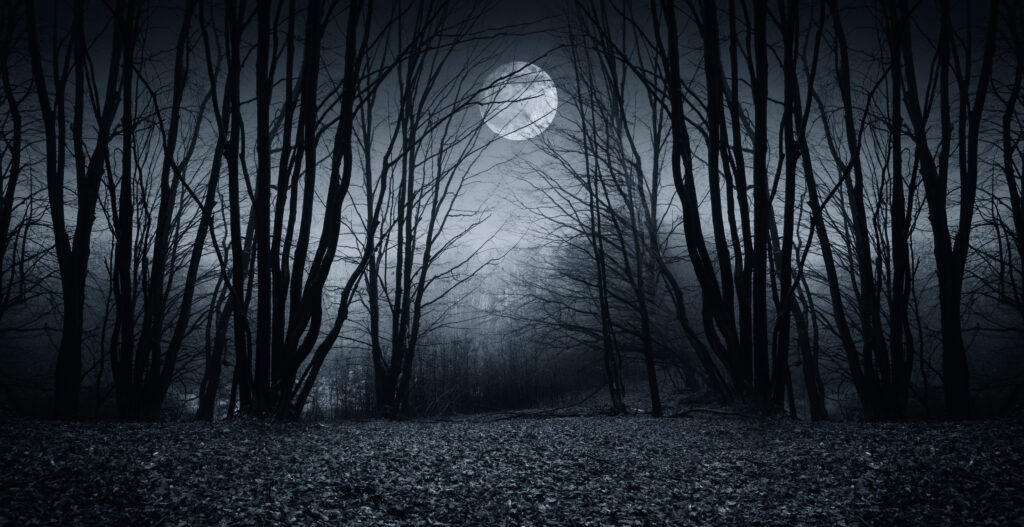
Whether it was because our school lay on the ancestral lands of the indigenous Karkin/Carquines Tribe of the Muwekma Ohlone (formerly Costanoan) peoples; or was because a shaded forest trail was at the edge of the school; or was because we were imaginative kids; or was because of some entirely different reason, we came to associate “John” from the song with one of the many (what we assumed were) understandably unsettled spirits of the Ohlone. John became an entity to be respected: He might “get you” if you wandered alone in those woods or if you did not acknowledge his presence, but if you paid your respects—such as by humming the song to yourself as you approached the trailhead—then he might not bother you when you entered those woods.
Coincidentally, one of my friends from Mrs. McNally’s class lived right across the street from the school. He told me of times when he “saw” the apparition of an adult man walking down the hallway outside of his bedroom. Talking about this apparition or about “John” while spending the night at my friend’s house or while entering the forest when school was not in session became tests of our courage, chances for us to step into the paranormal side of reality. As time progressed, reminiscences about these apparitions became invitations to reflect on the mysterious and sometimes scarier sides of life as we knew it.
Even now, when I think about those woods behind the school, they evoke a sense of the Oz factor for me (Randles, 2001), being a bit too quiet. A bit too eerie. Whether real, imaginary, or both, such ghost stories and other legends serve a very real purpose for the developing psyche.
Importance of Legend-Tripping
Though many who engage in these narratives may not know it consciously (Debies-Carl, 2023), doing so can help people to confront the more challenging and even frightening sides of reality. In general, herein lies some of the allure of (and anxiety behind) legends and of legend-tripping, particularly for children and adolescents.
Typically, legends “are ambiguous stories that seem to stimulate a reflective ambivalence in their audiences. Upon hearing one, people might respond with conflicted feelings as it invokes both belief and doubt simultaneously” (Debies-Carl, 2023, p. 4). Sociologist Jeffrey S. Debies-Carl’s commentary here reflects a theme noted by the aforementioned legend folklorist Linda Dégh. In Legend and Belief, Dégh recounts literature about a number of legend-trip sites given evocative and even ghastly names such as Spooklight Hill, The Screaming Bridge, two different Devil’s Hollows, and a number of other similarly named places; each of these locales is said to be tied to some particular legend involving murder, devil worship, natural disaster, tragic accident, or some other negatively-valenced occurrence (2001, pp. 160-161). Similarly, as Glazier, myself, and several colleagues have noted, “paranormal folklore [is] historical or ongoing accounts of anomalous or exceptional experiences (ExEs), which are experienced by more than one person on different occasions” (2025, p. 1). Such folklore often becomes the stuff of legend.
Over time, such narratives of firsthand (i.e., memorate) and secondhand exceptional experiences may morph into a kind of collective memory (Halbwachs, 1992)—which when shared and accrued across time, can take on the form of a fabulate (Debies-Carl, 2023). For a memorate to become a fabulate, the narrative form moves from an initial subjective state to achieve a more ambiguous (e.g., liminal) status as a story that is shared between others. In essence, it can lose some of its subjective, autobiographical flavor while gaining the voices of others who add to its structure. In this way, the fabulate—and therefore, a legend—can carry with it a kind of duality that is characterized through an inner conflict. What actually happened and what might have happened become intertwined, creating tension between historical fact and narrative possibility.
It follows that the legend-trip (Hall, 1980)—or alternatively, the legend quest a la folklorist Linda Dégh (1969)—is an activity wherein people travel to a site that is associated with paranormality or with tragedy in the hopes of demonstrating their own courage to themselves and to others in their peer group. For example, folklorists McNeill and Tucker (2018) reflect that, “‘Trip’ means the whole journey, while ‘quest’ stresses the journey’s objective and the hero’s striving” (p. 8). As such, to trip or to quest in this sense may be an invitation to engage with the archetypal hero (at least, in theory). Importantly, for adolescents, the legend trip is a rite of passage that can lead them into self-awakening within and among their peer group (Meley, 1991, p. 18). Participating in a trip, and particularly doing so at night, can be a collective step towards adulthood through re-enacting or approaching the legendary: this endeavor is achieved by crossing a socially- and/or physically-constructed barrier to gain access to the site of legend.
As such, the status of legend-tripping and related endeavors (e.g., dark tourism) runs parallel in at least some ways to the scientific pursuits of parapsychology.
As such, the status of legend-tripping and related endeavors (e.g., dark tourism) runs parallel in at least some ways to the scientific pursuits of parapsychology. For example, both deal with potentially uncovering information of evidentiary value to demonstrate the validity of a given phenomenon that tends to be fringed (i.e., placed at odds with accepted norms of the academy and science; Mitchell, 2023) within the mainstream of Western culture.
Ecology of Legend-Tripping
Legend-tripping potentially intersects with some intriguing theories and concepts within various segments of the academy, including but not limited to religious studies as well as the transpersonal, parapsychological, anthropological, cryptozoological, and ufological literature.
First, we turn to the concept of legend-tripping being a rite of passage. Per scholars such as French anthropologist Arnold Van Gennep (1873-1957), we learn the following about such rites: “I propose to call the rites of separation from a previous world, preliminal rites, those executed during the transitional stage, liminal (or threshold) rites, and the ceremonies of incorporation into the new world post-liminal rites (2004, p. 21).” Anything defined as liminal represents a threshold, boundary, border, exit, or entrance, and is therefore implicated in spaces such as portals, doors, edges, windows, and crossroads. Featuring prominently in both non-fictional narratives as well as fictional ones (e.g., Brown, 2025), these threshold aspects of physical (e.g., trailheads, doorways, etc.) and temporal (e.g., altered states of consciousness) place and time are not only arguably fundamental features of reality, but also invite the human psyche and material body into contact with mystery on the other side of the mundane. While the late anthropologist’s proposed structure of rites has not been without its criticisms, it still stands as an influential model used to describe a breadth of human activities (Zhang, 2012). For example, being familiar with Van Gennep’s work, mythologist Joseph Campbell (1904-1987) commented, “The standard path of the mythological adventure of the hero is a magnification of the formula represented in the rites of passage: separation—initiation—return” (Campbell, 2004, p. 28).
Anything defined as liminal represents a threshold, boundary, border, exit, or entrance, and is therefore implicated in spaces such as portals, doors, edges, windows, and crossroads.
To be a rite of passage, the activity is generally structured or at least semi-structured and should aid the initiate in developing a new skill, a new sense of identity, and/or a new sense of community, and should essentially serve as a prescription for preparation for life beyond the rite. Following this train of thought, as a rite of passage, the legend-trip can serve as a mental and physical preparation for further acceptance into society or, at least, into one’s peer group.
In his book titled The Collective Memory (1992), eminent French sociologist Maurice Halbwachs discusses how the physical space within which a group lives may impact the psychology of that group and vice versa. He defines collective memory in the following manner:
Space is a reality that endures: since our impressions rush by, one after another, and leave nothing behind in the mind, we can understand how we recapture the past only by understanding how it is, in effect, preserved by our physical surroundings. It is to space—the space we occupy, traverse, have continual access to, or can at any time reconstruct in thought and imagination—that we must turn our attention. Our thought must focus on it if this or that category of remembrances is to reappear. (Halbwachs, 1992, pp. 6-7)
In addition to its quality of endurance, space can also be filled by both material and immaterial things, by tangible and intangible human creations. Such a situation is clearly exemplified by the legend and the ways in which we might interact with it. In a sense, space functions as a muse for our collective memory in that it helps to direct our attention toward particular remembrances. For example, we might consider that the legend of Sleepy Hollow is tied not just to whatever one might recall about the actions and character of Ichabod Crane and company, but also to a specific location within which the story took place. Further, whatever meaning we make of the legend and whatever actions we take involving it (e.g., dressing up as the Headless Horseman for Halloween) indicate the various public and private ways in which the narrative lives on through those who hear of it in particular social, cultural, and historical contexts (e.g., Cowdell, 2014). Given these characteristics, the legend and legend-trip can therefore serve as vehicles for the transmission of information about physical, psychological, and sociological dimensions of human existence and experience.
Further, Halbwachs’ (1992) reflections on collective memory might lead us to consider another way in which the legend-trip relates to parapsychology specifically: that is, place memory (Heath, 2004, 2005). Parapsychologist Pamela Rae Heath (2004) has written that place memory is “most often thought of today as the apparent energetic imprint of information, produced by living beings and somehow stored by the environment, which some individuals may be able to retrieve through paranormal means” (p. 67). She further suggests that this phenomenon consists of two types that may interact with human consciousness: a) an active type, which is formed from the impression of information on the environment during active psychokinetic, or PK, events; and b) a passive type, which is largely generated through the repetitive and recent presence of a person in an environment. The passive type is in line with the work of other psychical researchers (e.g., Roll, 2003). It so happens that the subject of a given legend-trip, be it a residual haunting, psychokinetic event (i.e., via what has been termed living agent psi), or the like, may be tied to the place memory hypothesis. In this manner, the very presence of legend-trippers may interact with the substance and structure of the legend site, helping to keep the memory “alive.”
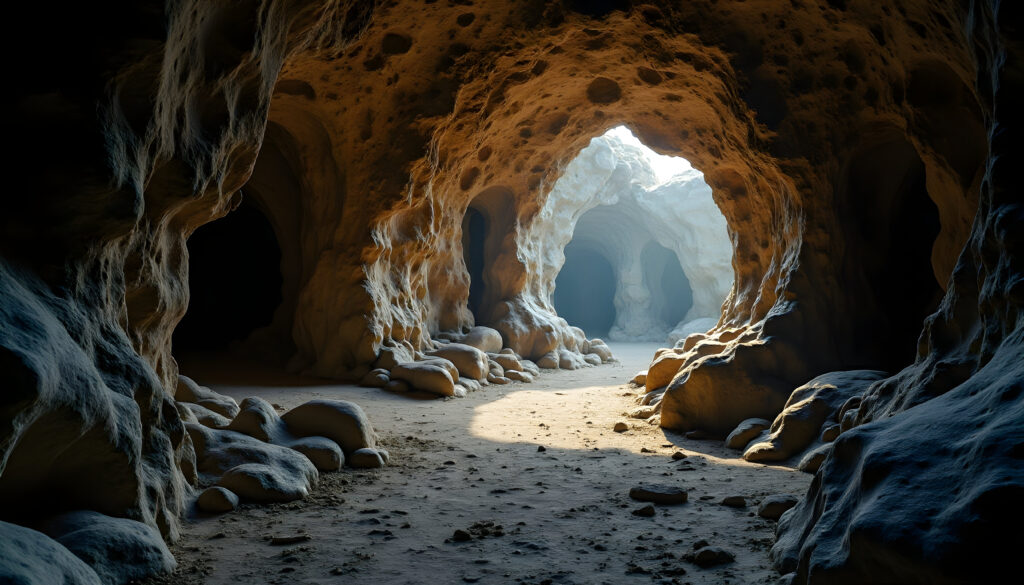
Further, in her 2014 study examining potential associations between geological factors (e.g., presence of quartz, fault lines, water, etc.) and sites of ghost investigations from the show Ghost Hunters, GIS analyst Lindsey Danielson found that limestone in or around the location was significantly positively correlated with the site locations, while quartz deposits were significantly negatively correlated with the sites. The thrust of Danielson’s study overlaps with some of the published theoretical and empirical work (e.g., Dagnall et al., 2020; Debies-Carl, 2023; Devereux, 2013; Escolà-Gascón & Houran, 2021; Holloway, 2010; Laythe et al., 2022) and potentially points to some interesting avenues for further research in parapsychology and related enterprises. Such literature indicates that there may be certain geophysical, cultural, and other characteristics that are intrinsic to or accidental about a place’s natural and built environment that cause it to be perceived as haunted; of course, this is also not to say that there is not, per se, something truly paranormal about a given place. Indeed, part of the draw of the legend-trip is that the place itself can help to induce a sense of danger: forests, mountaintops, lakes, caves, bridges, and many other sites in the natural and built environment can evoke just such a thrill.
Ethics of Legend-Tripping
As we round out this discussion, it would be helpful to briefly consider the ethical implications of legend-tripping. Unlike traditional rites of passage (e.g., Dégh, 2001; Markstrom & Iborra, 2003), the legend-trip typically involves behavior that is not approved of by the adult members of the community. In fact, the legend-trip often takes place in the absence of said approval, thereby further adding to the taboo of engaging in the activity in the first place.
Given the fact that the act is often transgressive, it can at least at times be intentionally disrespectful to the reputed legendary site, including a wide range of behavior such as trespassing, vandalism, and even life-threatening violence. While group cohesion and identity formation are important effects for the often-adolescent legend-trippers, the ethics of such activities should ideally be considered more deeply by thrill seekers and others (e.g., ghost hunting shows, etc.) who implicitly and/or explicitly advocate for such pursuits. Of course, in the Western societies within which such tripping takes place, the absence of socially-sanctioned rites of passage for teenagers is a key influence in the very existence of legend-tripping. Still, the moral imperative here is particularly important when legend tripping involves Indigenous sacred sites and other locations of religious, spiritual, or otherwise deep cultural significance-especially when that significance lies outside of the beliefs and values of the trippers themselves.
As scholars such as Debies-Carl (2023) note, many who engage in such activities do so without consciously understanding the full import of their actions. The author’s commentary about how he and others engage with legend sites ethnographically, with utmost intentionality and, seemingly, with respect for the place and people tied to the legend at the front of their minds, is a useful guide not only for how researchers interact with sites, but for how legend-trippers themselves can be more conscientious about the literal and figurative mark they leave on such places. Ultimately, continuing to keep such cultural and ethical matters at the front of mind would be helpful for legend-trippers and scholars thereof alike.
Brown, D. (2025). The secret of secrets. Doubleday.
Campbell, J. (2004). The hero with a thousand faces (Commemorative edition). Princeton University Press.
Cowdell, P. (2014). Ghosts and their relationship with the age of a city. Folklore, 125(1), 80-91. https://doi.org/10.1080/0015587X.2013.853516
Dagnall, N., Drinkwater, K. G., O’Keeffe, C., Ventola, A., Laythe, B., Jawer, M. A., & Houran, J. (2020). Things that go bump in the literature: An environmental appraisal of “haunted houses.” Frontiers in Psychology, 11, Article 1328. https://doi.org/10.3389/fpsyg.2020.01328
Danielson, L. (2014). Using GIS to analyze relationships to explore paranormal occurrences in the continental United States. Papers in Resource Analysis, 16, 1-10 pp. Saint Mary’s University of Minnesota University Central Services Press. http://www.gis.smumn.edu
Debies-Carl, J.S. (2023). If you should go at midnight: Legends and legend tripping in America. University Press of Mississippi. https://muse.jhu.edu/book/109594
Dégh, L. (1969). Legend and belief: Dialectics of a folklore genre. Indiana University Press.
Dégh, L. (1969). The haunted bridges near Avon and Danville and their role in legend formation. Indiana Folklore, 2(1), 54-89.
Devereux, P. (2013). Dreamscapes: Topography, mind, and the power of simulacra in ancient and traditional societies. International Journal of Transpersonal Studies, 32(1), 51-63. http://dx.doi.org/10.24972/ijts.2013.32.1.51
Escolà-Gascón, Á., & Houran, J. (2021). Paradoxical effects of exposure to nature in “haunted” places: Implications for stress reduction theory. Landscape and Urban Planning, 214, 104183.
Glazier, J. W., Mitchell, D. S. B., Wipff, Z., & Cochran, N. (2025). Paranormal folklore in Western Georgia: A critical narrative analysis of apparitions. Anthropology of Consciousness. Advance online publication. https://doi.org/10.1111/anoc.70005
Halbwachs, M. (1992). Space and the collective memory. In Halbwachs, M. (Ed). The Collective Memory (pp. 1-15). Harper and Row.
Hall, G. (1980). The big tunnel. In L. Dégh (Ed.), Indiana folklore: A reader (pp. 225-257). Indiana University Press.
Heath, P. R. (2004). The possible role of psychokinesis in place memory. Australian Journal of Parapsychology, 4(2), 63-80. https://www.pamelaheath.com/PDF/PlaceMemory.pdf
Heath, P. R. (2005). A new theory on place memory. Australian Journal of Parapsychology, 5(1), 40-58. https://www.pamelaheath.com/PDF/PlaceMemory2.pdf
Holloway, J. (2010). Legend-tripping in spooky spaces: Ghost tourism and infrastructures of enchantment. Environment and Planning D: Society and Space, 28(4), 618-637. https://doi.org/10.1068/d9909
Laythe, B., Houran, J., & Dagnall, N. (2022). Ghosted!: Exploring the haunting reality of paranormal encounters. McFarland Press.
Markstrom, C. A., & Iborra, A. (2003). Adolescent identity formation and rites of passage: The Navajo Kinaaldá ceremony for girls. Journal of Research on Adolescence, 13(4), 399-425. https://doi.org/10.1046/j.1532-7795.2003.01304001.x
McNeill, L. S., & Tucker, E. (2018). Introduction. In L. S. McNeill & E. Tucker (Eds.), Legend tripping: A contemporary legend casebook (pp. 3–30). University Press of Colorado. http://www.jstor.org/stable/j.ctv1vbd1wh.4
Meley, P. M. (1991). Adolescent legend trips as teenage cultural response: A study of lore in context. Children’s Folklore Review, 5-24. https://scholarworks.iu.edu/journals/index.php/cfr/article/download/25271/31088/59586
Mitchell, D. S. B. (2023). “What goes bump in the psyche”: Relict hominoids and reality shifts as existential threats to Western culture. In J. W. Glazier (Ed.), Paranormal ruptures: Critical approaches to exceptional experiences (pp. 21-57). Beyond the Fray Publishing.
Randles, J. (2001). Time storms: Amazing evidence for time warps, space rifts and time travel. Judy Piatkus (Publishers) Limited.
Roll, W. G. (2003). Book review. Journal of Parapsychology, 67, 187-203.
Van Gennep, A. (2004). The rites of passage. Routledge Press.
Zhang, J. (2012). Recovering meanings lost in interpretations of Les Rites de Passage. Western Folklore, 71(2), 119-147. https://tinyurl.com/563bxu2f


In this issue of Mindfield, the contributors examine the theme of “Mapping the Unseen: Psi, Media, and the Cultural Imagination.” The editorial by Jacob W. Glazier, Anastasia Wasko, and David S. B. Mitchell examines how fictional narratives can create the cultural space in which new scientific ideas and research agendas emerge. In his Presidential Column, …

by Carl Lorenz Cervantes