by Isela Madriz


by Isela Madriz
In the last thirty years, dark tourism has increased in popularity. The development of the internet and social media provided a space for people with similar interests to share, plan, and even offer tours to such “dark” places. Dark tourism is defined as tourism to “sites associated with death, suffering and the seemingly macabre” (Stone, 2006, p. 146). Within this same category, there are subdivisions, such as crime tourism, where the goal is to visit places where crimes occurred or to visit where a serial killer lived.
Another type is legend tripping, which was related to adolescents in thrill-seeking subcultures (Bristow & Newman, 2004). The teens would attempt to prove themselves by breaking rules and challenging each other to visit spooky locations such as haunted graveyards at midnight. However, now a number of organizations and agencies facilitate these activities, offering safe and organized experiences. The impact on local economies is huge. Dracula tourism in Romania attracts over 250,000 visitors annually (Jamal & Tanase, 2005), and ghost tour operators across the United States report over 100,000 visitors per year (Saladino, 2015). This is the positive aspect of dark tourism—it brings jobs and opportunities to the communities surrounding these iconic and mysterious sites.
I have visited some of the best-known places for dark tourism. They are also associated with important historical events. Alcatraz Prison, the Paris Catacombs, the Tower of London, the tombs of the Valley of the Kings in Egypt, and here in Costa Rica, the Durán Sanatorium—I have been to these sites, which encompass an atmosphere of mystery and death. As such, the places are associated with stories and legends about ghosts.
My fascination with history and desire to understand paranormal phenomena led me to visit them. I believe that I, like most people, am curious about the tragic events, the historical context that marked these sites, and the possibility of experiencing the intense emotions that a paranormal encounter can offer.
I believe that I, like most people, am curious about the tragic events, the historical context that marked these sites, and the possibility of experiencing the intense emotions that a paranormal encounter can offer.
Once, thirty meters underground, I walked more than a kilometer past centuries-old bones. It was a unique experience. The experience made me question our role in this world and consider the fragility of human beings. I was provoked by a great nostalgia for the stories of these people, many of whom only their bones remain, piled up in those catacombs. However, the visit to the catacombs (like another to Alcatraz Prison) was far from paranormal; the places moved me because I empathized with the people who once suffered or were buried there.
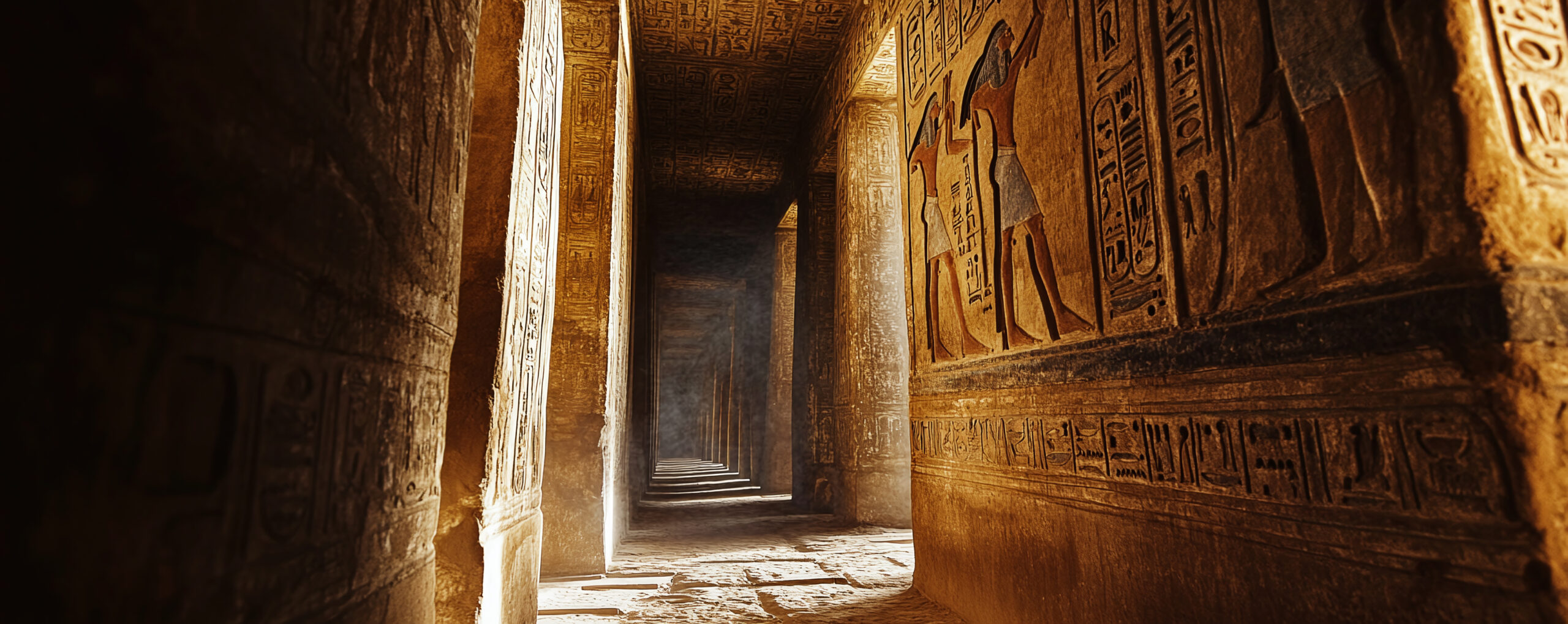
Egypt is one of the places where regular tourist attractions are tombs and temples. During a trip in 2010, I wasn’t thinking about the paranormal or looking for it—I just wanted to enjoy the majestic artwork and “connect” with those amazing locations. I was in the Tomb of Ramses III (King’s Valley 11). The tomb is one of the longest in the King´s Valley and has three stages with corridors and side rooms. The last stage is closed to the public due to structural damage. But there was a gate to view how the tomb goes further into the mountain. I was taking my time to appreciate the hieroglyphs when I reached that gate; everyone from my group had already exited the tomb. I found myself alone there, peeking, trying to see into the tunnel.
Then, I perceived movement at the end. I felt that someone was there, calling me. I felt overwhelmed and nostalgic, and I started crying. A few minutes later, my former partner came back looking for me. He asked me what I was doing, and then he said, “Here is someone at the end of the tunnel, right?” Afterward, he felt overwhelmed and emotional, too. We stayed a few minutes, then left, and it felt as if I was turning my back on someone. I even felt guilty for leaving. This was a unique experience that left an impression on me. In thirteen years of field investigations, I’ve never felt something like it. I believe that exceptional experiences happen when they must, not when we want them to occur.
In thirteen years of field investigations, I’ve never felt something like it. I believe that exceptional experiences happen when they must, not when we want them to occur.
There is a great deal of controversy surrounding all types of dark tourism (Ironside, 2018). For some, visiting sites of great tragedies for “entertainment” is disrespectful and unethical. I don’t see it that way, as long as we maintain respect for the people who perished there. I believe it is favorable for new generations to learn about the historical events and tragic situations that occurred, the ones that have created haunting landscapes. This will help raise awareness and encourage preservation efforts.
In conclusion, I believe dark tourism is here to stay, and we must engage wisely to educate people about the dark history of our culture, present in all these mysterious places. We must honor and respect those who are no longer here, and we must make the tragedies visible to prevent them from repeating themselves in the future.
Bristow, R., & Newman, M. (2004). Myth vs. fact: An exploration of fright tourism. In K. Bricker (Ed.), Proceedings of the 2004 Northeastern Recreation Research Symposium (pp. 215–221). U.S. Department of Agriculture, Forest Service, Northeastern Research Station.
Ironside, R. (2018). The allure of dark tourism: Legend-tripping and ghost seeking in dark places. In D. Waskul & M. Eaton (Eds.), The supernatural in history, society and culture (pp. 95-115). Temple University Press.
Jamal, T. & Tanase, A. (2005). Impacts and conflicts surrounding Dracula Park, Romania: The role of sustainable tourism principles. Journal of Sustainable Tourism, 13(5), 440-455.
Saladino, E. (2015, Oct 5). How haunted hotels turn terror into cash. Bloomberg. https://www.bloomberg.com/news/articles/2015-10-05/how-haunted-hotels-turn-terror-into-cash
Stone, P. R. (2006). A dark tourism spectrum: Towards a typology of death and macabre related tourist sites, attractions and exhibitions. Tourism: An Interdisciplinary International Journal, 54(2), 145-160. https://psycnet.apa.org/record/2006-10649-005



In this issue of Mindfield, the contributors examine the theme of “Mapping the Unseen: Psi, Media, and the Cultural Imagination.” The editorial by Jacob W. Glazier, Anastasia Wasko, and David S. B. Mitchell examines how fictional narratives can create the cultural space in which new scientific ideas and research agendas emerge. In his Presidential Column, …
by Carl Lorenz Cervantes